SKILLED NURSING SERVICES PROVIDER IN PENNSYLVANIA
By Fatumata Kaba · 2025-10-08 · 5 min read
Skilled Nursing Services in Pennsylvania represent essential, Medicaid-funded clinical interventions delivered by licensed professionals to individuals with complex medical needs within their own homes or community settings. By providing medically necessary care, these services effectively prevent or delay the need for institutionalization, promoting patient independence and recovery. These programs are primarily governed through the Pennsylvania Medicaid State Plan, various Home and Community-Based Services (HCBS) waivers, and the Community HealthChoices (CHC) Managed Care Organizations (MCOs).
What Are the Governing Agencies and Oversight Bodies for Skilled Nursing?
The regulatory framework for skilled nursing in Pennsylvania is multi-layered, involving both state and federal oversight to ensure patient safety and fiscal accountability. The Pennsylvania Department of Health (DOH) – Division of Home Health serves as the primary licensing body for home health agencies, ensuring that organizations meet the clinical and operational standards required to provide skilled nursing care.
In addition to licensing, the Pennsylvania Department of Human Services (DHS) – Office of Long-Term Living (OLTL) plays a critical role in managing the funding streams for these services. OLTL oversees the HCBS waiver programs that support aging and physically disabled populations. Furthermore, Community HealthChoices (CHC) MCOs are responsible for authorizing and reimbursing these services under the managed Medicaid model, while the Centers for Medicare & Medicaid Services (CMS) provides the overarching federal guidelines and regulatory oversight.
- Pennsylvania Department of Health (DOH): Responsible for licensure of home health agencies.
- Pennsylvania Department of Human Services (DHS) – OLTL: Manages Medicaid HCBS waiver programs.
- Community HealthChoices (CHC) MCOs: Authorize and reimburse services for managed Medicaid recipients.
- Centers for Medicare & Medicaid Services (CMS): Establishes federal compliance standards.
- Pennsylvania Department of State: Manages business entity registration and healthcare professional licensure verification.
How Are Skilled Nursing Services Defined and Executed in the Home?
Skilled Nursing Services are strictly defined by their medical necessity and must be prescribed by a physician. These services encompass a wide range of clinical interventions that require the specialized expertise of a Registered Nurse (RN) or a Licensed Practical Nurse (LPN) working under the direction of an RN and physician supervision. The goal is to provide high-level clinical support while teaching the individual or their primary caregiver how to manage chronic or acute health issues effectively.
Approved providers must be capable of delivering diverse services, including complex medication administration such as IV therapy, wound care, and chronic condition monitoring for diseases like diabetes or cardiac respiratory conditions. Furthermore, providers are expected to assist in post-acute care following hospital discharges, develop robust care plans, and ensure that family members are trained to recognize and report changes in the patient's condition to the clinical team.
- Medication Administration: Injections, IV therapy, and oral medication management.
- Wound Care: Dressing changes, pressure sore management, and surgical site care.
- Chronic Condition Support: Monitoring and support for cardiac, respiratory, and neurological conditions.
- Caregiver Training: Educating patients and family members on symptom monitoring and care protocols.
What Are the Prerequisites for Becoming an Approved Provider?
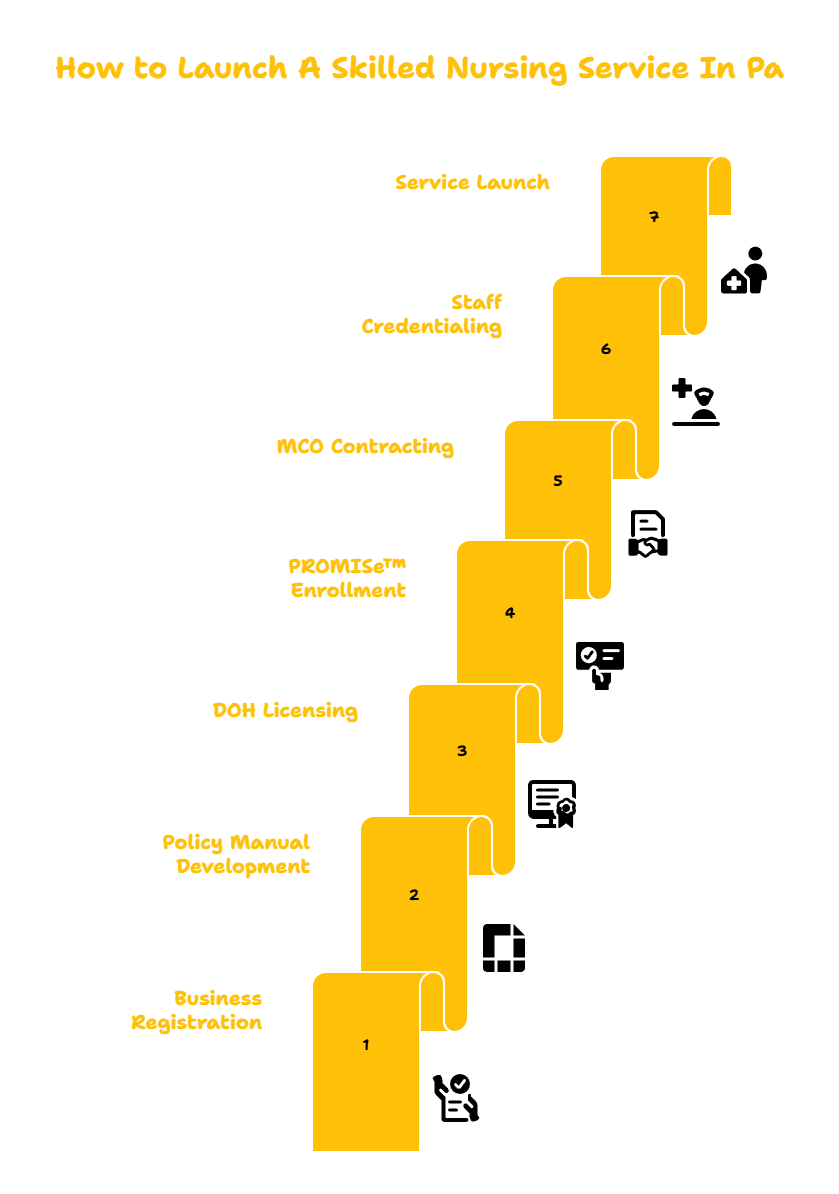
Establishing a skilled nursing operation requires adherence to both business registration laws and healthcare-specific regulations. Providers must first form a legal entity, obtain an Employer Identification Number (EIN), and secure a Type 2 National Provider Identifier (NPI). Depending on the specific business model, the provider must also obtain a Home Health Agency license from the Pennsylvania Department of Health before moving forward with Medicaid enrollment.
Once the foundation is established, the entity must enroll with PROMISe™, Pennsylvania’s Medicaid Management Information System, to receive reimbursement. After successful enrollment, the agency must negotiate and sign contracts with the various CHC MCOs currently operating in the state. Maintaining comprehensive insurance, including malpractice, general liability, and workers’ compensation, is mandatory to protect both the agency and the patients served.
What Is the Required Documentation for Operational Compliance?
Operational success in the Pennsylvania Medicaid landscape hinges on rigorous documentation standards. Agencies must maintain a detailed Policy & Procedure Manual that reflects current DOH and CMS clinical guidelines. This manual must explicitly cover plans of care, medication administration protocols, infection control policies, and procedures for HIPAA compliance, ensuring that all staff members are aligned with state standards regarding patient rights and clinical supervision.
In addition to administrative policies, agencies must demonstrate clinical readiness through documented visit notes, standardized care plan templates, and clear evidence of LPN supervision by an RN. Electronic documentation systems are increasingly the standard for maintaining chart audit readiness. Agencies should be prepared to present professional credentials, proof of insurance, and evidence of staff training, including HIPAA certification and abuse prevention, during any state-led audit or MCO verification process.
How Are Staffing Requirements Managed for Quality Assurance?
High-quality patient outcomes depend on the expertise and professional licensure of the nursing staff. Registered Nurses are responsible for conducting patient assessments, developing individual care plans, and providing the necessary supervision for LPNs. All nursing staff must maintain an active, unencumbered Pennsylvania license and stay compliant with continuing education requirements set forth by the Pennsylvania Board of Nursing.
Beyond standard licensure, all personnel must undergo comprehensive onboarding that includes CPR and First Aid certification, infection control training, and rigorous training on electronic health record (EHR) usage. The Clinical Supervisor or Director of Nursing plays an essential role in quality assurance, performing regular staff evaluations and ensuring that all nursing activities remain within the legal scope of practice while meeting the specific needs outlined by the patient's physician.
Frequently Asked Questions
What is the typical timeline to launch a skilled nursing agency in Pennsylvania?
The timeline generally ranges from 4 to 8 months. Business registration and policy development typically take 1–2 months, followed by 2–4 months for DOH licensing and PROMISe™ enrollment, and 1–2 months for MCO contracting and staff credentialing.
Are skilled nursing services limited to elderly patients?
No. While many services are provided through aging-related waivers, skilled nursing is also available to physically disabled individuals and medically complex children through various HCBS waiver programs and the Medicaid State Plan, provided the service is deemed medically necessary.
What is the role of a CHC MCO in the delivery of skilled nursing?
Community HealthChoices MCOs are responsible for the authorization and reimbursement of skilled nursing services for individuals enrolled in the managed care program. They assess the clinical necessity of the services and manage the billing process between the state and the provider agency.
Key Takeaways
Launching a skilled nursing provider agency in Pennsylvania requires a dual focus on rigorous regulatory compliance and high-standard clinical operations. Successful providers must navigate the Pennsylvania Department of Health licensing requirements, maintain active PROMISe™ enrollment, and secure robust contracts with CHC MCOs. By investing in comprehensive policy development, ensuring staff credentials are up to date, and maintaining meticulous documentation, agencies can provide essential care that promotes health and independence for Pennsylvania's most vulnerable populations.
Last verified: 2024. This information is intended for educational purposes only and does not constitute legal or professional consulting advice. Always consult with the Pennsylvania Department of Human Services or relevant licensing boards for the most current regulatory updates.