SKILLED NURSING SERVICES PROVIDER IN NEW HAMPSHIRE
By Fatumata Kaba · 2025-07-27 · 5 min read
Skilled Nursing Services in New Hampshire provide critical medical oversight, rehabilitative support, and chronic disease management to individuals living in their own homes or community settings. By delivering professional nursing care to those enrolled in Medicaid Home and Community-Based Services (HCBS) waiver programs, these providers enable participants to maintain health stability and avoid unnecessary institutionalization. This article outlines the regulatory framework, enrollment requirements, and operational standards necessary for agencies to successfully launch and maintain these vital services under the New Hampshire Department of Health and Human Services (DHHS).
What are the Core Components of Skilled Nursing Services?
Skilled Nursing Services are professional medical interventions performed by licensed nurses to manage complex health conditions and promote long-term recovery. In the context of New Hampshire Medicaid waivers, these services are not merely custodial; they are clinically driven and tailored to the unique physiological needs of the participant as documented in their Individualized Service Plan (ISP). The goal is to provide a level of care that bridges the gap between home-based personal care and acute hospital interventions.
Approved providers must deliver a comprehensive range of clinical support, which typically includes the following:
- Health Monitoring: Regular assessments of vital signs, blood glucose, and other critical health indicators.
- Medication Administration: The safe delivery of injections, IV therapy, and the oversight of complex medication regimens.
- Wound Care: Professional cleaning, dressing, and clinical monitoring of surgical sites or chronic wounds.
- Chronic Disease Management: Dedicated support for conditions such as diabetes, COPD, or heart disease.
- Post-Surgical Care: Targeted recovery management, including pain assessment and mobility assistance.
- Patient and Family Education: Teaching essential self-care techniques to improve participant independence and safety.
Which Governing Agencies Oversee Skilled Nursing in New Hampshire?
The regulatory landscape for Skilled Nursing Services in New Hampshire is a multi-tiered structure involving state and federal oversight. The New Hampshire Department of Health and Human Services (DHHS) serves as the primary administrator, managing the state’s Medicaid waiver funding, provider enrollment protocols, and service authorization processes. Within the DHHS, the Bureau of Elderly and Adult Services (BEAS) plays a vital role in ensuring that service delivery meets established quality standards and regulatory compliance for all HCBS waiver participants.
At the federal level, the Centers for Medicare & Medicaid Services (CMS) provides overarching guidance. CMS ensures that Medicaid-funded services adhere to national HCBS quality benchmarks, person-centered planning requirements, and strict participant protection standards. Providers must remain cognizant of both state and federal directives, as compliance is frequently audited to ensure that care is provided in accordance with the participant’s ISP and the broader goals of the Medicaid program.
What are the Licensing and Provider Approval Prerequisites?
Before an agency can begin billing for services, it must establish a formal business and regulatory foundation. This begins with the legal registration of the business entity with the New Hampshire Secretary of State and the acquisition of an EIN from the IRS. Furthermore, a Type 2 NPI is required for billing purposes. Depending on the organizational structure and scope, the provider must also obtain the appropriate Home Health Agency licensure from the DHHS to ensure the facility is recognized for medical service delivery.
Administrative preparation involves more than just registration; agencies must develop robust internal systems. This includes securing comprehensive general liability and professional liability insurance policies. Additionally, agencies must codify their operational protocols into a formal Policy & Procedure Manual. This document must explicitly detail:
- Clinical protocols for patient assessment, care planning, and medical documentation.
- Specific guidelines regarding medication administration and chronic disease oversight.
- Standards for staff credentialing, background checks, and continuous training.
- HIPAA-compliant procedures for managing sensitive patient information and handling grievances.
- Infection control, emergency preparedness, and quality assurance monitoring.
How Does the Enrollment Process Work for New Hampshire Medicaid?
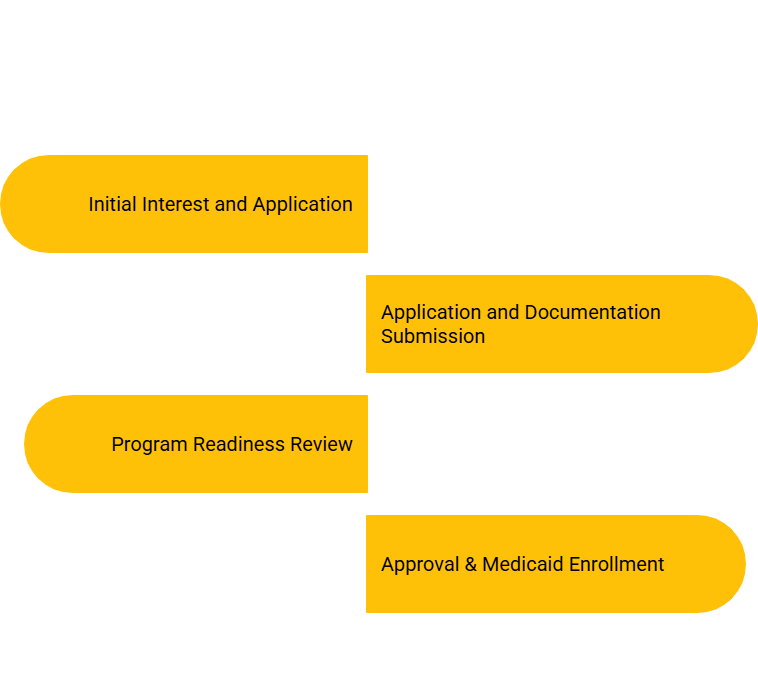
The transition from a startup to an active Medicaid provider requires navigating the New Hampshire Medicaid Provider Enrollment Portal. This process is structured to ensure that only qualified, vetted agencies are authorized to handle clinical patient care. Providers should anticipate a sequence of steps, starting with an initial application that establishes the agency's credentials within the Medicaid system.
Once the initial application is submitted along with required documentation—including Articles of Incorporation, nursing licenses, and insurance certificates—the DHHS and BEAS conduct a program readiness review. This review evaluates the provider's ability to maintain safe and effective nursing protocols. Once all requirements are met and the agency is fully enrolled, they receive authorization to bill Medicaid for services using designated billing codes. The timeline for this process, from initial application to billing approval, typically spans several months, necessitating careful planning for operational expenses during the launch phase.
What Staffing and Competency Standards Must Be Met?
Because Skilled Nursing Services involve direct clinical intervention, staffing requirements are stringent. The Program Director acts as the clinical lead and must be a licensed Registered Nurse (RN), ideally with a BSN or MSN and prior healthcare management experience. Registered Nurses (RNs) and Licensed Practical Nurses (LPNs) must hold active, unencumbered licenses in New Hampshire and possess verifiable experience in the clinical areas relevant to their patient population.
All clinical staff, including any Certified Nursing Assistants (CNAs) working under the supervision of an RN, must undergo continuous professional development. Agencies are responsible for ensuring that all staff receive:
- Advanced clinical training and safety protocol updates.
- Comprehensive training in HIPAA compliance and the protection of patient rights.
- Crisis management, infection control, and emergency response training.
- Annual competency evaluations to ensure high-quality care delivery.
Frequently Asked Questions
What are the primary New Hampshire Medicaid waivers that cover Skilled Nursing?
Skilled Nursing Services are authorized under several key programs, including the Choices for Independence (CFI) Waiver, the Developmental Disabilities (DD) Waiver, the Acquired Brain Disorder (ABD) Waiver, and the In-Home Support (IHS) Waiver for Children.
What documentation is essential for an agency’s policy and procedure manual?
Agencies must maintain detailed documentation on patient assessment, care planning, medical documentation, staff training, background check procedures, HIPAA compliance, grievance handling, infection control, and quality assurance systems.
What is the typical timeline for launching a skilled nursing agency in New Hampshire?
The total launch timeline is estimated at 6 to 10 months, consisting of phases for business formation (1-2 months), staffing and development (2-3 months), state enrollment and readiness review (60-90 days), and final billing setup (30-45 days).
Key Takeaway: Establishing a successful Skilled Nursing Services agency in New Hampshire requires a precise balance of regulatory compliance, clinical expertise, and robust administrative infrastructure. By adhering to the guidelines set by DHHS, BEAS, and CMS, and by maintaining a rigorous focus on staff credentialing and quality assurance, providers can effectively meet the needs of Medicaid waiver participants while ensuring the long-term sustainability of their agency.
Last verified by Waiver Consulting Group on [Insert Date]. This content is for informational purposes only and does not constitute legal or professional advice. Please consult with the New Hampshire Department of Health and Human Services or a qualified professional for guidance specific to your agency's situation.