SKILLED NURSING SERVICES PROVIDER IN NEVADA
By Fatumata Kaba · 2025-09-04 · 6 min read
Skilled Nursing Services in Nevada represent a vital component of the state’s long-term care infrastructure, providing essential medical oversight and clinical support to vulnerable populations within their own homes. By delivering professional nursing care to individuals with chronic illnesses, disabilities, or post-acute recovery needs, these services facilitate the goals of Nevada’s Medicaid Home and Community-Based Services (HCBS) waivers by preventing unnecessary institutionalization and promoting independence.
Operating a Skilled Nursing agency in Nevada requires a rigorous commitment to clinical standards, regulatory compliance, and administrative excellence. This guide outlines the essential framework for healthcare entrepreneurs and administrators aiming to become authorized Medicaid providers, ensuring that all organizational processes align with the mandates set forth by the Nevada Department of Health and Human Services (DHHS) and the Aging and Disability Services Division (ADSD).
Navigating the Regulatory Landscape and Governing Agencies
The provision of Skilled Nursing Services in Nevada is governed by a multi-tiered regulatory structure designed to ensure participant safety and the efficacy of Medicaid-funded interventions. Primary oversight is provided by the Nevada Department of Health and Human Services (DHHS), which acts as the state’s Medicaid authority, managing federal funding, provider enrollment, and reimbursement protocols. Coordination with the Aging and Disability Services Division (ADSD) is equally critical, as this agency is tasked with monitoring quality standards and ensuring that service delivery remains in strict compliance with HCBS waiver mandates.
At the federal level, the Centers for Medicare & Medicaid Services (CMS) sets the overarching standards for all HCBS programs. CMS mandates that state-administered services must prioritize person-centered planning, participant protections, and high-quality clinical outcomes. Providers must demonstrate, through thorough documentation and ongoing audits, that their internal operations adhere to these federal expectations while simultaneously meeting the specific requirements outlined in the Nevada Medicaid Provider Enrollment Portal.
Defining the Scope of Clinical Skilled Nursing Services
Skilled Nursing Services encompass a broad range of medical interventions performed by licensed professionals, ranging from routine health monitoring to complex clinical management. These services are not one-size-fits-all; they are strictly tailored to the participant’s Individualized Service Plan (ISP). By delivering these services in a home or community setting, providers help manage symptoms and prevent acute health crises that could otherwise necessitate hospitalization or nursing facility admission.
Common clinical services authorized under Nevada Medicaid HCBS waivers include:
- Health Monitoring: Periodic assessment of vital signs, blood glucose levels, and other physiological indicators essential for chronic disease management.
- Medication Administration: Direct oversight of prescribed medication regimens, including injections, oral therapies, and complex IV management.
- Wound and Surgical Care: Clinical cleaning, dressing, and ongoing evaluation of surgical sites or chronic wounds to promote healing and prevent infection.
- Chronic Disease Management: Specialized support for conditions such as COPD, diabetes, and heart disease to maintain stability.
- Patient and Caregiver Education: Providing instruction on self-care techniques, symptom recognition, and medication safety to empower both the patient and their support network.
Establishing and Licensing a Nevada Skilled Nursing Agency
The journey toward becoming an authorized provider begins with formal business entity formation. An agency must first be registered with the Nevada Secretary of State, followed by the acquisition of an Employer Identification Number (EIN) from the IRS and a National Provider Identifier (NPI) Type 2. These identifiers are the foundation of any Medicaid billing system and are mandatory for all subsequent state-level applications.
Beyond standard business registration, applicants must obtain specific licensure from the DHHS if the scope of their operation requires a Skilled Nursing Agency designation. This process includes securing comprehensive general and professional liability insurance, which serves as a safeguard for both the agency and the participants served. Agencies must also develop a robust internal policy framework that covers patient care standards, emergency preparedness, infection control, and clear guidelines for medication administration and storage.
Executing the Medicaid Provider Enrollment Process
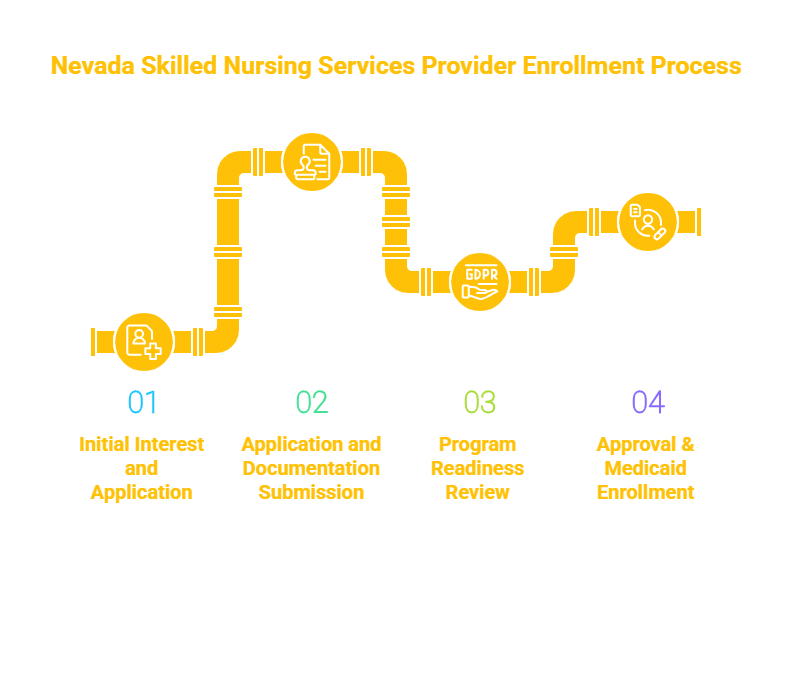
Once the business foundation is laid, the provider must navigate the Nevada Medicaid Provider Enrollment Portal. This digital gateway is where agencies submit their application for participation in specific HCBS waiver programs. The process is not merely a registration but a comprehensive demonstration of operational readiness, requiring the submission of all corporate documentation, NPI/EIN verification, professional nursing licenses, and proof of required insurance coverage.
Following the submission, the agency will undergo a Program Readiness Review conducted by DHHS and ADSD. During this stage, state officials evaluate the agency’s capacity to deliver care safely and effectively. This includes reviewing staff credentialing processes, safety protocols, and the quality assurance systems that the agency intends to use for ongoing monitoring. Only after successful evaluation is the agency authorized to bill Medicaid using designated service codes.
Staffing, Credentialing, and Competency Standards
The quality of a Skilled Nursing program is defined by its clinical team. Agency leadership must recruit, screen, and maintain staff that meet specific state licensure requirements. The Skilled Nursing Program Director is the backbone of the organization and must hold a Bachelor’s or Master’s degree in nursing (BSN or MSN), be an active Registered Nurse (RN), and possess documented experience in home healthcare management.
Nursing staff, including RNs and Licensed Practical Nurses (LPNs), must maintain active Nevada licenses and undergo rigorous background clearances. Certified Nursing Assistants (CNAs) may also provide supporting care under the direct supervision of an RN. All staff must participate in mandatory annual training, which covers essential topics such as HIPAA compliance, patient rights, crisis management, and infection control. Continuous professional development and regular competency evaluations are not only regulatory necessities but are essential for maintaining the high standard of care required for waiver participation.
Frequently Asked Questions
What specific waivers cover Skilled Nursing Services in Nevada?
Skilled Nursing Services are currently authorized under several key programs, including the HCBS-IDD waiver, the Frail Elderly (FE) waiver, the Physical Disabilities waiver, the Traumatic Brain Injury (TBI) waiver, and the Aged and Disabled (AD) waiver.
How long should an agency expect the launch process to take?
The timeline varies based on organizational readiness, but typically, business formation and compliance preparation take 1–2 months, followed by 2–3 months for staffing and credentialing. The formal Medicaid enrollment and readiness review phase usually spans 60–90 days, with an additional 30–45 days required to finalize billing systems and launch services.
What must be included in the Policy & Procedure Manual for Medicaid approval?
The manual must comprehensively detail patient assessment and care planning, medical documentation standards, medication management, HIPAA compliance, grievance handling, infection control, and safety/emergency protocols, as well as the agency’s internal quality assurance processes.
Key Takeaway
Launching a Skilled Nursing Services provider in Nevada is a complex, high-stakes endeavor that requires meticulous adherence to state and federal Medicaid guidelines. Success hinges on a well-structured administrative foundation, rigid clinical compliance, and a dedicated team of licensed professionals capable of delivering person-centered care. By focusing on the rigorous requirements of the DHHS and ADSD, agencies can position themselves to provide high-quality medical support that is essential to the lives of Nevada’s most vulnerable populations.
Waiver Consulting Group’s Start-up Assistance Service supports healthcare agencies in launching Medicaid-compliant Skilled Nursing Services in Nevada, including business registration, policy manual development, staff credentialing, and billing setup. Our Client Portal offers a wealth of resources that you can explore related to various programs and state requirements.
Last verified: 2024. The information provided in this article is for educational purposes only and does not constitute legal or professional advice. Always consult with the Nevada Department of Health and Human Services (DHHS) or qualified legal counsel to ensure compliance with current state and federal regulations.