SKILLED NURSING SERVICES PROVIDER IN NEBRASKA
By Fatumata Kaba · 2025-09-02 · 6 min read
Delivering Specialized Medical Care in the Nebraska Home Environment
Skilled Nursing Services in Nebraska provide essential medical care and clinical monitoring for individuals with complex health needs, chronic conditions, or those recovering from acute surgical procedures. By bringing professional healthcare directly into the home environment, these services promote patient safety, prevent unnecessary hospitalizations, and significantly enhance the quality of life for Medicaid waiver participants. These services are authorized under Nebraska’s Medicaid Home and Community-Based Services (HCBS) waiver programs and must be delivered according to a formal Individualized Service Plan (ISP) directed by a licensed physician.
For healthcare entrepreneurs and agency administrators, establishing a Skilled Nursing service provider entity requires rigorous adherence to state clinical standards and regulatory oversight. Providers must balance the operational demands of clinical care delivery with the administrative requirements of Medicaid enrollment, ensuring that every intervention—from medication management to complex wound care—is documented and billed in full compliance with Nebraska Department of Health and Human Services (DHHS) protocols.
Who Governs Skilled Nursing Services in Nebraska?
The regulatory framework for Skilled Nursing Services in Nebraska is multifaceted, involving both state-level management and federal oversight. The primary state agency is the Nebraska Department of Health and Human Services (DHHS), which serves as the central authority for administering Medicaid waiver funding. DHHS manages the provider enrollment process, service authorization workflows, and the reimbursement mechanisms necessary for agency sustainability.
Operating under the DHHS umbrella, the Nebraska Medicaid and Long-Term Care (MLTC) Division holds responsibility for ensuring that providers maintain strict quality standards and adhere to service delivery mandates. These agencies collectively ensure that participants receive care that is both clinically appropriate and compliant with the requirements of the HCBS waiver. Additionally, the federal Centers for Medicare & Medicaid Services (CMS) provides the overarching regulatory structure, ensuring that Medicaid-funded services nationwide uphold federal standards for person-centered planning, participant protection, and service quality.
What Clinical Services Can Authorized Providers Deliver?
Skilled Nursing Services involve medical care provided exclusively by licensed nursing professionals within the participant's home. These services are specifically designed to address complex medical needs that require the expertise of a Registered Nurse (RN) or a Licensed Practical Nurse (LPN). Because these services are tied to an Individualized Service Plan, providers must maintain rigorous documentation reflecting the necessity and outcome of each clinical intervention.
Approved providers are authorized to deliver a broad spectrum of medical interventions, including:
- Medication Management: Professional administration, routine monitoring of therapeutic effects, and comprehensive education for patients and caregivers regarding prescribed regimens.
- Wound Care: Advanced dressing changes, persistent wound assessment, and the implementation of infection control protocols to promote healing.
- Chronic Disease Management: Proactive support for conditions such as diabetes, COPD, and heart disease to prevent acute exacerbations.
- IV Therapy: Clinical administration of intravenous medications and fluids, accompanied by catheter and site management.
- Post-Surgical Care: Skilled monitoring of recovery progress, pain management interventions, and essential mobility support.
- Vital Sign Monitoring: Routine tracking of blood pressure, heart rate, respiration, and oxygen saturation levels to detect clinical shifts.
- Palliative and End-of-Life Care: Specialized support focusing on comfort and symptom management for patients with terminal illnesses.
How Do Agencies Meet Licensing and Enrollment Requirements?
To operate as a Medicaid-approved Skilled Nursing provider, an agency must navigate a multi-layered registration and compliance process. The foundation begins with the formal business entity formation registered with the Nebraska Secretary of State. Once the entity is established, the agency must secure a federal Employer Identification Number (EIN) from the IRS and a Type 2 National Provider Identifier (NPI) to facilitate administrative and billing transactions.
Beyond standard business registration, an agency must obtain a Home Health Agency License from the Nebraska DHHS. This license is a mandatory prerequisite for delivering skilled nursing care. Throughout this process, the agency must demonstrate financial and operational viability by maintaining robust general and professional liability insurance policies. Furthermore, providers must develop a comprehensive Policy and Procedure Manual that encompasses clinical protocols, infection control guidelines, HIPAA compliance measures, and emergency preparedness plans.
What Is the Process for Medicaid Provider Enrollment?
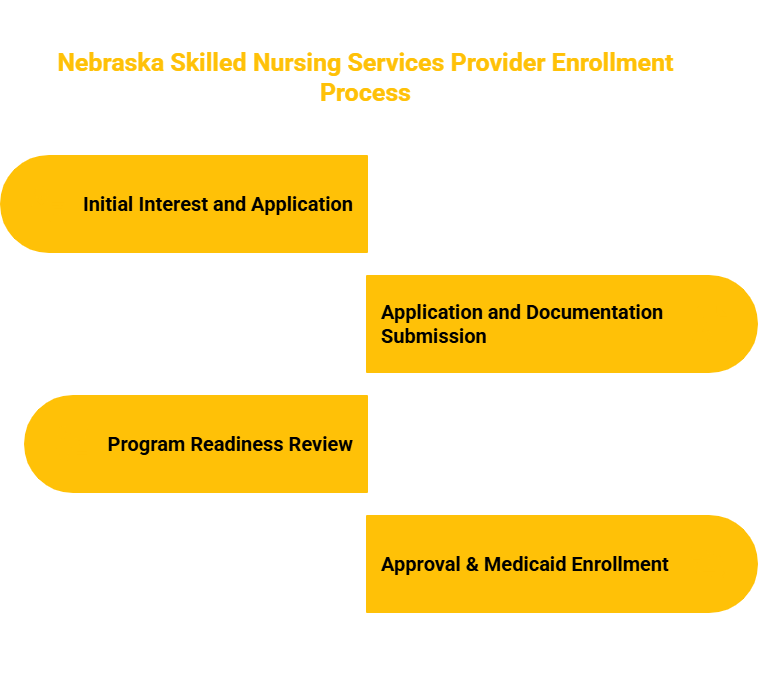
The transition from a licensed entity to a Medicaid-authorized provider follows a structured, sequential path. Initially, the agency must register via the Nebraska Medicaid Provider Enrollment Portal. This application serves as the formal request to participate in the HCBS waiver program. During this phase, the applicant must submit exhaustive documentation, including Articles of Incorporation, proof of NPI and EIN, current nursing licenses for staff, and certificates of insurance.
Following the submission, the DHHS performs a Program Readiness Review. This phase is critical, as state auditors evaluate the agency’s capacity to deliver care safely and effectively. They will scrutinize the agency's internal clinical protocols, safety procedures, and the qualifications of the proposed nursing staff. Upon the successful completion of the review, the provider is formally approved and granted authorization to bill Medicaid for services using specific designated billing codes.
Staffing and Clinical Competency Standards
The quality of a Skilled Nursing program is defined by the caliber of its nursing staff. The program must be led by a Skilled Nursing Program Director, typically holding a BSN or MSN degree, who possesses sufficient supervisory experience to oversee daily clinical operations. This role is supported by Registered Nurses (RNs) and Licensed Practical Nurses (LPNs), all of whom must hold active Nebraska licensure and maintain current CPR and First Aid certifications.
All staff members are subject to rigorous training requirements to ensure clinical competency. These mandatory training modules generally cover:
- Clinical safety and standardized infection control practices.
- Full comprehension of HIPAA privacy standards and patient rights.
- Annual competency evaluations to ensure skills remain aligned with evolving medical standards.
- Ongoing professional development regarding chronic disease management and rapid emergency response.
- Verification of staff through systematic background checks prior to and during employment.
Frequently Asked Questions
What Nebraska Medicaid waivers cover Skilled Nursing Services?
Skilled Nursing Services are currently available under several Nebraska Medicaid waiver programs, including the Aged and Disabled (AD) Waiver, the Traumatic Brain Injury (TBI) Waiver, the Developmental Disabilities (DD) Waiver, the Children with Disabilities Waiver, and the broader Home and Community-Based Services (HCBS) Waiver framework.
What is the typical timeline for launching a Skilled Nursing agency?
The process generally spans several months. Business formation and initial compliance preparation typically require 1–2 months. Staff hiring and program development take 2–3 months. The official Nebraska Medicaid Provider Enrollment and Readiness Review can take between 60–90 days, followed by 30–45 days to finalize the Medicaid billing setup.
What documentation is essential for an agency's policy manual?
An agency must maintain a thorough manual that covers medication management protocols, wound care procedures, chronic disease monitoring, IV therapy standards, patient education methods, staff credentialing procedures, HIPAA compliance strategies, and comprehensive emergency preparedness and crisis management plans.
Key Takeaway
Launching a Skilled Nursing agency in Nebraska is a complex undertaking that requires strict adherence to DHHS and Medicaid regulations. Success relies on meticulous documentation, the hiring of qualified, licensed nursing personnel, and the development of robust, compliant clinical and administrative policies. By systematically aligning with state licensing requirements and completing the formal Medicaid enrollment process, providers can deliver vital, high-quality medical services to individuals in need within the home setting.
Last verified: 2024. This article is for informational purposes only and does not constitute legal or professional medical advice. Always consult with the Nebraska Department of Health and Human Services (DHHS) or legal counsel for the most current regulations and specific requirements regarding Medicaid provider enrollment.