SKILLED NURSING SERVICES PROVIDER IN LOUISIANA
By Fatumata Kaba · 2025-08-12 · 6 min read
Delivering Professional Nursing Care to Support Complex Medical Needs in Community Settings
Skilled Nursing Services in Louisiana provide Medicaid waiver participants with medically necessary nursing care delivered by licensed professionals in home or community-based environments. These services are critical for individuals who require regular medical oversight, complex care management, or support with chronic conditions, enabling them to remain in their homes rather than institutional settings.
What Are the Governing Agencies and Regulatory Frameworks?
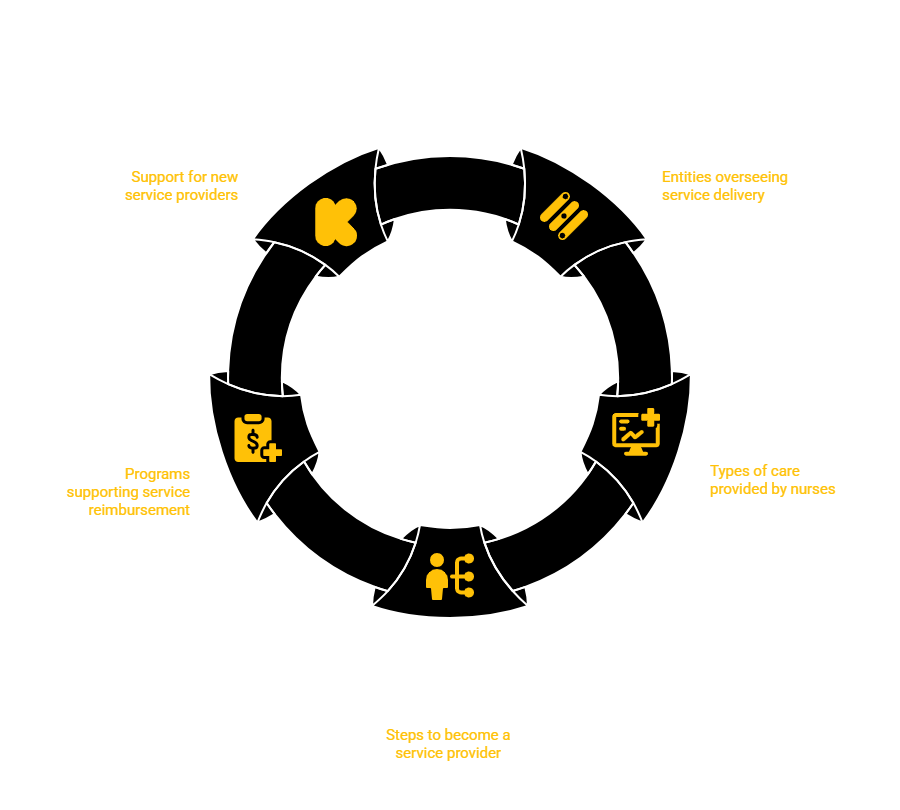
The delivery of Skilled Nursing Services in Louisiana is governed by a multi-layered regulatory environment designed to ensure participant safety and fiscal accountability. At the state level, the Louisiana Department of Health (LDH), specifically through the Office of Aging and Adult Services (OAAS) and the Office for Citizens with Developmental Disabilities (OCDD), defines program requirements and monitors the quality of service delivery within Home and Community-Based Services (HCBS) waivers.
Providers must also interface with the Medicaid Management Information System (MMIS) and Molina Medicaid Solutions, which manage the technical aspects of provider enrollment, claims processing, and reimbursement. Furthermore, federal oversight is provided by the Centers for Medicare & Medicaid Services (CMS) under 1915(c) HCBS waiver programs. At the local implementation level, Managed Care Organizations (MCOs) under the Bayou Health framework authorize specific skilled nursing services based on a participant’s documented Plan of Care (POC), coordinate ongoing care, and issue payments to approved providers.
What Clinical Scope Is Included in Skilled Nursing Services?
Skilled Nursing Services involve professional clinical care delivered by Registered Nurses (RNs) or Licensed Practical Nurses (LPNs). All care must be performed under the supervision of a physician or an authorized waiver case manager. Because these services are reserved for participants with significant health needs, the scope of practice is highly specialized and focused on maintaining stability in the home.
Covered services typically include the following clinical activities:
- Medication administration and complex IV therapy
- Wound care management and catheter maintenance
- Tube feedings and tracheostomy care
- Vital sign monitoring and ongoing skilled health assessments
- Disease management for chronic conditions such as diabetes, COPD, and CHF
- Health teaching and direct caregiver education
- Complex care coordination and clinical reporting
- Emergency response planning and delegated nursing tasks
How Do Providers Meet Licensing and Approval Requirements?
Establishing an agency to provide Skilled Nursing Services requires strict adherence to both business and healthcare regulations. Before enrolling with Medicaid, providers must formally register their business with the Louisiana Secretary of State and secure a federal Employer Identification Number (EIN) and a Type 2 National Provider Identifier (NPI). Depending on the specific business model, the provider may need to obtain Home Health Agency Licensure through the LDH Health Standards Section or, in specific contexts, enroll as an individual licensed nurse.
Operational readiness is a prerequisite for enrollment. Providers must implement comprehensive professional liability and workers’ compensation insurance to mitigate risk. Internally, the agency must develop a robust Skilled Nursing Services Policy & Procedure Manual that outlines clinical workflows, HIPAA-compliant documentation practices, and emergency protocols. Furthermore, the agency must establish a secure electronic health records (EHR) and billing system to ensure that all services remain audit-ready and compliant with state and federal regulations.
What Is the Step-by-Step Provider Enrollment Process?
The enrollment path is a sequenced process that begins with administrative registration and concludes with MCO credentialing. First, applicants must navigate the Louisiana Medicaid Provider Enrollment Portal at https://www.lamedicaid.com to submit an application under the appropriate waiver service category. If the provider is operating as an agency, they must concurrently apply for Home Health Licensure through the LDH Health Standards Section.
Once the initial administrative filings are submitted, the provider must furnish all supporting documentation, including business incorporation documents, nursing license verification, proof of insurance, and representative care plan templates. Following state-level approval, the provider must proceed to MCO credentialing. This step is essential, as MCOs serve as the primary conduit for service referrals and reimbursement. Establishing strong relationships with case managers is equally vital during this phase to ensure a smooth initiation of care for waiver participants.
How Do You Maintain Compliance Through Documentation and Staffing?
Staffing requirements are strictly regulated to protect participant health outcomes. All Registered Nurses (RNs) must hold an active Louisiana license through the Louisiana State Board of Nursing (LSBN) and maintain current CPR certification. Licensed Practical Nurses (LPNs) must also be licensed in Louisiana and are required to work under the direct or indirect supervision of an RN, depending on the complexity of the case. For agencies, a designated Nurse Supervisor or Clinical Director is required to ensure consistent oversight and compliance.
Documentation is the backbone of Medicaid compliance. Every service provider must maintain organized records, including:
- Clinical nursing assessment forms and individualized care plans
- Medication Administration Records (MARs)
- Detailed clinical documentation logs and shift notes
- HIPAA compliance policies and signed participant consent forms
- Emergency protocols and infection control documentation
- Nurse credentialing and license renewal tracking logs
- Billing logs, time sheets, and audit-ready service summaries
Which Medicaid Programs Support Skilled Nursing Services?
Skilled Nursing Services are integrated into several specific Louisiana Medicaid HCBS waiver programs, each designed to support unique populations with varying degrees of medical acuity. These programs include the Residential Options Waiver (ROW), the New Opportunities Waiver (NOW), the Supports Waiver, the Children’s Choice Waiver, and the Community Choices Waiver (CCW). Additionally, skilled services may be provided under Long-Term Personal Care Services (LT-PCS) with proper authorization, and through the Technology Assisted (TA) Program via the Early and Periodic Screening, Diagnostic, and Treatment (EPSDT) benefit.
Service delivery generally occurs in the participant’s home or a community-based residence. Under specific circumstances, and if medically justified by the Plan of Care, these services may also be authorized for delivery in adult day programs or educational settings.
Frequently Asked Questions
What is the typical timeline to launch a Skilled Nursing agency?
The launch process generally spans several months. Business registration and initial staff recruitment typically take 1 to 2 months. Obtaining Home Health Licensure and completing Medicaid enrollment often requires an additional 60 to 90 days. Finalizing staff credentialing and developing the required policy manuals usually takes 1 month, followed by a rolling launch period as MCO approvals are secured.
What types of training must staff undergo?
All nursing staff must complete training in HIPAA compliance, confidentiality standards, and protocols for the prevention of abuse, neglect, and exploitation. Furthermore, staff are required to be proficient in documentation standards, Plan of Care adherence, infection control, and emergency preparedness. Agencies are responsible for maintaining records of annual continuing education for all staff members.
How does the Waiver Consulting Group assist in the start-up process?
WCG provides support for providers seeking to establish Medicaid-approved Skilled Nursing Services. This includes assistance with provider enrollment, home health licensure support, the development of comprehensive Policy & Procedure Manuals, and the creation of staff credentialing and clinical documentation templates. WCG also assists in establishing HIPAA-compliant systems and pathways for care coordination with waiver teams.
Key takeaway: Success in the Louisiana Skilled Nursing market requires a rigorous commitment to clinical documentation, state-mandated licensure, and proactive coordination with MCOs and case managers to ensure seamless service delivery for Medicaid waiver participants.
Last verified: October 2023. This content is for informational purposes only and does not constitute legal or professional advice. Always consult the latest LDH and Medicaid bulletins for specific regulatory updates.