SKILLED NURSING SERVICES PROVIDER IN GEORGIA
By Fatumata Kaba · 2025-07-14 · 5 min read
Skilled Nursing Services in Georgia provide essential, medically necessary care for individuals with chronic conditions or complex health needs, allowing them to remain safely in their own homes. By operating under Georgia’s Medicaid Home and Community-Based Services (HCBS) waiver programs and the Medicaid State Plan, providers deliver high-quality clinical support that upholds patient dignity and independence.
What Are the Governing Bodies and Oversight Frameworks?
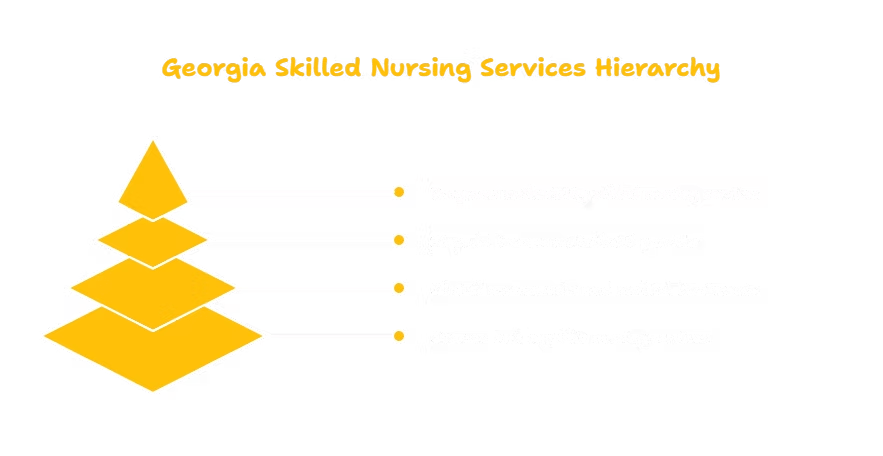
Success in this sector requires navigating a complex regulatory landscape overseen by multiple state and federal entities. The Georgia Department of Community Health (DCH) serves as the primary authority, managing provider enrollment, service authorization, and the critical reimbursement processes that keep the agency operational. Compliance with DCH standards is the baseline for all clinical service delivery in the state.
Furthermore, the Georgia Board of Nursing maintains strict oversight over the licensure and practice standards for Registered Nurses (RNs) and Licensed Practical Nurses (LPNs). Agencies must also align their internal operations with the Centers for Medicare & Medicaid Services (CMS) mandates. CMS provides the overarching federal framework, ensuring that all home health and HCBS services meet rigorous quality, safety, and documentation requirements necessary for federal funding participation.
What Clinical Procedures Are Included in Skilled Nursing Services?
Skilled Nursing Services are defined by clinical complexity, involving assessments, treatments, and ongoing monitoring directed by a licensed physician. To maintain eligibility and reimbursement, all services must be ordered by a physician and clearly documented within the participant’s individualized plan of care. These services act as a vital bridge between institutional care and independent living.
Approved providers are typically expected to deliver a wide array of specialized interventions, including:
- Medication administration, complex medication management, and IV therapy
- Wound care, dressing changes, and pressure sore management
- Tracheostomy care, ventilator support, and respiratory therapies
- Gastrostomy (G-tube) feeding and related interventions
- Diabetic management and insulin injections
- Catheter care and urinary system management
- Chronic disease monitoring and health education
- Emergency intervention planning and caregiver education
How Do You Meet Licensing and Provider Approval Requirements?
Launching a service provider agency begins with formal business entity formation through the Georgia Secretary of State. Once the entity is established, founders must secure an EIN from the IRS and a Type 2 NPI. If the business model involves operating a formal Home Health Agency, it must secure licensure through the DCH Healthcare Facility Regulation Division (HFRD). Alternatively, some models may operate under specific nurse delegation frameworks as dictated by waiver programs.
Beyond basic business registration, operational readiness is tested through rigorous policy development. Agencies are required to carry both professional and general liability insurance to protect the organization and its participants. Developing a robust, DCH-compliant policy and procedure manual is a foundational requirement, as it outlines the standard of care, safety protocols, and HIPAA compliance measures that will govern every interaction between staff and participants.
What Is the DCH Provider Enrollment Process?
The enrollment process is structured to ensure that only qualified, ready-to-operate agencies receive authorization to bill for Medicaid services. Initial interest is processed through the Georgia Medicaid Management Information System (GAMMIS). If the agency is subject to HFRD licensing, this must be completed and approved before the Medicaid enrollment phase can be finalized.
During the application phase, the agency must submit a comprehensive packet, including Articles of Incorporation, proof of NPI/EIN, insurance certifications, and staff credentials. DCH will then conduct a program readiness review. This phase focuses on the agency’s ability to adhere to Medicaid documentation standards and participant safety protocols. In some cases, especially for facility-based models, a site inspection may be conducted to verify that the physical or administrative environment meets state requirements.
What Are the Essential Staffing and Training Requirements?
The quality of care is directly tied to the competency of the clinical team. The Director of Nursing (DON) or Clinical Supervisor must hold an active Georgia RN license and demonstrate at least two years of relevant experience, ideally in home health or complex care settings. All clinical staff, including RNs and LPNs, must undergo thorough background screenings and maintain active Georgia nursing licenses and current CPR certifications.
Beyond initial hiring, agencies must implement a continuous training program. All staff are required to be proficient in:
- HIPAA confidentiality, participant rights, and abuse prevention training
- Emergency response, infection control, and incident reporting training
- Clinical competency assessments and annual skill evaluations
- Ongoing professional development to maintain both licensure and Medicaid compliance
Frequently Asked Questions
Which Medicaid programs authorize Skilled Nursing Services in Georgia?
Skilled Nursing Services are currently authorized under the Comprehensive Supports Waiver Program (COMP), the New Options Waiver Program (NOW), the Independent Care Waiver Program (ICWP), the Georgia Pediatric Program (GAPP), and the Medicaid State Plan for Home Health Services.
How long should a new agency expect the startup process to take?
The timeline varies based on the scope of services, but generally, business formation takes 2–3 weeks, HFRD licensing and readiness reviews take 90–120 days, staffing and credentialing take 30–45 days, and final Medicaid billing system setup takes 45–60 days.
What core policies must be included in the agency’s documentation?
Agencies must maintain documentation covering participant intake, individualized care plans, specific medical protocols (such as wound care or respiratory support), incident reporting, infection control, client rights, HIPAA compliance, and clear systems for Medicaid billing and clinical documentation.
Strategic Implementation and Support
Waiver Consulting Group (WCG) assists healthcare agencies and clinical providers in successfully launching Medicaid-compliant Skilled Nursing Services. WCG provides comprehensive guidance on business registration, HFRD licensing support, policy manual development, staff credentialing systems, and Medicaid billing configuration. By streamlining these administrative hurdles, providers can focus on the critical task of delivering high-quality clinical care. For those seeking additional guidance, the Client Portal provides extensive resources related to state programs and regulatory requirements.
Key Takeaway: Establishing a Skilled Nursing Services provider in Georgia requires a methodical approach to state licensing, DCH program enrollment, and strict adherence to clinical documentation standards. By aligning business operations with the specific requirements of the COMP, NOW, ICWP, GAPP, and State Plan programs, agencies can effectively support the health and independence of Georgia’s most vulnerable populations.
Last verified: 2024. This content is for informational purposes only and does not constitute legal or medical advice. Please consult directly with the Georgia Department of Community Health or qualified legal counsel regarding specific state requirements and individual agency compliance.