SKILLED NURSING SERVICES PROVIDER IN CALIFORNIA
By Fatumata Kaba · 2025-07-07 · 5 min read
Delivering licensed medical care in the home is a critical component of California’s healthcare infrastructure, promoting stability, recovery, and quality of life for individuals with complex health needs. Skilled Nursing Services in California provide physician-directed medical support that allows patients to remain in their communities, effectively preventing unnecessary institutionalization while adhering to the stringent regulatory standards set by state and federal authorities.
Navigating the Regulatory Landscape for Skilled Nursing Services
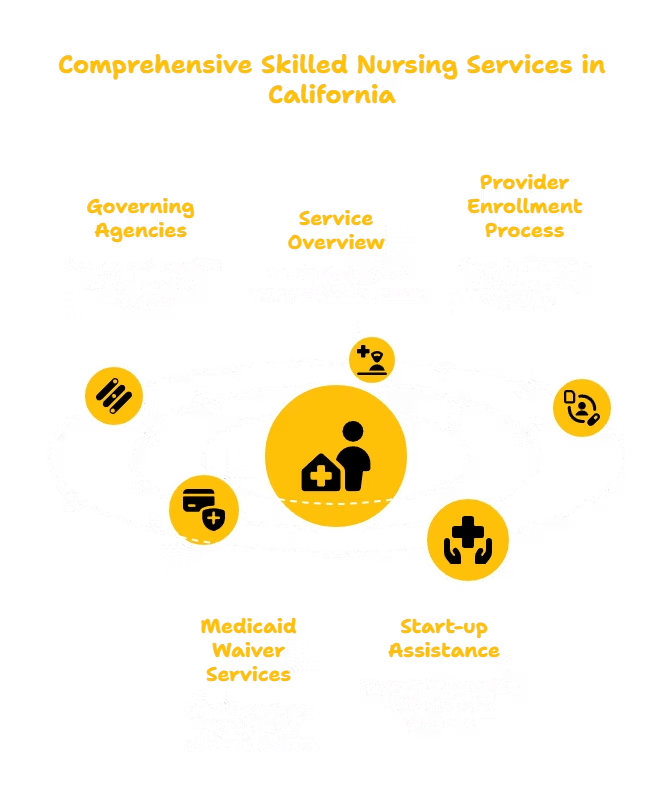
The delivery of skilled nursing in a home setting is governed by a multi-layered regulatory framework. At the state level, the California Department of Health Care Services (DHCS) acts as the primary agency for administering Medi-Cal and overseeing the funding streams associated with Home and Community-Based Services (HCBS) waivers. Concurrently, the California Department of Public Health (CDPH) is responsible for the licensure of Home Health Agencies (HHAs) and the enforcement of Title 22 regulations, which dictate the standards for patient care and facility operation.
In addition to state oversight, federal standards apply when services intersect with Medicare or broader Medicaid requirements. The Centers for Medicare & Medicaid Services (CMS) provides the overarching federal guidelines that ensure consistency, quality, and safety in nursing practices. Prospective providers must navigate these regulatory bodies simultaneously, ensuring that every operational policy aligns with both the state licensing mandates and the specific reimbursement requirements of the programs they intend to participate in.
Defining the Scope of Skilled Nursing Services
Skilled Nursing Services are characterized by the delivery of direct medical interventions by a Registered Nurse (RN) or a Licensed Vocational Nurse (LVN) operating under a physician’s written order. These services are intended for individuals whose medical condition is sufficiently complex to require regular clinical oversight that cannot be provided by non-medical caregivers. The clinical objective is to manage chronic or acute health issues within the home, thereby maintaining a patient's health status and avoiding hospital or nursing facility placement.
Approved providers must be prepared to offer a robust range of clinical services tailored to the specific needs of their patient population. Typical services authorized under these programs include:
- Medication administration and complex IV therapy
- Wound care, catheter maintenance, and tracheostomy management
- Feeding tube maintenance, monitoring, and nutritional oversight
- Chronic disease management (e.g., diabetes, cardiac, or pulmonary conditions)
- Skilled clinical assessments and comprehensive nursing documentation
- Coordination of care between primary care physicians and interdisciplinary teams
- Emergency planning, caregiver training, and health education
Licensing and Enrollment Prerequisites
Establishing a Skilled Nursing agency requires a systematic approach to business formation and regulatory compliance. Before a provider can begin receiving referrals or seeking reimbursement, they must establish a formal business entity with the California Secretary of State and secure a federal Employer Identification Number (EIN). Furthermore, obtaining a Type 2 National Provider Identifier (NPI) is essential for any organizational entity functioning as a healthcare provider.
The path to operation involves several sequential milestones, starting with the application for a Home Health Agency (HHA) license through the CDPH. Once licensed, the agency must move into the enrollment phase via the Medi-Cal Provider Application and Validation for Enrollment (PAVE) portal. Agencies intending to provide services specifically for waiver participants, such as those under the Nursing Facility/Acute Hospital (NF/AH) Waiver, must complete additional program-specific enrollment to ensure eligibility for reimbursement for those specialized services.
Establishing Documentation and Operational Compliance
Regulatory audits are a constant reality for home health providers. Therefore, implementing a comprehensive policy and procedure manual is not merely a bureaucratic task but a clinical requirement. Documentation systems must be HIPAA-compliant and capable of tracking physician orders, nursing care plans, medication administration records, and infection control logs. These records form the evidence base for medical necessity during state and federal reviews.
An effective compliance program will include specific protocols for incident reporting, quality assurance, and ongoing staff credentialing. Agencies must maintain organized files that document the training and licensure verification of every nurse on staff. Whether for Medi-Cal State Plan billing or waiver program reporting, the ability to produce accurate, timely, and detailed documentation is the primary factor in sustaining a viable healthcare operation.
Staffing Standards and Clinical Supervision
Quality of care is intrinsically linked to the qualifications and supervision of the nursing staff. A Registered Nurse (RN) in this setting must hold an active California license and possess the professional experience necessary to handle complex home-based care. While Licensed Vocational Nurses (LVNs) may provide direct care, they must work under the ongoing supervision of an RN, in accordance with the scope of practice regulations.
Central to agency operations is the Director of Patient Care Services (DPCS) or the Clinical Supervisor. This individual must be an RN with a minimum of two years of clinical experience, including at least one year of specific experience in home health supervision. Beyond clinical credentials, all staff must undergo rigorous training in HIPAA protocols, infection control, emergency response, and cultural competence to ensure a holistic approach to patient care.
Frequently Asked Questions
What is the difference between Medi-Cal State Plan and HCBS Waiver skilled nursing?
Medi-Cal State Plan benefits provide foundational skilled nursing services for eligible beneficiaries based on general medical necessity. HCBS waivers, such as the NF/AH or HCBA waivers, are designed to provide enhanced services to individuals who meet a specific level of care that would otherwise require institutionalization in a hospital or nursing facility.
How long does the licensing and enrollment process typically take?
While timelines vary based on application volume, business formation usually takes 1–2 weeks, whereas the CDPH HHA licensing process can take 3–6 months. Medi-Cal enrollment through PAVE typically takes 60–90 days, and additional waiver program enrollment often requires an additional 30–60 days.
Are providers required to be Medicare-certified?
While Medicare certification is not always mandatory for all Medi-Cal-only services, it is a common requirement for Home Health Agencies that operate under broader state licensing regulations. Providers should verify the specific requirements of their intended programs to determine if Medicare Conditions of Participation apply to their operations.
Key Takeaway
Success in the California skilled nursing sector requires a balance between rigorous clinical compliance and disciplined administrative management. By adhering to the standards set by the CDPH, DHCS, and CMS—and by maintaining meticulous documentation and staffing protocols—providers can effectively deliver essential medical services to vulnerable populations while ensuring the long-term sustainability of their agency.
Last verified: 2024. Disclaimer: This information is for educational purposes only and does not constitute legal or professional advice. Regulatory requirements are subject to change; please consult the official websites of the California Department of Health Care Services (DHCS) and the California Department of Public Health (CDPH) for the most current guidance.