SHARED CARE SERVICES PROVIDER IN ALASKA
By Fatumata Kaba · 2025-07-03 · 5 min read
Shared Care Services in Alaska provide a structured, supportive living arrangement for two or more individuals with intellectual and/or developmental disabilities (IDD) who reside together in a shared home setting. Authorized under Alaska’s Home and Community-Based Services (HCBS) Medicaid Waiver programs, this service model focuses on delivering coordinated habilitation and support services to promote independence, social integration, and personal safety while respecting the unique needs of every resident.
What are the foundational goals and regulatory requirements for Shared Care?
The primary objective of Shared Care Services is to foster a family-style environment that balances individual autonomy with necessary support. By living together, individuals can share the costs of a household while benefiting from professional, person-centered care that addresses activities of daily living (ADLs), health monitoring, and community engagement. This model is strictly governed by the Alaska Department of Health’s Division of Senior and Disabilities Services (SDS), which ensures that all homes meet high standards for safety, health, and service delivery quality.
Federal oversight is provided by the Centers for Medicare & Medicaid Services (CMS). CMS mandates that all HCBS programs, including Shared Care, must operate within a least-restrictive environment. This ensures that the services provided prioritize community integration rather than institutionalization. Providers are expected to maintain rigorous compliance with state and federal regulations, requiring detailed documentation that proves services are being delivered according to each individual’s specific person-centered plan.
How does the provider enrollment process work with SDS?
Launching a Shared Care program begins with the provider submitting an application to the Division of Senior and Disabilities Services (SDS). Prospective providers must first attend an orientation session hosted by SDS, which outlines the expectations regarding habilitation, shared living models, and the specific requirements for compliance. Following orientation, the provider must draft a comprehensive service plan that details how the home will be managed, how residents will be supported, and the strategies for maintaining a safe and healthy living environment.
Once the application and service plans are submitted, the provider enters the inspection and readiness phase. SDS personnel conduct a site inspection of the proposed residence to evaluate safety systems, accessibility, and overall suitability for the residents. Simultaneously, the provider must demonstrate that all caregivers and staff have passed stringent background checks and completed the mandatory training. Only after SDS provides formal approval can the organization proceed to enroll as a Medicaid provider through the Alaska Medicaid Management Information System (MMIS) and begin the credentialing process for billing.
What operational standards must be met to ensure compliance?
Operational excellence is maintained through a robust set of policies and procedures that every provider must possess. A compliant policy manual must cover the entire lifecycle of the resident's stay, including admission, roommate matching, and discharge protocols. Because Shared Care involves living with others, the provider is specifically responsible for implementing clear procedures for conflict resolution and housemate management, ensuring that the preferences and privacy of every resident are protected within the shared space.
In addition to behavioral and social management, providers must maintain detailed service documentation. This includes keeping track of daily progress, individual goal achievement, health monitoring, and medication reminders. Effective record-keeping is not merely an administrative burden; it is the primary evidence used during audits to verify that the provider is meeting the individual service agreements outlined in the Medicaid waivers. Failure to document services adequately can lead to payment denials or the loss of provider certification.
What are the staffing requirements for a Shared Care home?
The success of a Shared Care home relies heavily on the competence and compassion of the staff. Each residence requires a designated Program Supervisor or Home Manager who holds experience in managing residential settings. This role is responsible for overseeing the daily operations, supervising staff, and ensuring that the home environment remains aligned with the person-centered goals of each individual resident.
Direct support staff or caregivers must meet specific educational and professional benchmarks, including holding a high school diploma or GED and successfully passing thorough background investigations. Beyond basic requirements, all staff members must participate in specialized training programs provided or approved by SDS. This curriculum typically includes:
- Person-centered planning and habilitation documentation.
- Confidentiality and HIPAA compliance.
- Emergency preparedness and incident reporting protocols.
- Behavioral support techniques and conflict resolution strategies.
- Annual refreshers on client rights, dignity, and safety standards.
Which Medicaid Waivers support Shared Care services?
Shared Care is authorized under specific Alaska Medicaid Waivers designed to support individuals with disabilities in their local communities. The primary waiver programs that include these services are the Individuals with Intellectual and Developmental Disabilities (IDD) Waiver and the Adults with Physical and Developmental Disabilities (APDD) Waiver. In specific cases, the Children with Complex Medical Conditions (CCMC) Waiver may also authorize these services, depending on the age of the individual and the setting of the home.
Providers must be aware that billing codes are specific to each waiver and must be properly configured within the MMIS system. Because services must be individualized even within a shared group setting, the documentation for a resident under the IDD waiver may differ slightly in focus from one under the APDD waiver. Providers should maintain active communication with case managers and the SDS regional offices to ensure that all services billed are strictly aligned with the current, authorized care plan for every resident in the home.
Frequently Asked Questions
What is the typical timeline to launch a Shared Care home?
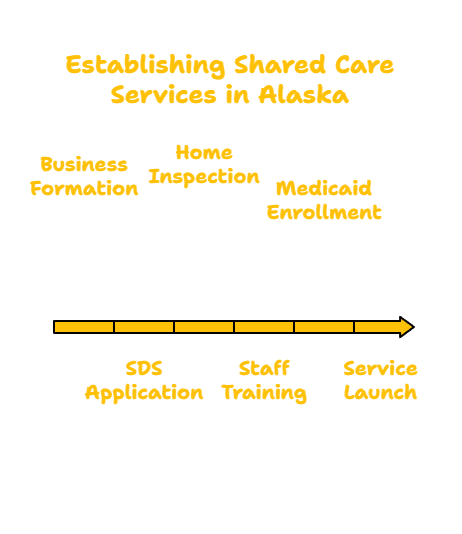
The timeline varies based on the provider's readiness, but generally, the process takes several months. Business formation and home preparation take approximately 1–2 weeks, followed by a 60–90 day window for the SDS application and inspection process. Staff onboarding usually requires 30–45 days, and final Medicaid enrollment through the MMIS system takes an additional 45–60 days.
What are the primary responsibilities of a Shared Care provider regarding documentation?
Providers are responsible for maintaining individual records for every resident. This includes daily progress tracking related to habilitative goals, records of medication administration, health monitoring logs, incident reports, and documentation regarding resident rights and personal preferences. All of this must be easily accessible for SDS audits.
How does roommate matching work in a Shared Care setting?
Roommate matching is a critical component of the service. Providers are required to establish a formal policy for matching, which includes assessing compatibility in daily routines, behavioral needs, and social preferences. The goal is to create a living arrangement where residents feel comfortable and supported, and the provider must have documented procedures in place to resolve conflicts if they arise.
Key Takeaway
Establishing a Shared Care Services provider agency in Alaska requires a rigorous commitment to SDS standards, careful planning for resident compatibility, and strict adherence to Medicaid documentation protocols. By focusing on person-centered care and maintaining a high level of operational transparency, providers can effectively support individuals with disabilities in achieving greater independence and a high quality of life within a shared residential environment.
Last verified: October 2023. This information is provided for educational purposes and reflects general guidance on Alaska Medicaid HCBS programs. Regulations, policies, and requirements are subject to change. Providers should consult directly with the Alaska Department of Health – Division of Senior and Disabilities Services for the most current program information and official guidance.