RESPITE CARE SERVICES PROVIDER IN WISCONSIN
By Fatumata Kaba · 2026-04-14 · 5 min read
OFFERING TEMPORARY RELIEF FOR CAREGIVERS WHILE ENSURING SAFE, COMPASSIONATE SUPPORT FOR INDIVIDUALS WITH DISABILITIES OR COMPLEX HEALTH NEEDS
Respite Care Services in Wisconsin provide essential temporary relief for unpaid primary caregivers of individuals with disabilities, serious illnesses, or functional limitations, ensuring that participants receive continuous, high-quality care while their support systems recharge. By offering both in-home and community-based alternatives, these services promote long-term stability for families while upholding the health, safety, and routine continuity required under Wisconsin’s Home and Community-Based Services (HCBS) Medicaid waiver programs.
As the demand for professional respite care grows, agency founders must navigate a complex landscape of regulatory oversight managed by the Wisconsin Department of Health Services (DHS). Successfully operating as a provider requires a thorough understanding of program requirements, including integration with IRIS (Include, Respect, I Self-Direct), Family Care, and the Children’s Long-Term Support (CLTS) program.
Navigating the Regulatory Framework and Governing Agencies
The delivery of respite care in Wisconsin is governed by a multi-tiered regulatory structure. The Wisconsin Department of Health Services (DHS) serves as the primary authority, responsible for administering HCBS waivers, establishing service delivery standards, and overseeing the licensure of residential facilities. Understanding the hierarchy of these agencies is the first step for any provider seeking to achieve and maintain compliance.
Operational coordination is managed at the local level through Managed Care Organizations (MCOs), IRIS Consultant Agencies (ICAs), and county waiver agencies. These entities are responsible for authorizing individual service plans, vetting provider qualifications, and managing the ongoing delivery of care. Additionally, the ForwardHealth portal serves as the critical interface for Medicaid provider enrollment and the submission of claims for eligible services.
- Wisconsin Department of Health Services (DHS): Sets state-wide standards and manages waiver administration.
- MCOs, ICAs, and County Waiver Agencies: Act as the direct points of contact for service authorization and provider approval.
- ForwardHealth: The centralized hub for Medicaid billing systems and provider credentialing.
Core Models of Respite Care Delivery
Respite care is designed to offer short-term, intermittent relief that aligns strictly with the participant's Individual Support Plan (ISP) or Long-Term Care Functional Screen (LTCFS). Providers must ensure that the format of care delivered meets the specific needs outlined in the participant's plan, ranging from routine supervision to intensive medical support.
Flexibility is a hallmark of the Wisconsin system, with options ranging from in-home visits to facility-based stays. Whether providing emergency crisis support or planned coverage for family vacations, the service must consistently prioritize the individual's safety and well-being. Documentation is vital; every hour of respite must be clearly recorded to reflect the care provided and its alignment with the approved waiver goals.
- In-Home Respite: Care provided within the participant’s private residence.
- Facility-Based Respite: Delivered in licensed Adult Family Homes, Community-Based Residential Facilities (CBRFs), or dedicated respite centers.
- Crisis/Emergency Respite: Unplanned, temporary support triggered by family emergencies or sudden gaps in primary care.
Steps to Establish a Compliant Provider Agency
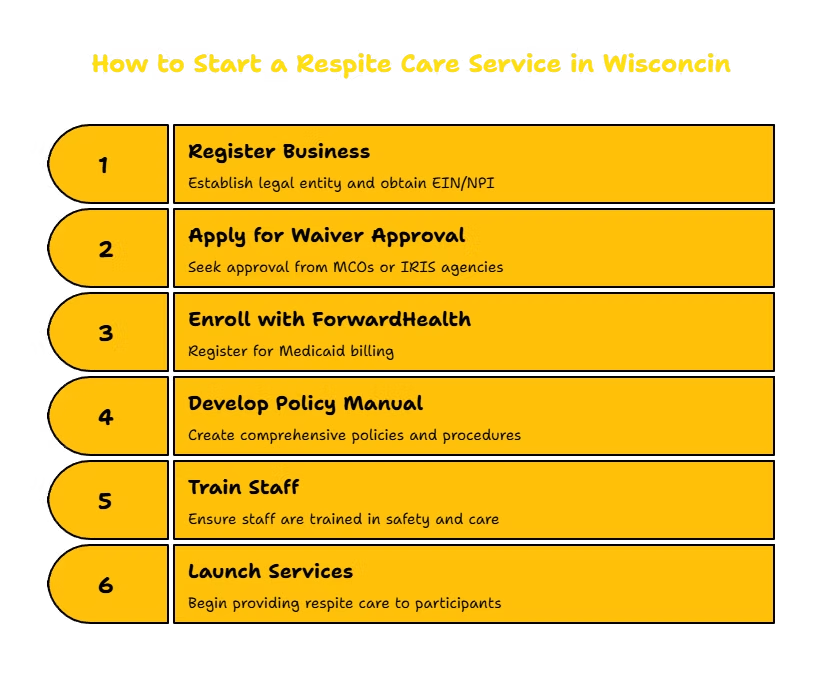
The launch of a respite care agency follows a sequenced process that transitions from business formation to operational readiness. Prospective providers must first establish a legal business entity with the Wisconsin Department of Financial Institutions (DFI) and secure a Federal EIN and Type 2 NPI. For those intending to offer facility-based services, obtaining a residential license from DHS is a mandatory precursor to any client engagement.
Once the business foundation is set, the focus shifts to enrollment with the specific entities that fund these services. This involves submitting detailed credentials, undergoing background checks, and ensuring that all organizational policies are fully developed and documented. Providers should prepare for a rigorous vetting process that scrutinizes their capacity to deliver safe, consistent care in accordance with state expectations.
- Phase 1: Business registration and NPI/EIN acquisition.
- Phase 2: Application for waiver-approved status through MCOs or IRIS agencies.
- Phase 3: Medicaid enrollment via the ForwardHealth portal.
- Phase 4: Submission of staff credentials, safety policies, and service templates.
Developing Essential Policies and Procedures
A comprehensive Policy and Procedure (P&P) Manual is the cornerstone of a compliant respite care agency. This document serves as the internal roadmap for staff, ensuring that all operations adhere to state laws and the requirements of the participants' ISPs. The manual must cover everything from day-to-day administrative tasks to high-stakes emergency protocols.
Key sections of the P&P Manual should address staff supervision, behavioral de-escalation techniques, and precise incident reporting. Furthermore, the manual must outline the exact methods for billing and documenting daily service notes. Because these records are subject to review by MCOs and DHS auditors, the clarity and completeness of these documents directly impact the agency's ability to maintain its approved provider status.
- Staffing Protocols: Procedures for supervision, training, and ongoing performance evaluation.
- Health and Safety: Emergency escalation procedures and seizure protocols.
- Operational Documentation: Templates for daily logs, incident reports, and participant intake forms.
Staffing, Training, and Professional Standards
The quality of respite care is inherently tied to the competence of Direct Support Professionals (DSPs). All staff members must be at least 18 years of age and undergo mandatory background checks in compliance with the Wisconsin Caregiver Law. Beyond these baseline requirements, staff must be equipped with the specific skills necessary to support individuals with unique needs, such as personal care, behavioral support, or mobility assistance.
Training programs must be robust and ongoing. Every staff member is required to demonstrate competency in CPR, First Aid, HIPAA compliance, and abuse/neglect reporting. For facilities operating as CBRFs or AFHs, staff must also meet specific licensing-driven training requirements. A culture of continuous learning ensures that staff remain prepared to handle the complexities associated with diverse waiver participant needs.
Frequently Asked Questions
How is respite care different from other long-term care services?
Respite care is specifically designed for short-term, intermittent relief rather than long-term daily support. It is intended to support the primary caregiver, whereas other services may focus on the ongoing, day-to-day maintenance of the participant's health and independence.
What is the role of an IRIS Consultant Agency (ICA) in the respite process?
The ICA assists participants in the IRIS program by facilitating the development of their Individual Support and Service Plan (ISSP). They play a critical role in authorizing respite services and ensuring that the selected provider meets all program criteria for self-directed care.
Is Medicaid billing required for all respite care providers?
While Medicaid is a primary funder for many waiver programs, provider enrollment in ForwardHealth is specifically required if the agency intends to bill Medicaid directly. Providers should confirm their billing requirements with the MCOs or IRIS agencies with which they contract.
Key Takeaway
Launching a respite care agency in Wisconsin requires a disciplined approach to regulatory compliance, a commitment to high-standard staff training, and seamless integration with the state’s managed care and self-directed waiver infrastructure. By meticulously following the requirements set forth by the Department of Health Services and the local oversight agencies, providers can successfully deliver a service that is both operationally sustainable and vital to the well-being of the communities they serve.
Last verified: [Insert Date]. This content is for informational purposes only and does not constitute legal or professional advice. Requirements for Medicaid waivers and provider licensing are subject to change; always consult the official Wisconsin Department of Health Services and ForwardHealth portals for the most current regulations and policy updates.