RESPITE CARE SERVICES PROVIDER IN WEST VIRGINIA
By Fatumata Kaba · 2026-04-14 · 5 min read
Respite care services in West Virginia provide critical, temporary relief to primary caregivers of individuals with chronic illnesses, disabilities, or age-related conditions, allowing them time for personal rest or essential life demands. These Medicaid-funded services ensure that participants continue to receive high-quality, supportive care in their home or community settings while their primary caregivers are unavailable. Oversight for these programs is managed by the West Virginia Department of Health and Human Resources (WVDHHR) and the Bureau for Medical Services (BMS).
What Are the Governing Agencies and Oversight Bodies for West Virginia Respite Care?
The provision of respite care is strictly regulated to ensure participant safety and fiscal accountability. The West Virginia Department of Health and Human Resources (WVDHHR) serves as the primary state agency responsible for overseeing all Medicaid waiver services and setting the standards for provider participation. Within this framework, the Bureau for Medical Services (BMS) acts as the authority for managing Medicaid billing, processing claims, and enforcing state-level policy compliance.
In addition to state agencies, Acentra Health (formerly Kepro) plays a vital operational role in the administration of these services. Acentra Health is responsible for conducting service authorizations, performing participant assessments, and reviewing the Individualized Service Plan (ISP) or Person-Centered Support Plan (PCSP). Providers must coordinate closely with these entities to ensure that all delivered services are properly authorized and align with the participant’s approved care plan.
What Does the Scope of Respite Care Services Include?
Respite care is designed as intermittent or scheduled support that allows the primary caregiver a temporary break. The services can be delivered within the participant’s private home, a certified provider’s residence, or appropriate community settings. The core objective is to maintain the continuity of the participant’s routine while offering a safe and engaging environment during the caregiver’s absence.
The scope of care typically encompasses the following support activities:
- Supervision and companionship for the participant.
- Assistance with Activities of Daily Living (ADLs) such as grooming or mobility.
- Medication reminders (note: providers are strictly prohibited from administering medication).
- Meal preparation and light housekeeping tasks.
- Behavioral redirection and proactive safety monitoring.
- Engagement in recreational or social activities suitable for the participant.
What Are the Prerequisites for Becoming a Medicaid Respite Care Provider?
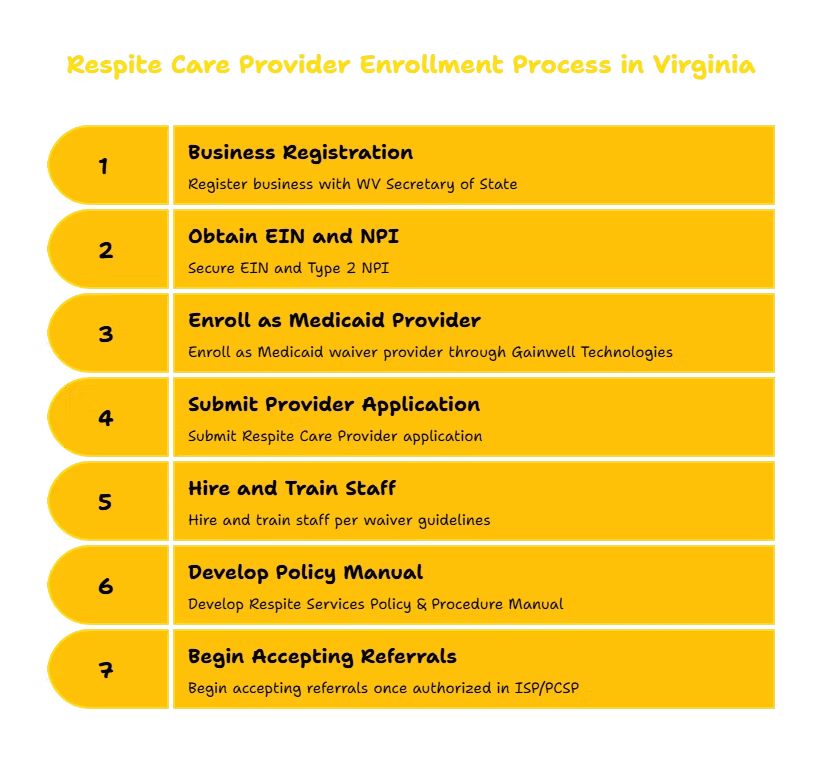
Becoming an approved provider requires strict adherence to both state business registration and Medicaid enrollment protocols. Agencies must first establish their business entity with the West Virginia Secretary of State and obtain an Employer Identification Number (EIN) and a Type 2 National Provider Identifier (NPI). These are the foundational credentials necessary to participate in the Medicaid program.
Following initial registration, providers must engage with Gainwell Technologies, which handles the Medicaid waiver provider enrollment. The agency must submit a comprehensive Respite Care Provider application specific to the waiver program under which they intend to operate. Furthermore, the agency must develop a formal Respite Services Policy & Procedure Manual, which must be submitted for review to demonstrate that the provider understands and can comply with safety, documentation, and reporting requirements.
What Is the Required Documentation and Staffing Protocol?
Successful agencies maintain meticulous records to satisfy audit requirements and ensure quality of care. The Policy & Procedure Manual must outline clear protocols for participant safety, emergency response, incident reporting, HIPAA compliance, and clear documentation of service time logs. These documents form the backbone of the provider's operations and must be readily available for review by regulatory auditors.
Staffing requirements are equally stringent to ensure the safety of vulnerable participants. All direct support professionals (DSPs) must meet specific eligibility standards:
- Must be at least 18 years of age.
- Completion of a mandatory background check via the WV CARES portal.
- Mandatory training in abuse prevention, emergency response, and proper documentation procedures.
- Current CPR/First Aid certification in accordance with waiver-specific guidelines.
- Periodic HIPAA and confidentiality training refreshers.
Which Medicaid Waivers Cover Respite Care in West Virginia?
Respite services are integrated into several distinct Medicaid waiver programs, each tailored to specific participant populations. Providers should be familiar with the nuances of each waiver, as eligibility and service limits are determined by the participant's individual assessment and the specific provisions of the respective waiver program.
The primary programs include the following:
- Aged and Disabled Waiver (ADW): Focused on in-home respite for adult participants.
- Intellectual/Developmental Disabilities (I/DD) Waiver: Allows for respite in the home or approved licensed settings.
- Children with Serious Emotional Disorder Waiver (CSEDW): Provides community-based respite specifically for children.
- Traumatic Brain Injury Waiver (TBIW): Offers limited respite services based on the specific needs outlined in the ISP.
Frequently Asked Questions
How long does the provider enrollment process take?
The overall timeline for launching a service is approximately 3 to 6 months. This includes 2–4 weeks for business formation, 3–5 weeks for staff hiring and credentialing, and 1–2 months for Medicaid and waiver provider approvals. Services can only commence after full authorization is reflected in the participant’s ISP/PCSP.
Can respite care workers administer medication to participants?
No. Under West Virginia Medicaid policy, respite care workers are authorized only to provide medication reminders. They are strictly prohibited from the physical administration of medication, which must be managed by the family or a licensed medical professional if required.
Are Registered Nurses (RN) required for respite services?
An RN supervisor is not required for non-medical respite care. However, if a participant’s condition necessitates skilled oversight or complex medical monitoring, an RN licensed in West Virginia may be involved for consultation and oversight, provided it aligns with the participant's approved care plan.
Key Takeaways for Provider Agencies
Launching a respite care agency in West Virginia requires a high degree of administrative rigor, focusing on regulatory compliance through the WVDHHR, BMS, and Acentra Health. Success depends on maintaining updated Policy & Procedure Manuals, conducting thorough staff credentialing through WV CARES, and ensuring that every hour of service is documented according to waiver-specific guidelines. By focusing on these core operational pillars, agencies can ensure they remain compliant while providing essential support to families in need.
Last verified: October 2023. This information is provided for educational purposes only and does not constitute legal or professional advice. Always consult the latest policy manuals and official guidance from the West Virginia Bureau for Medical Services (BMS) before implementing operational changes.