RESPITE CARE SERVICES PROVIDER IN WASHINGTON
By Fatumata Kaba · 2026-04-06 · 5 min read
GIVING FAMILY CAREGIVERS A BREAK WHILE ENSURING SAFE, COMPASSIONATE SUPPORT FOR LOVED ONES AT HOME OR IN THE COMMUNITY
Respite Care Services in Washington provide essential temporary relief for primary caregivers of individuals with disabilities, chronic illnesses, or age-related limitations. By providing professional, short-term support, these services allow primary caregivers the necessary time to rest, manage personal responsibilities, and prevent burnout while ensuring their loved ones receive high-quality, continuous care.
Respite services are integrated into several Washington Medicaid waiver programs, including the Community First Choice (CFC) program, Core Waiver, Basic Plus Waiver, and the Individual and Family Services (IFS) waiver. Oversight for these programs is primarily managed by the Developmental Disabilities Administration (DDA) and the Department of Social and Health Services (DSHS), while the Health Care Authority (HCA) handles Medicaid reimbursement through the Apple Health system.
How Do Washington State Agencies Govern Respite Care Services?
The regulatory landscape for respite care in Washington is multi-tiered, involving specific state departments that each play a distinct role in authorization and oversight. Understanding these roles is critical for any agency administrator, as compliance requires coordination across these bodies to ensure that services remain eligible for Medicaid reimbursement.
The Developmental Disabilities Administration (DDA) acts as the primary entity for authorizing and monitoring services for individuals with developmental disabilities. Concurrently, the Department of Social and Health Services (DSHS) oversees critical infrastructure, including licensing standards for residential facilities and the management of programs that support caregivers. Finally, the Health Care Authority (HCA) manages the financial aspect of the program, ensuring that all claims adhere to Apple Health policy compliance and Medicaid standards.
What Types of Respite Care Models Are Authorized?
Respite care is designed to be flexible to meet the diverse needs of families across the state. These services provide unpaid caregivers a short-term break, with care delivered by trained professionals who are held to state-mandated standards. Because these services are funded through Medicaid, they must be formally listed in the individual’s Person-Centered Service Plan (PCSP) and pre-authorized by the appropriate funding body.
Providers generally offer the following models of support:
- In-Home Respite Care: Services provided directly in the participant's home by a Direct Support Professional (DSP).
- Out-of-Home Respite: Care delivered in a licensed adult family home, assisted living facility, or a certified respite home environment.
- Community-Based Respite Programs: Structured supervision and engagement activities offered in group settings.
- Planned or Emergency Respite: Scheduled relief for long-term caregiver support, or crisis-driven coverage for immediate, unexpected needs.
What Are the Prerequisites for Becoming an Approved Provider?
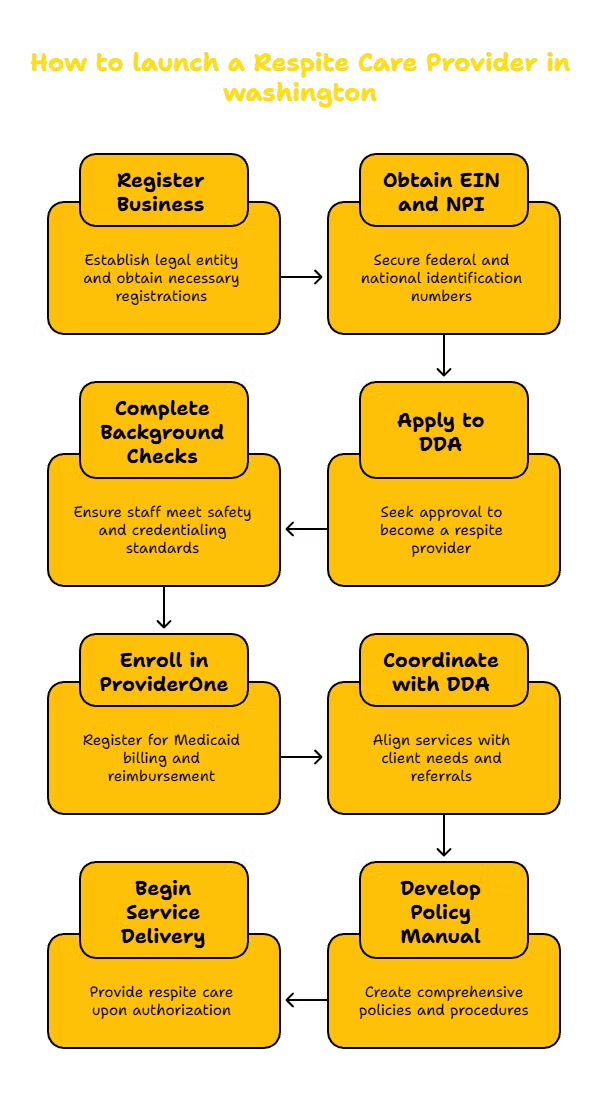
Launching a respite care agency requires strict adherence to state registration and Medicaid enrollment pathways. The process begins with establishing the legal business structure, which involves registering with the Washington Secretary of State, obtaining an Employer Identification Number (EIN), and securing a Type 2 National Provider Identifier (NPI).
Once the business is legally established, the provider must demonstrate compliance with state-specific requirements. This includes qualifying as a DDA Respite Provider and, for those offering out-of-home services, obtaining the necessary DSHS residential care license. The provider must then complete the enrollment process within the ProviderOne system, which is the centralized portal for managing Medicaid billing and claims in Washington.
How Can Agencies Develop a Robust Operational Framework?
Success in the respite sector is heavily reliant on a comprehensive Policy & Procedure Manual. This document serves as the foundation for daily operations, ensuring that all staff remain compliant with HIPAA regulations, participant rights, and safety standards. Administrators should ensure that their documentation tools, such as daily logs, time sheets, and shift notes, are standardized to support accurate billing and clinical oversight.
Key operational components that must be documented include:
- Caregiver Communication: Protocols for coordinating services with families and updating service plans.
- Staff Oversight: Clearly defined incident response protocols and supervisory structures.
- Safety and Clinical Standards: Detailed procedures for medication management, emergency response, and participant health monitoring.
- Accountability: Established grievance processes and procedures for internal auditing of staff training logs and background check clearances.
What Are the Staffing and Training Requirements for Respite Workers?
The quality of respite care is inherently tied to the competence of the Direct Support Professionals (DSPs) providing the care. All staff members are required to pass comprehensive DSHS background checks. Furthermore, they must maintain current certifications in CPR and First Aid. Depending on the setting of the care, staff must complete DDA-approved training, which often includes a 75-hour core training, orientation, and specific skills development modules.
Beyond initial certification, ongoing professional development is expected. This includes mandatory training in HIPAA compliance, the protection of client rights, abuse prevention, and specialized care skills tailored to the specific needs of the population being served. Agencies are responsible for maintaining rigorous documentation of these trainings and conducting regular competency evaluations to ensure high-quality, safe support.
Frequently Asked Questions
Which Medicaid waiver programs cover respite care?
Respite is covered under the Community First Choice (CFC) program, Core Waiver, Basic Plus Waiver, and the Individual and Family Services (IFS) Waiver. Additionally, the Tailored Supports for Older Adults (TSOA) program provides short-term caregiver support for specific non-Medicaid populations.
What is the typical timeline to launch a respite care agency?
The process generally takes several months: 2–3 weeks for business registration and initial onboarding, 4–8 weeks for DDA approval and Medicaid enrollment, and 2–4 weeks for developing policy manuals and staff training systems. Actual service delivery begins once the individual's PCSP is authorized.
Where can providers go for help with the enrollment process?
Providers should coordinate directly with the DDA or their assigned case managers. Official portals for enrollment and policy verification include the DDA website, the DSHS ALTSA site for licensing information, and the ProviderOne portal for Medicaid billing registration.
Key Takeaway: Establishing a compliant respite care agency in Washington requires precise navigation of DDA and DSHS regulations, rigorous staff credentialing, and meticulous documentation of service delivery through the ProviderOne portal. By aligning business operations with the specific requirements of the PCSP and the individual’s chosen Medicaid waiver, providers can ensure both regulatory compliance and the delivery of essential, high-quality support to caregivers and their families.
Last verified: September 2024. This information is for educational purposes only and does not constitute legal or professional consulting advice; requirements may be subject to change by the state of Washington or federal governing bodies.