RESPITE CARE SERVICES PROVIDER IN VERMONT
By Fatumata Kaba · 2026-04-09 · 7 min read
OFFERING RELIEF TO FAMILY CAREGIVERS WHILE ENSURING INDIVIDUALS WITH DISABILITIES RECEIVE SAFE, COMPASSIONATE, TEMPORARY CARE
Respite care services in Vermont are essential support systems that provide short-term relief to unpaid family caregivers, allowing them to take a much-needed break from the intensive responsibilities of caring for individuals with developmental disabilities, physical impairments, or chronic medical needs. By facilitating these temporary breaks, providers help prevent caregiver burnout, maintain the stability of the family unit, and ensure that the individual receiving care continues to enjoy a safe, consistent environment within their community.
Operating as a respite care provider in Vermont requires a thorough understanding of the regulatory landscape governed by the Department of Disabilities, Aging and Independent Living (DAIL) and the Department of Vermont Health Access (DVHA). Because these services are funded through Vermont’s Home and Community-Based Services (HCBS) Medicaid Waivers, providers must align their business operations, staffing, and documentation practices strictly with the standards set forth by local Designated Agencies (DAs) and Specialized Service Agencies (SSAs).
How Are Respite Care Services Regulated in Vermont?
The regulatory framework for respite care in Vermont relies on a tiered system of oversight. The Vermont Department of Disabilities, Aging and Independent Living (DAIL) acts as the primary authority, administering the various HCBS Waiver programs and establishing the clinical and operational expectations for service delivery. DAIL ensures that the support provided to individuals is person-centered and adheres to the state’s quality standards for community-based care.
In addition to DAIL, the Department of Vermont Health Access (DVHA) is responsible for the financial and technical administration of the Medicaid program. DVHA handles the complexities of provider enrollment, ensuring that any agency or individual billing Medicaid for respite services has met all necessary compliance requirements. Providers do not typically work in a vacuum; they function through partnerships with Designated Agencies (DAs) or Specialized Service Agencies (SSAs), which are the entities responsible for coordinating individual service planning, approving the Individual Support Plan (ISP), and conducting ongoing monitoring of care quality.
What Types of Respite Care Can a Provider Offer?
Respite care is designed to be highly flexible to accommodate the varying needs of families and individuals. Providers can offer services in several environments, depending on the specific authorization within the individual’s support plan. In-home respite involves the worker traveling to the individual’s residence to provide care, while out-of-home respite takes place in a certified provider’s residence or a designated community care setting.
Beyond the physical location, providers must be prepared to offer different levels of support, including planned respite for vacations or scheduled breaks, as well as emergency respite for unexpected family crises or health-related caregiver absences. Regardless of the setting or the timing, core service elements remain consistent, focusing on:
- Comprehensive supervision and compassionate companionship
- Assistance with Activities of Daily Living (ADLs)
- Behavioral support, provided the worker has received the necessary training and authorization
- Personal care and medication assistance, strictly executed in accordance with the individual’s approved ISP
What Are the Prerequisites for Becoming a Respite Provider?
The journey to becoming a qualified provider begins with solid business structuring. Prospective agencies must first register as a legal entity with the Vermont Secretary of State and secure a federal Employer Identification Number (EIN) and a Type 2 National Provider Identifier (NPI). These are the foundational blocks for any entity seeking to operate within the state’s medical billing framework.
Following business registration, the prospective provider must seek affiliation with a local DA or SSA. This affiliation is the critical bridge between an independent business and the state’s Medicaid funding streams. Providers will need to submit a comprehensive Respite Care Policy & Procedure Manual that reflects DAIL and Medicaid standards, maintain appropriate liability insurance, and establish robust HIPAA compliance protocols to protect client data. For those planning to provide out-of-home services, the agency must also pass rigorous home inspections to ensure the environment meets safety and accessibility requirements.
What Is the Step-by-Step Provider Enrollment Process?
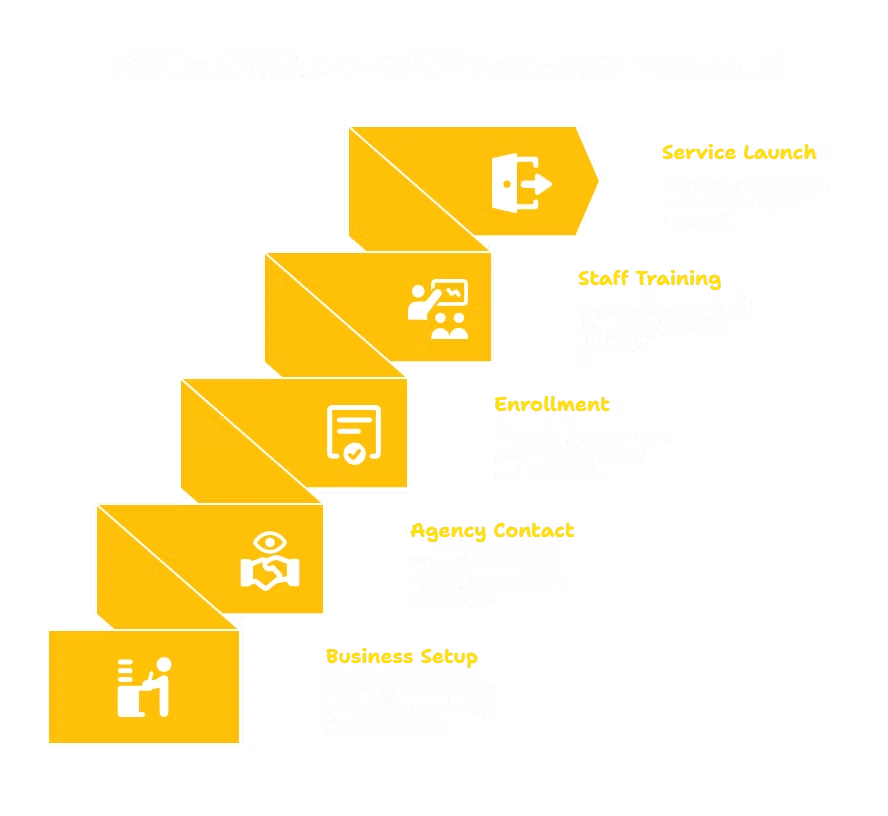
Launching a respite program requires a systematic approach to ensure that every operational requirement is met before the first shift is scheduled. The process typically begins with the formal registration of the legal business entity and the acquisition of tax and identification numbers. Once the business foundation is laid, the provider must engage directly with their local DA or SSA to secure a contracting agreement. This partnership is essential, as the DA/SSA is the gatekeeper for service authorizations.
The subsequent steps involve documentation and infrastructure. The provider must submit an application and the organization's policy manual to the governing DA/SSA for review. Simultaneously, the provider must initiate background checks and meet all staff training requirements to ensure compliance. Finally, the organization must establish reliable recordkeeping and billing systems to track services accurately. Services can only commence once the specific respite care is officially authorized within the participant’s Individual Support Plan (ISP).
What Documentation Is Required for Compliance?
Maintaining high standards of documentation is the cornerstone of a successful audit history. At a minimum, a provider must retain evidence of their legal business status, including Articles of Incorporation and confirmation of their EIN and NPI. Additionally, the provider must keep a current copy of their affiliation agreement with the local DA or SSA, which serves as the authorization for their service delivery scope.
The Policy & Procedure Manual serves as the central operational guide and must be maintained with strict detail. It should cover several critical domains:
- Intake procedures and structured methods for scheduling caregiver relief
- Clear protocols regarding client rights, safety, and emergency response
- Standardized guidelines for medication administration and personal care delivery
- Defined training requirements for staff and internal competency checks
- Templates for accurate billing, service tracking, and incident reporting
- Strict adherence to HIPAA regulations and client confidentiality standards
What Are the Staffing and Training Mandates?
The quality of a respite program is defined by the competency of its staff. Every Respite Care Worker must, at a minimum, possess a high school diploma or GED, pass a thorough background check, and maintain active CPR and First Aid certification. Agencies often employ a Respite Program Coordinator who oversees the scheduling of staff, ensures training compliance, and manages the reporting requirements demanded by the DA/SSA.
All personnel must complete a comprehensive onboarding sequence mandated by the DAIL and the local oversight agency. This includes orientation on the agency’s specific culture and safety protocols, as well as mandatory HIPAA compliance and documentation training. Because respite care often involves supporting individuals with diverse needs, workers must be trained in behavioral management and the specific implementation strategies outlined in an individual's ISP. Annual skills reviews are required to ensure that all staff maintain the necessary proficiency to provide safe, high-quality care.
Frequently Asked Questions
How do I know which Medicaid Waiver program applies to my clients?
Respite services are primarily covered under the Developmental Disabilities HCBS Waiver, the Choices for Care (CFC) Waiver for older adults or those with physical disabilities, and occasionally the Children’s Personal Care and High-Tech Programs. The specific eligibility is determined by the individual's needs and must be clearly defined within their Individual Support Plan (ISP) authorized by the local DA or SSA.
Can a provider bill for emergency respite services?
Yes, respite services may be provided on an emergency basis, provided that the service is authorized and the provider is contracted to perform these tasks. All emergency care must be documented according to the agency’s incident reporting and billing procedures, and it must ultimately align with the individual's support plan as overseen by the DA/SSA.
How long does the provider enrollment process usually take?
The timeline varies based on the agency's readiness, but generally, business setup takes 2–3 weeks, followed by 1–2 months for DA/SSA contracting and Medicaid enrollment. Staff training and necessary inspections usually add an additional 2–4 weeks. Providers should expect the entire process to take at least 3–4 months from initial planning to the first billable service.
Key Takeaway: Successfully launching a respite care provider agency in Vermont hinges on a proactive relationship with local Designated Agencies (DAs) or Specialized Service Agencies (SSAs), strict adherence to Medicaid documentation standards, and a robust commitment to staff training and safety. By ensuring that every aspect of the service delivery—from the initial business registration to the daily management of ISP-authorized care—is fully compliant with DAIL and DVHA requirements, providers can build sustainable programs that offer reliable support to both caregivers and the individuals they serve.
Last verified: May 2024. This content is provided for informational purposes only and does not constitute legal or professional consulting advice. Always verify current state regulations and policy updates through the official Vermont Department of Disabilities, Aging and Independent Living (DAIL) website or your local Designated Agency.