RESPITE CARE SERVICES PROVIDER IN UTAH
By Fatumata Kaba · 2026-04-01 · 5 min read
OFFERING TEMPORARY RELIEF FOR PRIMARY CAREGIVERS WHILE ENSURING SAFE, SUPPORTIVE CARE FOR INDIVIDUALS WITH DISABILITIES
Respite Care Services in Utah function as a critical support mechanism, providing temporary, substitute care for individuals with intellectual or developmental disabilities (ID/DD), physical disabilities, or medically complex conditions. By offering this relief to primary caregivers, these services ensure that individuals receive consistent, person-centered support in accordance with their Individual Support Plan (ISP) while their family or primary support system takes a necessary break.
The administration of these services is governed by the Utah Department of Health and Human Services (DHHS) through the Division of Services for People with Disabilities (DSPD). As a provider, navigating the complex regulatory environment of 1915(c) Home and Community-Based Services (HCBS) waivers is essential for maintaining compliance with state mandates and Centers for Medicare & Medicaid Services (CMS) federal guidelines.
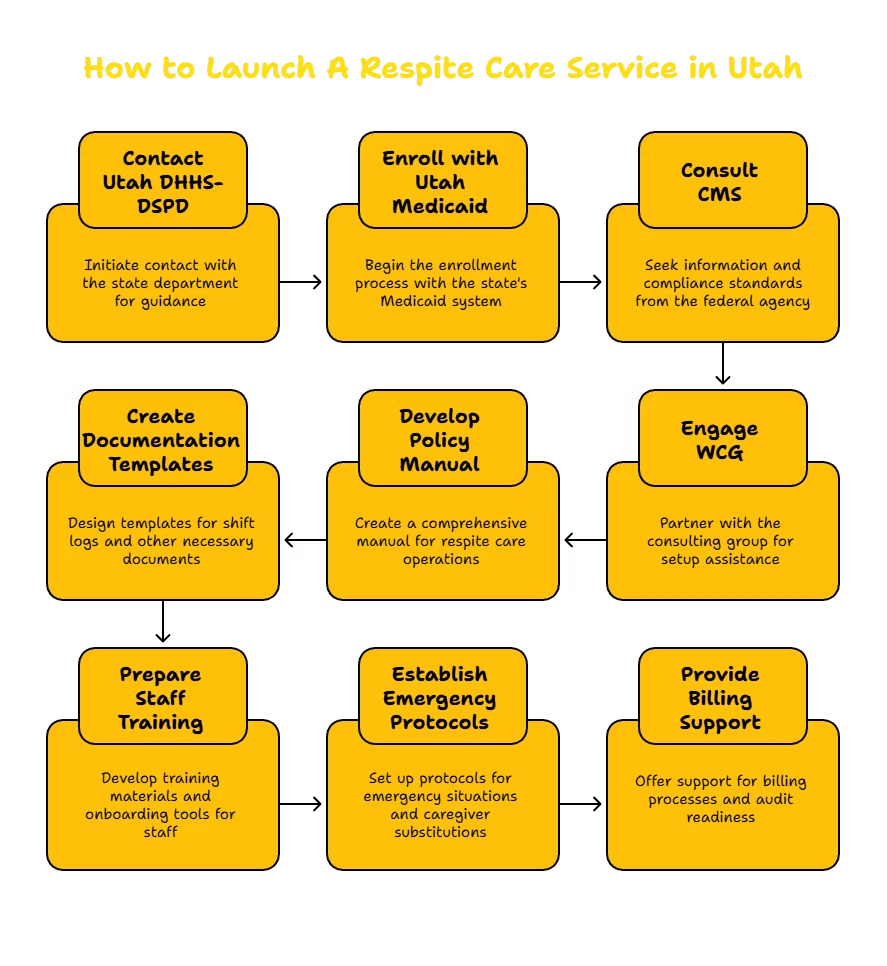
How Are Respite Care Services Regulated in Utah?
Respite care in Utah is not a standalone service but a component of the state’s broader HCBS framework. The Utah Department of Health and Human Services (DHHS) acts as the primary regulatory body, specifically through the Division of Services for People with Disabilities (DSPD). The DSPD holds the responsibility for authorizing respite services, ensuring that all providers adhere to strict quality standards and Medicaid billing protocols. When a provider enters this space, they are entering a highly regulated ecosystem designed to protect vulnerable populations.
At the federal level, the Centers for Medicare & Medicaid Services (CMS) oversees the waiver programs under which respite care is authorized. Compliance requires that providers maintain rigorous oversight of service delivery, staff qualifications, and documentation accuracy. Because these services are funded through Medicaid, the financial and clinical audit trails must be transparent, verifiable, and strictly aligned with the participant’s approved ISP, which serves as the legal roadmap for all care provided.
What Are the Core Requirements for Becoming a Respite Provider?
The pathway to becoming a Medicaid-approved respite provider requires meticulous business organization and regulatory adherence. Before enrolling as a provider, the business must be properly registered with the Utah Division of Corporations. Furthermore, every agency must obtain a federal Employer Identification Number (EIN) and a Type 2 National Provider Identifier (NPI) to facilitate billing and claims submission through the Medicaid system.
Beyond basic business registration, operational readiness is verified through the creation and maintenance of a comprehensive Respite Care Services Policy & Procedure Manual. This document acts as the internal constitution for your agency, outlining everything from intake processes and health monitoring protocols to emergency incident reporting. Agencies must also demonstrate that they carry sufficient general liability and workers’ compensation insurance, as these are non-negotiable requirements for contracting with the DSPD.
- Business Registration: Secure corporate status via the Utah Division of Corporations.
- Tax & Identity: Obtain a federal EIN and a Type 2 NPI.
- Medicaid Enrollment: Enroll specifically as a waiver service provider with Utah Medicaid.
- Contracting: Complete the DSPD contracting process for respite services.
- Insurance: Maintain active general liability and workers' compensation policies.
How Does the Service Delivery Process Function?
Respite care is fundamentally distinct from ongoing personal care services; its primary intent is to offer relief to the primary caregiver. Services can be delivered in various formats, including in-home respite, where the worker travels to the participant’s residence, or out-of-home respite, which takes place in a certified facility or a provider's residence. These services may be planned in advance or utilized in emergency situations, depending on the participant's needs and the constraints of their waiver.
When providing services, staff are responsible for executing the goals and tasks outlined in the participant's ISP. This includes companionship, supervision, assistance with activities of daily living (ADLs), and participation in community outings where authorized. For high-need cases, staff may perform health-related tasks, provided these actions fall within their scope of training and are appropriately delegated under Utah state regulations. Consistent documentation of these activities is mandatory for every shift to support Medicaid billing claims.
What Are the Essential Staffing and Training Protocols?
The quality of a respite program is defined by its staff. Respite care workers must be at least 18 years of age and must pass rigorous background checks. Beyond these prerequisites, providers are responsible for ensuring that all personnel possess valid CPR and First Aid certifications, as well as a demonstrated aptitude for caring for individuals with complex needs. If an agency provides delegated healthcare tasks, they must also employ a licensed Registered Nurse (RN) to serve as a clinical supervisor.
Mandatory training is a pillar of the DSPD standards. Every staff member must complete comprehensive onboarding that covers HIPAA compliance, the prevention of abuse, neglect, and exploitation (ANEP), and basic emergency preparedness. Furthermore, workers must be trained specifically on the implementation of ISPs and safety support techniques. Participation in the DSPD MySupport orientation is a critical step in finalizing the credentials of your care team.
Which Medicaid Waiver Programs Include Respite Services?
Respite services are not universal to all Medicaid recipients; they are specific benefits linked to particular 1915(c) waivers. Providers must be aware of which waiver their participants are enrolled under, as this dictates billing codes and service limits. The primary waivers in Utah include:
- Community Supports Waiver (CSW): Focused on supporting individuals with intellectual or developmental disabilities.
- Acquired Brain Injury (ABI) Waiver: Specifically tailored to individuals recovering from or living with brain injuries.
- Physical Disabilities Waiver (PDW): Designed for individuals with significant physical limitations requiring caregiver support.
- Medically Complex Children’s Waiver (MCCW): Intended for children with high-acuity medical needs requiring 24/7 care.
Frequently Asked Questions
How long does the provider enrollment process take?
The timeline typically ranges from 4 to 7 months. Business formation and manual preparation usually require 1–2 months, followed by 2–3 months for Medicaid and DSPD contracting, and an additional 30–45 days for staff training and final readiness.
Is site certification required for all respite care?
While in-home respite may not require facility certification, out-of-home respite, such as services provided in a dedicated facility or a specific provider’s residence, generally requires formal site certification through the DSPD.
What is the difference between personal care and respite?
Personal care focuses on the ongoing daily support needs of the individual. In contrast, respite care is specifically intended to provide the primary caregiver with a temporary break from their responsibilities, though the care provided during those sessions often involves similar assistance with ADLs.
Key Takeaway
Launching a compliant Respite Care Services agency in Utah demands a structured approach to business operations, adherence to DSPD and Medicaid regulatory standards, and a deep commitment to staff training and safety. Success depends on the provider’s ability to align their internal policy manuals with the specific mandates of the participant’s HCBS waiver, ensuring that every hour of service is documented, billable, and centered on the needs of the individual.
Last verified: October 2023. This content is provided for informational purposes only and does not constitute legal or professional advice. Always consult directly with the Utah Department of Health and Human Services (DHHS) or the Division of Services for People with Disabilities (DSPD) for the most current regulatory guidance and official program documentation.