RESPITE CARE SERVICES PROVIDER IN TENNESSEE
By Fatumata Kaba · 2025-10-22 · 6 min read
Respite care services in Tennessee serve as a vital support mechanism for individuals with disabilities or complex medical needs by providing short-term, substitute care that allows primary caregivers to rest, manage personal responsibilities, or recover from the physical and emotional demands of caregiving. These services are strategically integrated into the Tennessee Medicaid landscape through the Employment and Community First (ECF) CHOICES program, 1915(c) waivers, and various State Plan initiatives, ensuring that both in-home and facility-based support options are available to families across the state.
For provider agency administrators, establishing a respite care program requires a sophisticated understanding of both state-level regulatory mandates and the specific operational requirements established by TennCare and the Department of Intellectual and Developmental Disabilities (DIDD). By bridging the gap between clinical requirements and family support needs, providers can establish a sustainable and impactful presence within the Tennessee Medicaid Home and Community-Based Services (HCBS) ecosystem.
What Are the Governing Agencies and Regulatory Frameworks?
Navigating the Tennessee Medicaid HCBS system requires a clear understanding of the roles played by state and federal entities. The Tennessee Division of TennCare serves as the primary administrator for Medicaid waivers, including ECF CHOICES, and maintains oversight of respite care as a reimbursable service. Their role ensures that service delivery aligns with federal requirements and state-specific program goals for long-term care sustainability. Providers must align their operational workflows with TennCare’s current clinical and financial guidelines to ensure claims integrity.
The Department of Intellectual and Developmental Disabilities (DIDD) acts as a critical regulatory partner, responsible for the certification and ongoing monitoring of providers who serve individuals with intellectual and developmental disabilities (I/DD). Additionally, all services must adhere to federal standards set by the Centers for Medicare & Medicaid Services (CMS). These federal regulations govern the HCBS waiver framework, emphasizing person-centered care and the protection of individuals receiving temporary care services through mandatory quality assurance protocols.
What Does the Scope of Respite Care Services Include?
Respite care is designed to provide temporary relief to primary caregivers by placing a trained professional in the role of the caregiver, either within the individual’s private residence or at an approved facility. The service is versatile, supporting both planned breaks and emergency situations, ensuring that the health and safety of the individual are maintained without interruption. By utilizing these services, families can mitigate caregiver burnout and maintain the sustainability of long-term in-home support, which is a core objective of the Tennessee waiver system.
Providers must be prepared to deliver a wide range of tasks based on the participant's unique Person-Centered Support Plan. The service scope is tailored to the specific needs of the enrollee and must be clearly documented to justify reimbursement. Typical service components include:
- In-Home Respite: Direct care provided within the individual’s own home to maintain familiar environments.
- Out-of-Home Respite: Care delivered in licensed residential homes or provider-operated facilities that meet state environmental standards.
- Emergency Respite: Rapid-response support provided for unexpected caregiver crises, such as medical emergencies or acute family stressors.
- Planned Respite: Scheduled, recurring shifts designed to provide consistent support for the family’s long-term well-being.
- Supervision & Assistance: Direct support with activities of daily living (ADLs) such as bathing, toileting, meal preparation, and mobility assistance.
- Documentation: Rigorous maintenance of daily shift logs, incident reports, and ongoing health monitoring data required for clinical oversight.
How Do Providers Navigate the Licensing and Enrollment Process?
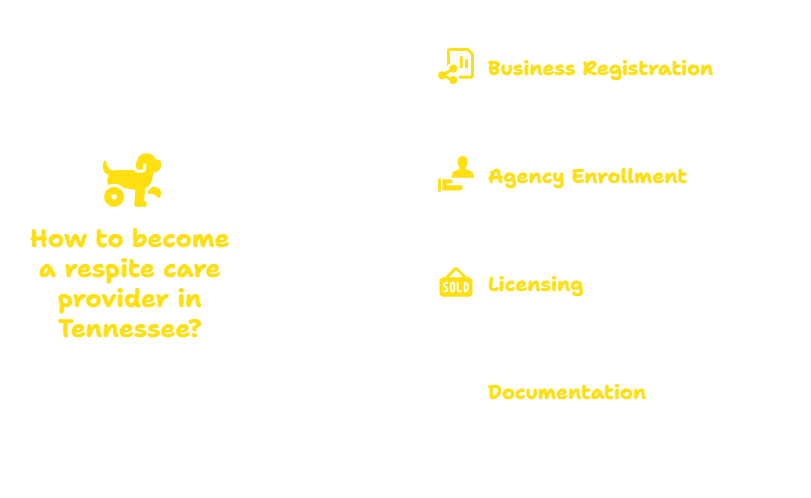
Launching a respite care agency in Tennessee involves a multi-stage process that prioritizes compliance and operational readiness. Prospective providers must first establish the business as a legal entity with the Tennessee Secretary of State and secure the necessary financial identifiers, such as an Employer Identification Number (EIN) and a Type 2 National Provider Identifier (NPI). This foundational step is required before entering into the formal application phase with state agencies, as these identifiers are essential for submitting claims in the electronic billing portals.
Once the business structure is confirmed, the agency must apply for provider status through TennCare or DIDD, depending on the specific waiver program being targeted. For those planning to offer out-of-home respite, obtaining a DIDD residential license is a mandatory prerequisite that involves comprehensive facility inspections and strict adherence to environmental and safety codes. Providers must also curate a robust Policy & Procedure Manual that clearly defines internal protocols for service delivery, staff oversight, and emergency intervention strategies.
What Documentation and Staffing Requirements Must Be Met?
Documentation is the backbone of Medicaid reimbursement and compliance in Tennessee. Agencies are expected to maintain detailed records for every client and staff member, including proof of liability and workers' compensation insurance, comprehensive background checks, and verified training certifications. Policies must explicitly cover HIPAA compliance, abuse prevention protocols, and detailed billing templates that align with the specific reimbursement codes authorized by Tennessee Medicaid waivers.
Staffing requirements are equally stringent to ensure high-quality care and mitigate agency risk. Direct Support Professionals (DSPs) must typically possess a high school diploma or GED, and complete mandatory training in CPR, first aid, and abuse prevention. Program supervisors are expected to bring relevant experience in disability support or healthcare coordination to oversee the delivery of services. Key training areas for all staff include:
- Person-centered planning and Individual Support Plan (ISP) implementation.
- HIPAA and data privacy standards regarding health information.
- Standardized documentation, reporting, and electronic billing procedures.
- Emergency, safety, and evacuation protocols for home and facility-based settings.
- HCBS compliance education provided through DIDD or TennCare regulatory updates.
Maintaining Compliance and Quality Assurance
Continuous compliance is not a one-time achievement but a dynamic operational requirement. Providers must remain vigilant regarding the Tennessee Medicaid program’s periodic audit cycles. This involves maintaining an audit-ready filing system where every hour of respite care can be traced back to an authorized ISP, a verified staff shift note, and a corresponding billing code.
Internal Quality Assurance (QA) programs should be established to review incident reports and documentation trends. By proactively identifying and correcting errors in service notes or billing, agencies can ensure they remain in good standing with TennCare and DIDD. Regular staff development and training updates are essential to ensure that the agency adapts to any changes in service definitions or state-level administrative requirements.
Frequently Asked Questions
What is the difference between ECF CHOICES and 1915(c) waiver respite services?
ECF CHOICES is specifically designed for individuals with intellectual and developmental disabilities to support integration into the community, while 1915(c) waivers offer a broader range of HCBS options for children and adults with various support needs. Eligibility and authorization for respite under these programs depend on the individual’s specific waiver enrollment and the clinical necessity defined in their plan.
Are there non-Medicaid options for respite care in Tennessee?
Yes, the Tennessee Family Support Program, managed through DIDD, provides non-Medicaid-funded respite assistance for individuals with developmental disabilities who may not be enrolled in a waiver program. This program serves as a critical safety net for families who do not meet the criteria for standard Medicaid HCBS waivers.
What is the typical timeline for becoming an approved provider?
The timeline generally follows a sequence of 1–2 months for business formation and licensing, followed by 2–3 months for TennCare/DIDD enrollment and documentation review, and an additional 30–60 days for staff recruitment and training to ensure full operational readiness before accepting the first client.
Key Takeaways for Provider Agencies
Success in the Tennessee respite care market requires meticulous attention to the regulatory standards set by TennCare and DIDD. Providers should focus on developing robust internal policies, ensuring rigorous staff training in person-centered care, and maintaining transparent, audit-ready documentation. By bridging the gap between clinical requirements and family support needs, providers can establish a sustainable and impactful presence within the state's Medicaid HCBS ecosystem.
Last verified: 2024. This information is for educational purposes only and does not constitute legal or professional advice. Always consult with the Tennessee Department of Intellectual and Developmental Disabilities (DIDD) or TennCare directly for the most current regulatory updates and requirements.