RESPITE CARE SERVICES PROVIDER IN SOUTH CAROLINA
By Fatumata Kaba · 2025-10-13 · 5 min read
Understanding the Role of Respite Care Services in South Carolina
Respite Care Services in South Carolina serve as a critical support mechanism, offering temporary, substitute care to individuals with disabilities or chronic health conditions when their primary caregivers require relief. By providing this essential break, these services help prevent caregiver burnout, maintain the stability of the family unit, and ensure that individuals continue to receive person-centered, high-quality support within their own homes or community settings.
Administered under several Home and Community-Based Services (HCBS) Waivers—including the ID/RD Waiver, Community Supports Waiver, HASCI Waiver, and CLTC—these services must be strictly aligned with the participant’s Individual Support Plan (ISP). Whether delivered in-home, at an adult day care site, or in a licensed facility, Respite Care is a vital component of the South Carolina Medicaid long-term care landscape, requiring providers to balance clinical compliance with compassionate, reliable service delivery.
Governing Agencies and Regulatory Oversight
The provision of Respite Care in South Carolina is governed by a multi-layered regulatory framework designed to ensure participant safety and federal compliance. The South Carolina Department of Health and Human Services (SCDHHS) serves as the primary authority, overseeing Medicaid funding, the authorization of services, and the reimbursement processes for enrolled providers.
In addition to SCDHHS, the South Carolina Department of Disabilities and Special Needs (DDSN) plays a specialized role in coordinating respite services for individuals with intellectual and developmental disabilities (IDD), which includes establishing provider training requirements and conducting ongoing oversight. Finally, the Centers for Medicare & Medicaid Services (CMS) provides the federal umbrella under which these state waivers operate, ensuring that all respite and family support services adhere to national standards for Medicaid-funded home and community-based care.
- SCDHHS: Manages funding, Medicaid enrollment, and provider reimbursements.
- DDSN: Coordinates services for IDD populations and handles specific provider credentialing.
- CMS: Sets the federal guidelines and ensures state-level waiver compliance.
- DHEC: Governs facility licensure for providers offering out-of-home respite care.
Core Components and Delivery Models of Respite Care
Respite care functions as a flexible, substitute care model designed to bridge the gap when a regular caregiver is unavailable. For providers, this means delivering services that are tailored to the specific needs of the participant, whether those needs are basic supervision or more intensive, skilled clinical support. Person-centered care is the hallmark of the program, requiring staff to remain vigilant, responsive, and fully informed of the participant’s daily routines and health requirements.
Delivery models vary based on the participant’s waiver and individual needs. Providers may operate through in-home visits, where a caregiver enters the participant's residence, or through out-of-home models, such as licensed group homes or community-based day centers. Documentation is the backbone of these services; providers must maintain rigorous records including shift notes, care logs, incident reports, and detailed Medicaid billing records to remain compliant with state audit expectations.
Strategic Steps for Provider Enrollment and Business Formation
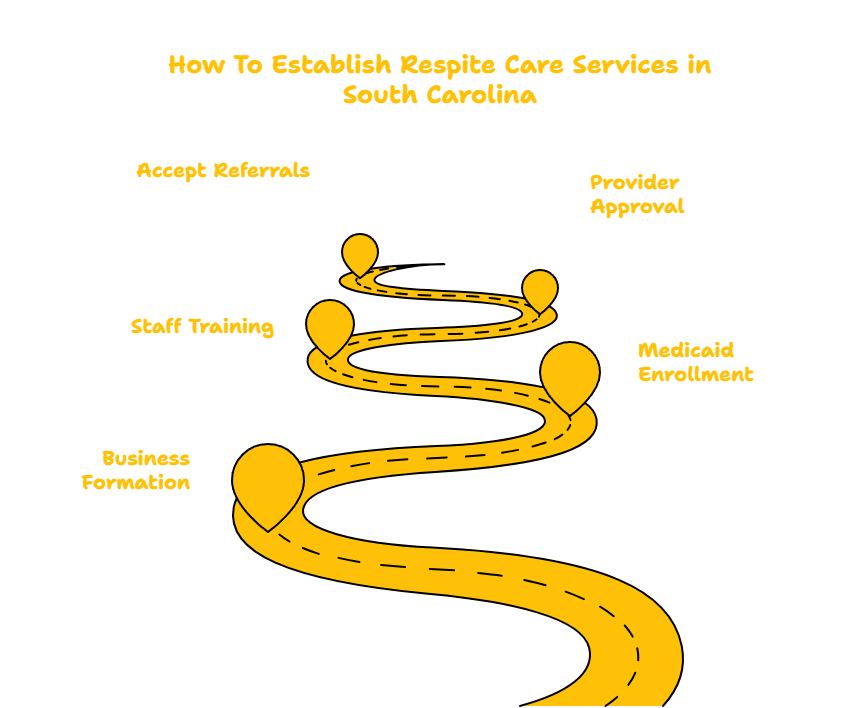
Launching a Respite Care agency requires a disciplined approach to business formation and regulatory alignment. Before delivering services, an organization must be legally established, which includes registering the business with the South Carolina Secretary of State and securing a Federal Employer Identification Number (EIN) and a Type 2 National Provider Identifier (NPI). These foundational steps provide the necessary legal and administrative infrastructure for Medicaid enrollment.
Once the business entity is established, the provider must navigate the enrollment process specific to the target waiver program. This typically involves applying through DDSN for IDD-related services or directly through SCDHHS for Community Long Term Care (CLTC) programs. The process is sequential and requires the submission of robust policy manuals, staff training protocols, and documentation samples that demonstrate an ability to meet the state’s rigorous standard of care.
- Register the business and obtain an EIN and Type 2 NPI.
- Select the appropriate Medicaid waiver program for enrollment.
- Develop a comprehensive Respite Care Services Policy & Procedure Manual.
- Submit staff training curricula and supervision protocols to the oversight agency.
- Secure required insurance, including liability and worker’s compensation.
Staffing, Training, and Clinical Requirements
The success of a Respite Care provider hinges on the competency of its staff. Whether hiring Direct Support Professionals (DSPs) to provide companionship and assistance with activities of daily living (ADLs) or engaging clinical professionals like RNs for skilled services, all personnel must meet stringent background and training requirements. Staff must be vetted through thorough background checks and be fully prepared to handle the diverse needs of the population served.
Ongoing professional development is not merely recommended—it is a regulatory requirement. All staff must participate in annual in-service training that covers HIPAA compliance, abuse prevention, participant rights, and emergency preparedness. Furthermore, providers must ensure that every staff member is proficient in the specific documentation protocols necessary for Medicaid billing, as incomplete or inaccurate logs are a primary source of audit findings.
Frequently Asked Questions
What are the primary Medicaid waiver programs that cover respite services in South Carolina?
Respite care is covered under several key programs, including the ID/RD Waiver, the Community Supports Waiver, the HASCI Waiver for individuals with head or spinal cord injuries, and the CLTC program for aging-related or chronic illness needs. Additionally, TEFRA and EPSDT may provide skilled pediatric respite for children under age 21 when medically necessary.
What is the typical timeline for launching a new respite care agency?
The launch process generally spans several months. Business formation and manual development typically take 1–2 months, followed by 2–3 months for Medicaid enrollment and staff onboarding. If the business model includes out-of-home facility services, an additional 1–2 months may be required for DHEC facility licensure.
What documentation is essential for maintaining compliance?
Providers must maintain comprehensive records, including staff training and background check verification, participant intake forms, emergency protocols, daily service logs, and detailed billing records. All documentation must demonstrate that services rendered align with the participant’s approved Individual Support Plan.
Key Takeaway
Establishing a Respite Care services agency in South Carolina requires meticulous attention to administrative, clinical, and regulatory detail. By prioritizing robust internal policy development, rigorous staff training, and strict adherence to the standards set by SCDHHS and DDSN, provider agencies can build sustainable programs that offer essential relief to caregivers while ensuring the safety and well-being of the individuals they support.
Last verified: October 2023. This content is for informational purposes only and does not constitute legal or professional medical advice. Always consult with the South Carolina Department of Health and Human Services (SCDHHS) or the South Carolina Department of Disabilities and Special Needs (DDSN) for the most current regulatory requirements and policy updates.