RESPITE CARE SERVICES PROVIDER IN OKLAHOMA
By Fatumata Kaba · 2025-09-03 · 5 min read
Respite care services are an essential component of Oklahoma’s Home and Community-Based Services (HCBS) framework, designed to provide temporary relief to unpaid family caregivers while ensuring participants continue to receive high-quality support. As a provider agency, delivering these services requires strict adherence to state and federal regulations set forth by the Oklahoma Health Care Authority (OHCA) and the Department of Human Services (OKDHS) to maintain participant safety and Medicaid reimbursement eligibility.
This guide serves as a foundational roadmap for agency founders and administrators looking to enter the Oklahoma respite care market. By understanding the regulatory landscape, staffing requirements, and the specific mandates of the state’s various Medicaid waiver programs, providers can establish a sustainable and compliant operation that addresses the growing demand for caregiver relief across the state.
Navigating the Regulatory Oversight of Respite Services in Oklahoma
The provision of respite care is heavily regulated to ensure the welfare of the individuals receiving support. Several key agencies play a distinct role in this process. The Oklahoma Health Care Authority (OHCA) acts as the primary agency for Medicaid reimbursement and policy implementation, while the Oklahoma Department of Human Services (OKDHS) manages Aging and Developmental Disabilities Services (DDS), which oversees the specific care planning and authorization for participants enrolled in waiver programs.
Additionally, the Oklahoma Department of Mental Health and Substance Abuse Services (ODMHSAS) may be involved for individuals requiring behavioral health-specific respite, and the Centers for Medicare & Medicaid Services (CMS) provides federal oversight to ensure all programs align with national HCBS standards. Understanding these agencies is critical for any provider, as each has specific reporting, billing, and quality assurance expectations that must be integrated into daily operations.
Establishing the Operational Scope of Your Respite Care Agency
Respite care is defined by its temporary nature, intended to prevent caregiver burnout and support the long-term stability of the home-based caregiving environment. Agencies must clearly define the types of respite they intend to provide, ranging from planned, scheduled care to emergency, crisis-based interventions. Each delivery model requires specific operational protocols to be effective.
Approved providers often specialize in one or more of the following service models:
- In-Home Respite: Providing supervision and care within the participant’s own residence.
- Out-of-Home Respite: Delivering care in a licensed respite center, adult day setting, or certified provider home.
- Emergency Respite: Rapid-response care for families facing unexpected crises or primary caregiver illness.
- Personal Care Integration: Assisting with Activities of Daily Living (ADLs) such as bathing, dressing, feeding, and toileting.
- Documentation and Compliance: Maintaining rigorous records on service delivery, participant conditions, and incident reporting.
The Roadmap to Provider Enrollment and Legal Compliance
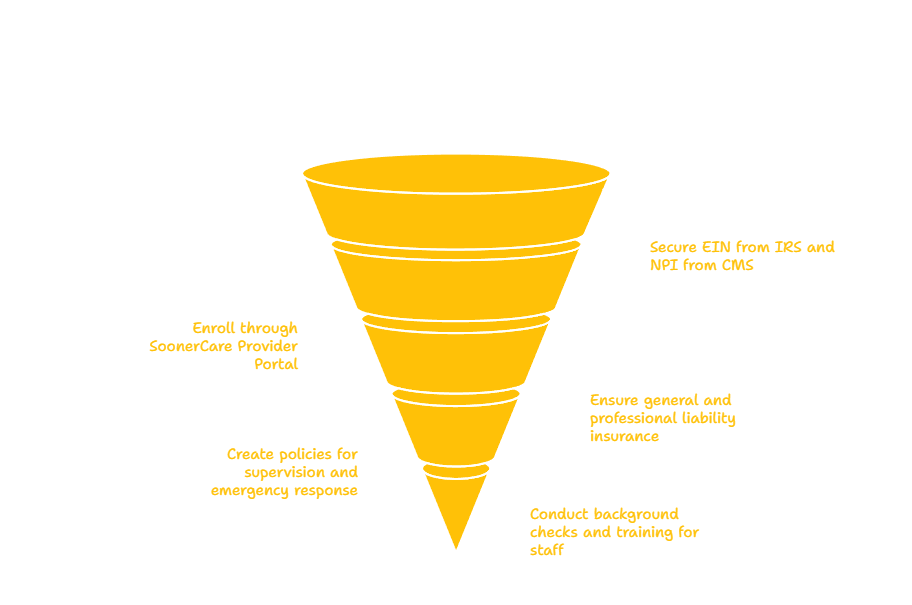
The enrollment process for becoming an Oklahoma Medicaid respite provider is a multifaceted administrative undertaking. Before a business can begin billing for services, it must establish a formal legal entity, secure an EIN from the IRS, and obtain a Type 2 NPI. Following business formation, the agency must register with the Oklahoma Secretary of State and ensure that all necessary liability insurances—both general and professional—are in place.
Once the foundational business requirements are met, agencies must proceed with the specific enrollment steps required by OHCA and OKDHS. This includes submitting comprehensive policy manuals that detail supervision standards, safety procedures, and HIPAA compliance protocols. The enrollment process typically involves a readiness review where state officials evaluate an agency’s ability to manage health and safety protocols effectively before granting Medicaid billing authorization.
Developing Robust Staffing and Training Infrastructure
The quality of your respite agency depends entirely on the caliber and preparedness of your staff. An effective program requires a dedicated Respite Program Administrator who possesses demonstrated experience in HCBS compliance and program management. This role is responsible for overseeing daily operations and ensuring the agency remains in constant alignment with evolving state regulations.
Direct support staff and caregivers must meet standardized requirements to ensure participant safety. This includes, at a minimum, holding a high school diploma or GED, possessing current CPR/First Aid certification, and passing thorough background checks. For agencies offering skilled respite services, oversight by a licensed Oklahoma RN or LPN is mandatory. Ongoing training must focus on personal care, incident documentation, infection control, and the protection of participant rights.
Integrating with Oklahoma’s Medicaid Waiver Landscape
Respite care is a covered service under several prominent Oklahoma Medicaid waivers, each catering to different participant populations. Providers must understand the specific requirements for the program their clients are enrolled in. Key programs include the ADvantage Waiver for older adults and individuals with physical disabilities, the Medically Fragile Waiver, and the various In-Home Supports Waivers for children and adults managed through Developmental Disabilities Services (DDS).
The Community Waiver and the Living Choice Program also offer opportunities to provide essential respite support. Furthermore, certain services may be authorized under the SoonerCare State Plan for behavioral health or EPSDT needs. Successfully serving these diverse populations requires a deep understanding of the unique authorization pathways and service limitations associated with each individual waiver.
Frequently Asked Questions
How long does the provider enrollment process typically take?
The timeline varies based on the agency's readiness, but the general pathway from business formation to service activation is approximately 6 to 9 months. This encompasses policy development, staff hiring, and the 60–90 day window for OHCA/OKDHS readiness reviews.
What documentation is required to pass a state compliance audit?
Agencies must maintain meticulous records, including staff credentialing logs, comprehensive incident reports, proof of HIPAA compliance, and evidence of periodic participant safety assessments. Having a standardized policy and procedure manual that is strictly followed is the best defense during an audit.
Can an agency provide both in-home and out-of-home respite services?
Yes, provided the agency meets the distinct licensing and certification requirements for both settings. Out-of-home services often require additional facility-specific licensure, which must be clearly documented during the provider enrollment phase.
Key Takeaway for Agency Founders
Succeeding as a respite care provider in Oklahoma demands a dual focus: operational excellence in administrative compliance and a commitment to high-standard, person-centered care. By carefully following the requirements set by the OHCA and OKDHS, maintaining rigorous training logs, and fostering strong relationships with waiver case managers, new agencies can successfully navigate the complexities of the Medicaid system and build a sustainable, mission-driven business.
Waiver Consulting Group assists new agencies in navigating these requirements by providing policy manual development, staff training templates, and guidance on the Medicaid billing setup. Please visit our website or contact our team to learn how to streamline your agency’s path to operational readiness.
Last verified August 2024. The information provided in this article is for educational purposes only and does not constitute legal or professional advice. Always consult directly with the Oklahoma Health Care Authority (OHCA) and relevant state departments for the most current rules, regulations, and provider requirements.