RESPITE CARE SERVICES PROVIDER IN NORTH CAROLINA
By Fatumata Kaba · 2025-09-15 · 6 min read
PROVIDING TEMPORARY RELIEF FOR PRIMARY CAREGIVERS THROUGH SAFE AND COMPASSIONATE SUPPORT
Respite Care Services in North Carolina provide essential, short-term, temporary relief for primary caregivers of individuals living with disabilities, chronic illnesses, or age-related conditions. By facilitating high-quality, professional support in both home and community settings, these services ensure that participants maintain their health and wellness while providing caregivers the necessary time to rest, manage personal affairs, and avoid caregiver burnout. These services are formally authorized and funded through North Carolina Medicaid Home and Community-Based Services (HCBS) Waiver programs, which prioritize person-centered care and community integration.
How are Respite Care Services Governed in North Carolina?
The delivery of Respite Care Services in North Carolina is subject to rigorous oversight by multiple state and federal entities. These governing bodies work in tandem to ensure that Medicaid waiver funding is utilized appropriately, providers meet stringent quality standards, and service participants receive care that is both safe and effective. Understanding the hierarchy of these agencies is the first step for any provider agency administrator.
The North Carolina Department of Health and Human Services (NCDHHS) serves as the primary agency responsible for administering Medicaid waiver funding, overseeing provider enrollment, and managing service authorization and reimbursement. Working alongside NCDHHS, the North Carolina Division of Health Benefits (NC Medicaid) handles the broader aspects of Medicaid waiver service management and provider participation. For services targeting individuals with developmental disabilities and behavioral health needs, the North Carolina Division of Mental Health, Developmental Disabilities, and Substance Abuse Services (DMH/DD/SAS) provides specialized clinical and operational oversight.
On a federal level, the Centers for Medicare & Medicaid Services (CMS) establishes the overarching framework for Home and Community-Based Services. CMS mandates that all Medicaid-funded Respite Care meets strict quality, safety, and person-centered care benchmarks. This multi-layered regulatory environment ensures that the respite model remains a robust, reliable, and standardized support system across the state.
What Types of Care Do Approved Providers Deliver?
Respite Care is a flexible service model designed to adapt to the specific needs of the individual and their primary caregiver. Whether the respite is planned weeks in advance or required due to an immediate emergency, authorized providers must be equipped to deliver a comprehensive suite of supports that go beyond basic supervision.
Approved providers often offer a spectrum of care ranging from basic personal assistance to specialized behavioral support. In-home services allow the participant to remain in their familiar environment, while out-of-home respite offers temporary placement in licensed facilities. These services ensure that even in the absence of a primary caregiver, the participant’s health, hygiene, and social needs are consistently met.
- In-Home Respite Care: Providing care within the individual’s home environment.
- Out-of-Home Respite Care: Temporary care in a licensed facility or community setting.
- Emergency Respite: Immediate care during unexpected caregiver absences.
- Planned Respite: Scheduled care for routine caregiver breaks or planned absences.
- Overnight Respite: Providing care during nighttime hours.
- Personal Care Assistance: Helping with bathing, grooming, meal preparation, and mobility.
- Social and Recreational Activities: Engaging individuals in safe, enjoyable interactions.
- Health Monitoring: Administering medication and tracking vital signs when needed.
- Behavioral Support: Managing challenging behaviors with positive intervention techniques.
- Documentation: Maintaining accurate records of care provided and individual progress.
What Are the Licensing and Provider Approval Requirements?
To operate as a Medicaid-eligible Respite Care provider, an agency must demonstrate both operational readiness and compliance with state regulations. The foundation of this process involves formal business registration with the North Carolina Secretary of State and obtaining the necessary federal identifiers, including an EIN and a Type 2 NPI. These prerequisites establish the agency as a legitimate legal entity capable of entering into a Medicaid provider agreement.
Beyond basic business registration, agencies must focus on developing a robust compliance infrastructure. This includes securing comprehensive general and professional liability insurance and drafting a detailed policy and procedure manual. This manual must explicitly cover respite care planning, safety management protocols, and specific procedures for caregiver support. Furthermore, agencies must implement strict hiring practices that include thorough background checks, health screenings, and specialized training to ensure every staff member is prepared for the responsibilities of direct care.
Navigating the North Carolina Provider Enrollment Process
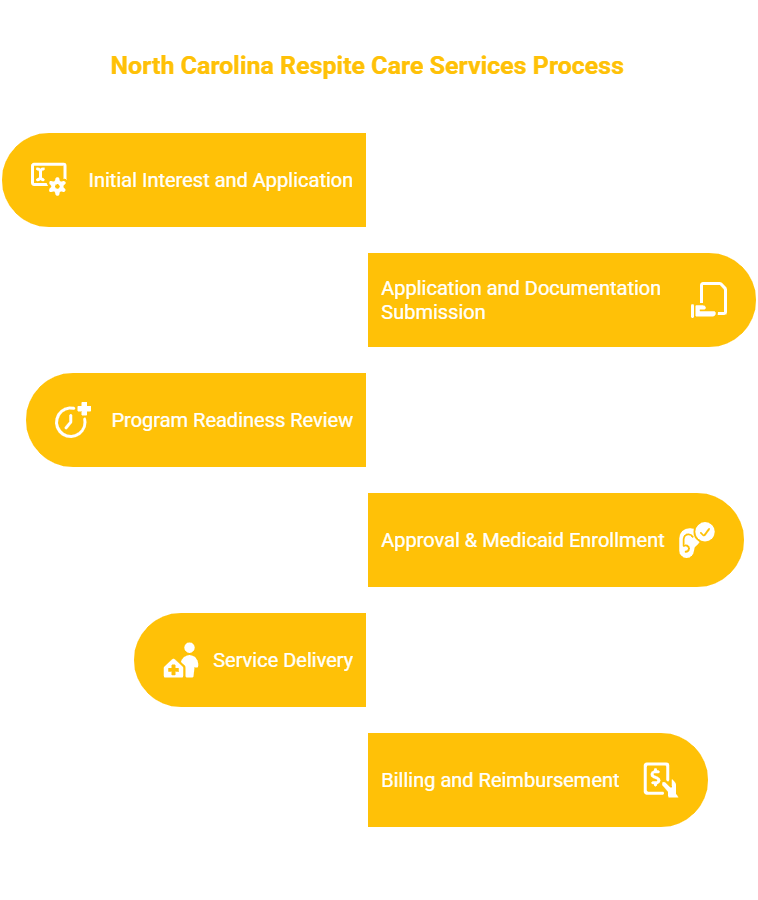
The pathway to becoming a Medicaid provider is a structured, phase-based sequence managed largely through the NCTracks Provider Portal. The initial phase involves the submission of the Provider Enrollment Application, which serves as the official request for authorization under specific HCBS waivers. During this phase, accuracy in documentation is critical, as any discrepancies can lead to significant delays in approval.
Following the application, NCDHHS and DMH/DD/SAS conduct a rigorous Program Readiness Review. During this assessment, state officials evaluate the provider’s operational protocols, safety standards, and staff qualifications to ensure they align with the state’s high standards for care. Once the program receives formal approval, the provider is officially enrolled in the Medicaid system, enabling them to begin billing for Respite Care Services using the appropriate designated billing codes.
Key Staffing and Documentation Standards
The quality of a respite agency is defined by its leadership and the competency of its direct support staff. A Respite Care Program Director is expected to possess a Bachelor’s or Master’s degree in social work, human services, or healthcare administration, along with demonstrable experience in managing care programs. Beneath this role, Respite Care Workers and Personal Care Aides (PCAs) must hold appropriate certifications and provide evidence of ongoing professional development.
Documentation requirements are extensive and serve as the audit trail for both compliance and billing. Agencies must maintain detailed records regarding:
- Staff credentialing, including background check results and training records.
- Individualized care plans and progress notes for every participant.
- Proof of HIPAA compliance and participant rights documentation.
- Safety protocols, including infection control and emergency response procedures.
- Internal quality assurance reports and grievance handling logs.
Frequently Asked Questions
Which Medicaid Waivers include Respite Care services?
Respite Care Services are available through several North Carolina programs, including the Innovations Waiver, the Community Alternatives Program for Disabled Adults (CAP/DA), the Community Alternatives Program for Children (CAP/C), the Traumatic Brain Injury (TBI) Waiver, and the broader Home and Community-Based Services (HCBS) Waiver.
How long does the provider enrollment process typically take?
The overall timeline from business formation to the launch of services generally spans several months. The enrollment and readiness review phase specifically typically requires 60–90 days, while the billing setup and final launch preparations may add another 30–45 days to the timeline.
What qualifications are required for Respite Care staff?
All staff must undergo training in respite care techniques, client safety, and caregiver interaction. Additionally, they must complete education regarding HIPAA compliance and participant rights, as well as participate in annual competency evaluations to ensure their skills remain aligned with the evolving needs of the individuals they support.
Key Takeaways for Prospective Providers
Launching a Respite Care agency in North Carolina requires a methodical approach that balances administrative rigor with a commitment to high-quality, person-centered care. By strictly adhering to the guidelines set forth by NCDHHS and the NCTracks enrollment requirements, providers can establish a sustainable and compliant operation. Success is built upon a foundation of comprehensive policy development, thorough staff training, and the maintenance of detailed, audit-ready documentation that satisfies both state and federal oversight agencies.
Last verified: October 2023. Disclaimer: This information is for educational purposes only and does not constitute legal or professional consulting advice. Requirements for Medicaid provider enrollment are subject to change; always consult the latest NCDHHS and NCTracks guidelines or a qualified professional before making business decisions.