RESPITE CARE SERVICES PROVIDER IN NEBRASKA
By Fatumata Kaba · 2025-08-08 · 5 min read
Supporting caregivers and promoting participant well-being through temporary relief services.
Respite Care Services in Nebraska provide short-term, temporary relief to family caregivers of individuals with disabilities, chronic illnesses, or age-related conditions. These services allow primary caregivers to rest, attend to personal matters, or recover from caregiver fatigue while ensuring the participant’s safety and well-being through programs authorized under the Nebraska Medicaid Home and Community-Based Services (HCBS) waiver system.
What are the regulatory and oversight structures for Nebraska respite providers?
The delivery of Medicaid-funded respite care is governed by a multi-tiered regulatory framework. At the state level, the Nebraska Department of Health and Human Services (DHHS) serves as the primary authority, managing waiver funding, provider enrollment, and reimbursement processes. The Nebraska Medicaid and Long-Term Care (MLTC) Division works in tandem to ensure service quality, manage participant protections, and enforce compliance standards across all HCBS waiver programs.
At the federal level, the Centers for Medicare & Medicaid Services (CMS) provides necessary oversight to ensure that Nebraska’s Medicaid-funded respite services align with national standards for person-centered planning and participant safety. Providers are expected to maintain strict adherence to these agency guidelines to remain in good standing and ensure continuity of funding for their participants.
What scope of services can a certified respite care provider deliver?
Respite care is designed to offer both planned and emergency relief to unpaid caregivers. By delivering these services, providers ensure that participants continue to receive essential supervision and support while the primary caregiver is unavailable. Whether services are delivered in the home or a community setting, the care provided must be rooted in the participant’s Individualized Service Plan (ISP).
Approved providers may deliver a variety of support options, including:
- In-Home Respite Services: Care provided directly in the participant’s residence.
- Facility-Based Respite Care: Short-term care in licensed community settings.
- Day, Overnight, or Weekend Respite: Flexible scheduling to accommodate caregiver breaks.
- Personal Care Assistance: Support with Activities of Daily Living (ADLs) such as bathing, grooming, feeding, mobility, and toileting.
- Health Monitoring: Basic tasks such as medication reminders and recreational engagement to foster participant social and therapeutic health.
How do providers navigate the Nebraska Medicaid enrollment process?
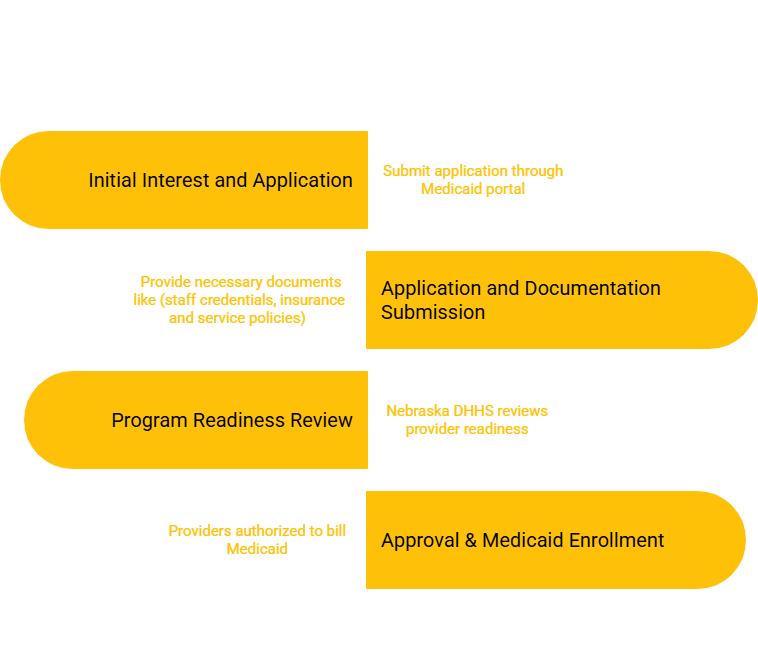
Launching a respite care agency requires a systematic approach to business and clinical compliance. Providers must first ensure their business entity is formally registered with the Nebraska Secretary of State. Once established, the provider must secure an Employer Identification Number (EIN) from the IRS and a National Provider Identifier (NPI) Type 2. Following these steps, the provider initiates the enrollment process through the Nebraska Medicaid Provider Enrollment Portal.
The enrollment journey includes a rigorous Readiness Review conducted by DHHS. During this phase, state officials examine the provider’s operational capacity, which includes staff qualifications, comprehensive safety protocols, and internal documentation systems. Only after successful review and approval is the agency authorized to bill Medicaid for services. Maintaining documentation—such as proof of liability insurance and facility licenses—is a critical component of this ongoing maintenance and compliance effort.
What are the essential requirements for documentation and staff competency?
A successful respite provider agency must maintain a robust Policy & Procedure Manual that serves as the backbone of their operations. This manual must explicitly outline processes for participant intake, emergency preparedness, incident reporting, and HIPAA-compliant data management. Furthermore, the agency is responsible for ensuring that all staff—including the Program Director and Direct Support Professionals—meet high standards of professional competency.
Staff requirements generally include the following:
- Direct Support Professionals: Must hold a high school diploma or GED, possess current CPR/First Aid certification, and pass mandatory background screenings and health clearances.
- Program Directors: Preference is given to those with a bachelor’s degree in a human services or healthcare field and proven supervisory experience.
- Mandatory Training: All staff must complete instruction in participant rights, abuse and neglect prevention, infection control, and emergency response procedures before providing direct care.
How are respite services integrated into existing Nebraska HCBS waiver programs?
Respite care acts as a vital support mechanism across several specialized Nebraska Medicaid waivers. These include the Aged and Disabled (AD) Waiver, the Traumatic Brain Injury (TBI) Waiver, the Developmental Disabilities (DD) Waiver, the Children with Disabilities Waiver, and the general Home and Community-Based Services (HCBS) Waiver. Each program has unique characteristics, but all share the common goal of maintaining participants in the community.
Providers must be prepared to manage the specific needs of these diverse populations. Whether supporting an individual with complex physical needs or cognitive challenges, the respite worker acts as a temporary surrogate, ensuring that the health and wellness standards of the waiver are upheld at all times. This flexibility allows the system to respond to both routine caregiver fatigue and unexpected family crises.
Frequently Asked Questions
What is the typical timeline to launch a new respite care agency?
The launch process is categorized into several phases, generally spanning 6 to 9 months in total. This includes 1–2 months for business formation, 2–3 months for staffing and internal development, 60–90 days for the Medicaid readiness review, and 30–45 days to finalize billing systems and initiate services.
Is facility licensure required for all respite care providers?
Facility licensure is required specifically for those providers offering facility-based respite care. In-home respite providers must adhere to different compliance standards, though all providers must maintain current professional and general liability insurance as stipulated by the state.
What resources are available for Medicaid-compliant policy development?
WCG supports agencies in launching Medicaid-compliant Respite Care Services by providing assistance with business registration, policy and procedure manual development, staff credentialing templates, and Medicaid billing system setup. These services help agencies maintain audit readiness and ensure alignment with DHHS requirements.
Key Takeaway: Establishing a respite care agency in Nebraska requires a deep commitment to regulatory compliance and person-centered care. By strictly adhering to the standards set by DHHS, MLTC, and CMS, provider agencies can effectively support the Nebraska caregiver community while building a stable and sustainable business model.
Last verified: [Insert Date]. This information is provided for educational purposes only and does not constitute legal or professional advice. Always consult with the Nebraska Department of Health and Human Services (DHHS) or qualified legal counsel to ensure your business operations comply with the most current state and federal regulations.