RESPITE CARE SERVICES PROVIDER IN MISSOURI
By Fatumata Kaba · 2025-08-07 · 5 min read
PROVIDING TEMPORARY RELIEF TO CAREGIVERS WHILE ENSURING SAFE, COMPASSIONATE SUPPORT FOR INDIVIDUALS WITH DISABILITIES OR COMPLEX NEEDS
Respite care services in Missouri provide essential short-term, temporary relief to unpaid primary caregivers of individuals with disabilities, chronic conditions, or age-related needs. These Medicaid-funded services are designed to sustain the caregiver's well-being while ensuring that the individual receives consistent, high-quality support in their home, community, or through licensed out-of-home facilities.
As a provider, operating within Missouri’s Home and Community-Based Services (HCBS) waiver system requires a deep understanding of state regulatory requirements and federal oversight. This article serves as a professional roadmap for agencies navigating the complexities of becoming a qualified, compliant respite care provider in the state of Missouri.
What Are the Governing Agencies and Oversight Frameworks?
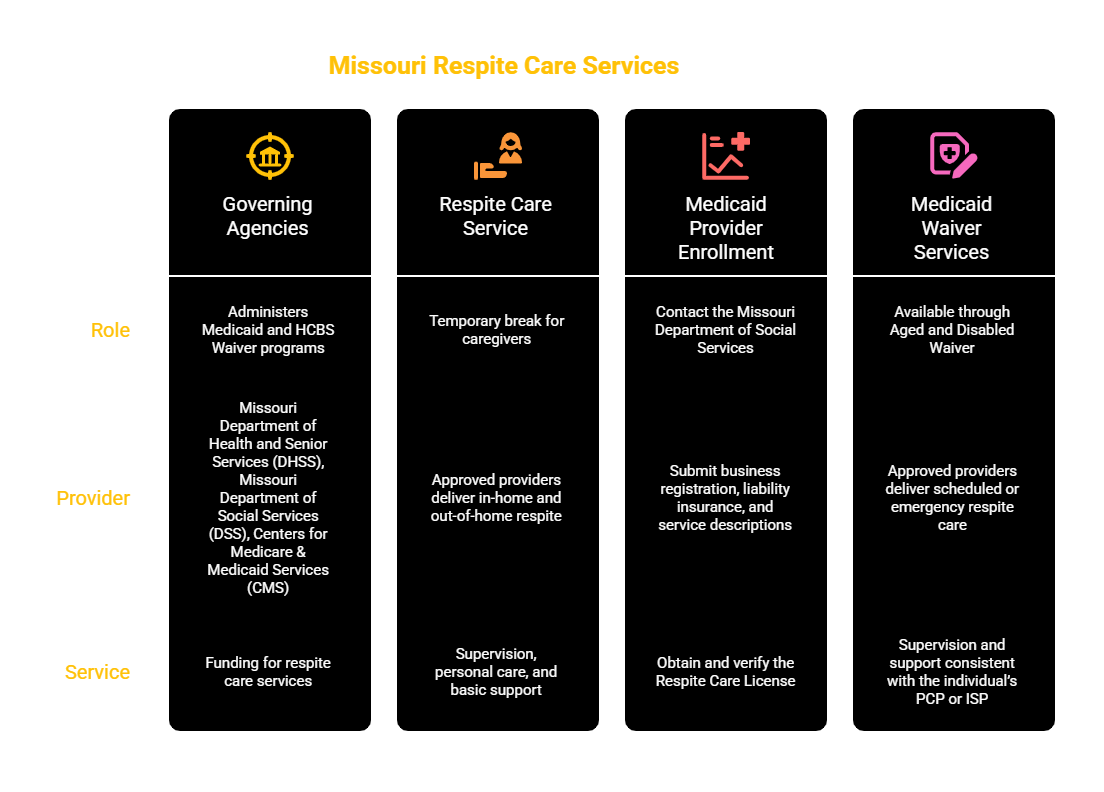
The provision of respite care in Missouri is a highly regulated activity requiring alignment with both state and federal directives. The Missouri Department of Health and Senior Services (DHSS) serves as the primary agency responsible for administering the HCBS waiver programs, which includes the oversight of funding for these specific services. Their regulatory role ensures that service delivery meets state quality standards and health-related expectations.
Simultaneously, the Missouri Department of Social Services (DSS) manages the operational side of Medicaid, specifically overseeing provider enrollment and the authorization of services. Beyond the state level, the Centers for Medicare & Medicaid Services (CMS) provides federal oversight to ensure that all state programs remain in compliance with federal law. Understanding the distinct roles of these three agencies is the first step in successful program administration.
- Missouri Department of Health and Senior Services (DHSS): Administers Medicaid and HCBS Waiver programs and provides funding for respite care services.
- Missouri Department of Social Services (DSS): Oversees Medicaid provider enrollment, eligibility, and service authorization protocols.
- Centers for Medicare & Medicaid Services (CMS): Provides essential federal oversight to ensure state-level waiver compliance.
How Are Respite Care Services Structured Under Missouri Waivers?
Respite care functions as a relief mechanism, allowing primary caregivers to take necessary breaks while ensuring the individual under their care continues to receive proper supervision. These services may be planned in advance or utilized in emergency situations, provided they align with the needs identified in the individual’s Person-Centered Plan (PCP) or Individual Service Plan (ISP). The flexibility of these services is what makes them vital to the HCBS model.
Approved providers are responsible for delivering care that may occur in the individual’s home or in designated community settings. Regardless of the setting, the provider is responsible for maintaining accurate documentation regarding service dates, duration of care, and the overall well-being of the participant. This documentation acts as the audit trail for billing and quality assurance purposes.
- In-home respite: Care provided directly within the individual’s private residence.
- Out-of-home respite: Care provided in a licensed facility or approved community setting.
- Core support: Supervision, personal care, and assistance with daily tasks as defined by the service plan.
- Ancillary support: Short-term behavioral support and social companionship.
What Are the Licensing and Medicaid Enrollment Requirements?
Launching a respite care agency involves several critical prerequisites. Before approaching state agencies, a business must be properly registered with the Missouri Secretary of State. Once the legal structure is in place, the agency must secure an Employer Identification Number (EIN) from the IRS and a Type 2 National Provider Identifier (NPI) to function within the healthcare billing system.
The enrollment process is sequential and requires meticulous attention to detail. After securing the necessary business credentials, the provider must obtain a Respite Care License through the DHSS. Following licensure, the agency must enroll as a Medicaid provider through the Missouri Department of Social Services. Failure to maintain compliance in any of these areas, including the maintenance of professional liability insurance, can result in the suspension of billing privileges or revocation of the provider agreement.
- Business Foundation: Register business with the Missouri Secretary of State and secure IRS EIN and Type 2 NPI.
- Licensing: Obtain a formal Respite Care License from the Missouri DHSS.
- Medicaid Enrollment: Complete the provider enrollment process through the Missouri DSS.
- Compliance: Maintain current liability insurance and comprehensive staff qualification records.
How to Manage Staffing, Training, and Documentation?
Staffing quality is a direct reflection of agency compliance. A Respite Care Supervisor or Program Manager is typically expected to have a background in human services or caregiving, with proven experience in supervision. Respite care workers, or in-home aides, must meet stringent requirements including high school diplomas or equivalents, current CPR/First Aid certification, and successful completion of background checks and fingerprinting.
Documentation is the backbone of a successful agency. Every provider must maintain a comprehensive policy and procedure manual that covers client intake, emergency protocols, and ethical standards. Agencies must document staff training on critical topics such as abuse prevention, client rights, and confidentiality, ensuring that annual refreshers are tracked and completed on time.
- Clinical Documentation: Daily service logs, medication reminders (non-administration), and incident reports.
- Staffing Records: Proof of TB clearance, fingerprinting, and ongoing training certificates.
- Policy Manual: Clearly defined grievance policies and client intake protocols.
Frequently Asked Questions
What HCBS Waivers provide coverage for respite care in Missouri?
Respite care is commonly available through the Aged and Disabled Waiver (ADW), the Independent Living Waiver, and the Medically Fragile Adult Waiver, provided the service is included in the individual's Person-Centered Plan.
What is the typical timeline to launch a respite care agency?
While timelines vary based on administrative efficiency, business formation typically takes 1–2 weeks, staff hiring and training takes 30–45 days, and the Medicaid provider enrollment process generally spans 60–90 days.
Are providers allowed to administer medication?
Standard respite care providers are typically restricted to providing medication reminders unless they are specifically licensed or authorized by the state to perform medication administration. Always consult the DHSS guidelines regarding your specific licensure level.
Key Takeaway
Success as a respite care provider in Missouri hinges on meticulous regulatory adherence and a commitment to standardized operational procedures. By aligning your business structure, staff training protocols, and documentation systems with the specific requirements of the DHSS and DSS, you can ensure long-term stability and success in supporting the HCBS waiver community.
WAIVER CONSULTING GROUP'S START-UP ASSISTANCE SERVICE — MISSOURI RESPITE CARE SERVICES PROVIDER: We support agencies and entrepreneurs in launching compliant Respite Care Services across Missouri under the HCBS Waiver models, providing assistance with business registration, Medicaid enrollment, policy development, and operational audit preparation.
Last verified: May 2024. This information is for educational purposes only and does not constitute legal or financial advice. Please consult with the Missouri Department of Health and Senior Services (DHSS) or the Missouri Department of Social Services (DSS) for the most current regulatory guidance and official program requirements.