RESPITE CARE SERVICES PROVIDER IN MISSISSIPPI
By Fatumata Kaba · 2025-08-06 · 5 min read
Respite Care Services in Mississippi provide essential, temporary relief to unpaid primary caregivers by offering professional, short-term care for individuals with disabilities, chronic conditions, or age-related needs. These services are delivered through the state’s Home and Community-Based Services (HCBS) waivers, ensuring that individuals receive consistent, high-quality support while allowing their family caregivers the necessary time to rest, recover, or attend to personal matters.
Understanding the Regulatory Landscape for Mississippi Respite Care
Launching a respite care agency requires a deep understanding of the oversight hierarchy in Mississippi. Coordination and funding for these services flow through multiple tiers of authority, starting with the federal level and filtering down to state-specific departments. Compliance is not optional; it is the cornerstone of maintaining a valid Medicaid provider status.
The regulatory framework involves the following key agencies:
- Mississippi Department of Mental Health (DMH): Responsible for coordinating HCBS waiver services and establishing the operational standards for service delivery.
- Mississippi Division of Medicaid (DOM): The primary body responsible for administering the Medicaid program and managing the financial reimbursement for waiver services.
- Centers for Medicare & Medicaid Services (CMS): Provides the necessary federal oversight and mandates compliance with federal waiver regulations to ensure program integrity.
Core Components of Respite Care Service Delivery
Respite care is designed to be highly flexible, catering to the specific needs defined in an individual’s Person-Centered Plan (PCP) or Individual Program Plan (IPP). Whether the respite is planned in advance to allow for a caregiver’s vacation or provided as an emergency stop-gap, the standard of care remains high. Providers must ensure that the transition between primary care and respite care is seamless.
The scope of service typically includes:
- In-home respite: Care provided directly within the individual’s private residence.
- Out-of-home respite: Services delivered in a licensed facility or designated community setting.
- Support services: Includes supervision, personal care, basic support, and behavioral support consistent with the individual's established plan.
- Documentation: Strict adherence to recording service dates, hours, and notes regarding the individual’s well-being during the shift.
Navigating the Provider Enrollment and Licensing Process
The path to becoming an approved provider begins with establishing a formal business structure and securing the necessary credentials to operate as a Home Care Organization (HCO). Founders must demonstrate organizational readiness before the Mississippi Division of Medicaid will issue a provider number.
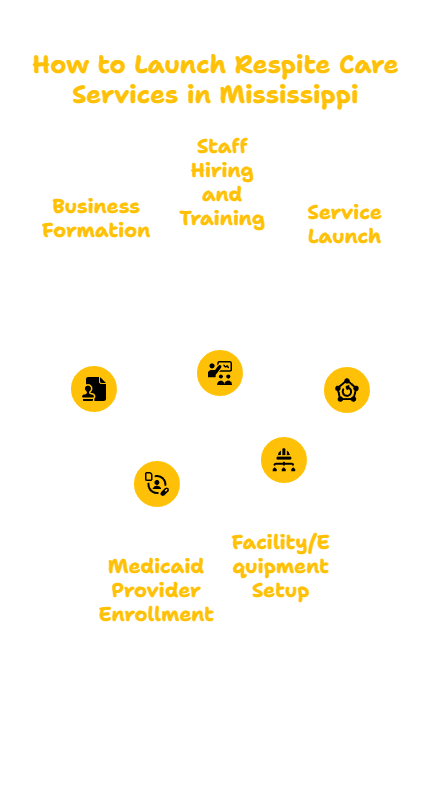
The enrollment sequence typically follows these administrative phases:
- Pre-Application: Engaging with the Mississippi Division of Medicaid to review current provider requirements and ensure all preliminary criteria are understood.
- Business Formation: Registering the entity with the Mississippi Secretary of State and obtaining an Employer Identification Number (EIN) and a Type 2 NPI.
- Licensure: Applying for and obtaining an HCO license from the Mississippi Department of Health.
- Medicaid Enrollment: Submitting formal applications for provider status, providing proof of liability insurance, and completing all required background checks for the agency.
Essential Documentation and Compliance Standards
A successful audit depends entirely on the quality and accessibility of an agency’s documentation. An agency must maintain a comprehensive policy and procedure manual that serves as the "source of truth" for all staff and administrative functions. These documents are routinely audited by state officials to verify that the agency is operating within the parameters of the law.
Required documentation includes, but is not limited to:
- Proof of business registration, EIN, and NPI confirmation.
- Current, verified HCO license and active liability insurance certificates.
- Detailed internal protocols for client intake, emergency communication, and grievance procedures.
- Service logs and staff supervision records that track daily progress and adherence to the individual's plan of care.
- Comprehensive training manuals focusing on client safety, abuse prevention, and the protection of confidential health information.
Staffing, Training, and Professional Requirements
The quality of respite care is directly linked to the competency of the staff. Beyond initial hiring, agencies are responsible for the ongoing supervision and professional development of their caregivers. Maintaining a staff that is both qualified and properly trained is a critical compliance requirement that impacts the agency's ability to remain in good standing with the Medicaid program.
Agencies must ensure that:
- Supervisors possess a background in social services, human development, or caregiving, with proven experience in team leadership.
- Direct Support Workers hold a high school diploma or equivalent, have passed mandatory background checks and fingerprinting, and maintain active CPR/First Aid certification.
- Continuous Training is provided, covering essential topics such as cultural sensitivity, emergency response, ethical conduct, and the specific needs of the populations served.
Frequently Asked Questions
What specific HCBS waivers cover respite services in Mississippi?
Respite care services are currently accessible through the 1915(c) HCBS Waiver for the Elderly and Disabled, the Mississippi Independent Living Waiver, and the Traumatic Brain Injury/Spinal Cord Injury Waiver.
How long does the provider enrollment process usually take?
While timelines vary based on completeness of documentation and agency capacity, the Medicaid provider enrollment process typically spans 60–90 days, following the initial business formation and licensure phases.
What are the primary operational responsibilities of a respite agency?
Agencies are responsible for business registration, hiring and training qualified staff, implementing rigorous documentation systems for billing and service logs, and ensuring constant coordination with service coordinators to meet the goals of each individual’s Person-Centered Plan.
WAIVER CONSULTING GROUP'S START-UP ASSISTANCE SERVICE — MISSISSIPPI RESPITE CARE SERVICES PROVIDER: We support agencies and entrepreneurs in launching compliant Respite Care Services across Mississippi under the HCBS Waiver models. Scope of Work: Business registration and licensure; Medicaid provider enrollment; Policy & procedure manual for respite care operations; Templates for service logs, emergency plans, and family communication; Website, domain, and email setup; Staff credentialing trackers and supervision logs; Client intake packet and consent forms; Incident reporting systems and audit preparation tools; Referral networking with healthcare professionals and community agencies.
Key Takeaway: Establishing a respite care agency in Mississippi requires meticulous attention to state and federal regulatory frameworks, including the procurement of an HCO license, enrollment with the Division of Medicaid, and the implementation of robust, compliant internal policies to safeguard both the provider and the individuals receiving care.
Last verified: October 2023. This information is for educational purposes only and does not constitute legal or professional advice. Requirements for Medicaid waivers are subject to change. Always consult directly with the Mississippi Division of Medicaid or the Mississippi Department of Mental Health for the most current regulations and program guidance.