RESPITE CARE SERVICES PROVIDER IN MINNESOTA
By Fatumata Kaba · 2025-07-27 · 5 min read
Understanding Respite Care Services in Minnesota
Respite care services in Minnesota function as a critical support mechanism, offering temporary, short-term relief to the unpaid primary caregivers of individuals living with disabilities, chronic health conditions, or age-related needs. By providing these essential breaks, the system helps maintain the long-term well-being of family caregivers while ensuring that the individuals they support continue to receive high-quality, compassionate supervision and care in a safe environment.
These services are primarily delivered through Minnesota’s Home and Community-Based Services (HCBS) Waiver programs. Whether provided in the individual’s own home, within a community setting, or at a licensed out-of-home facility, respite care is tailored to the unique requirements defined in an individual’s Person-Centered Plan (PCP) or Individual Program Plan (IPP). By facilitating these breaks, the state promotes the stability of family caregiving arrangements, which remains a cornerstone of the Minnesota long-term care ecosystem.
What Are the Governing Agencies and Regulatory Frameworks?
The regulatory environment for respite care in Minnesota is multi-layered, involving both state and federal oversight to ensure service quality and fiscal integrity. The Minnesota Department of Human Services (DHS) serves as the primary administrative body, overseeing the Medicaid program and the various HCBS Waiver programs that provide the necessary funding for these services. DHS establishes the policies, service definitions, and provider enrollment requirements that all agencies must follow.
In addition to DHS, the Minnesota Department of Health (MDH) is responsible for the licensing of respite care facilities. MDH enforces strict health and safety regulations to ensure that environments providing out-of-home care meet state standards. Finally, at the federal level, the Centers for Medicare & Medicaid Services (CMS) provides overarching guidance and ensures that Minnesota’s waiver programs remain in full compliance with federal Medicaid statutes and regulations.
- Minnesota Department of Human Services (DHS): Administers Medicaid and HCBS Waiver programs, including funding for respite care services.
- Minnesota Department of Health (MDH): Licenses respite care facilities and enforces compliance with health regulations.
- Centers for Medicare & Medicaid Services (CMS): Provides federal oversight and ensures waiver compliance.
How Do Providers Obtain Licensing and Medicaid Enrollment?
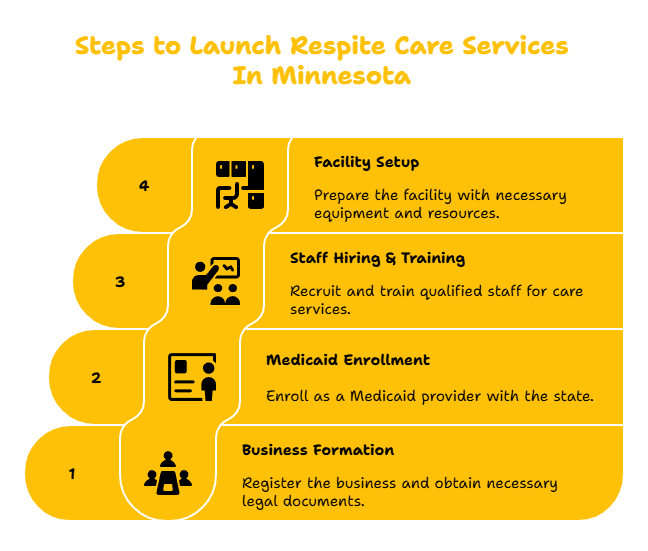
Establishing a respite care agency requires a structured approach to licensing and provider enrollment. Providers must first ensure their business is legally registered with the Minnesota Secretary of State and possesses the necessary federal tax documentation, including an Employer Identification Number (EIN) and a Type 2 National Provider Identifier (NPI). These foundational steps are mandatory before moving into the specialized world of Medicaid enrollment.
Once the business is legally formed, the provider must secure the appropriate Respite Care License from the MDH. After licensing is secured, the provider initiates the enrollment process with the Minnesota DHS. This process involves a pre-application phase to review specific provider requirements, followed by the submission of extensive documentation, including liability insurance certificates and detailed service descriptions. Upon successful review and approval, the agency is assigned a Medicaid provider number, which is the final authorization required to begin billing for services.
- Register the business with the Minnesota Secretary of State.
- Obtain an IRS EIN and a Type 2 NPI.
- Secure a Respite Care License from the Minnesota Department of Health.
- Complete the Medicaid provider enrollment process through the Minnesota Department of Human Services.
What Are the Operational and Staffing Requirements?
Operational success in respite care relies heavily on rigorous internal policies and qualified staffing. An agency must maintain a comprehensive policy and procedure manual that covers client intake, caregiver communication protocols, daily service logs, and emergency response procedures. Furthermore, because respite care often involves sensitive health-related support, agencies must have clear documentation protocols for medication reminders—noting that administration of medication is only permitted if the provider is appropriately licensed to do so—and maintain strict adherence to client rights and privacy protections.
Staffing requirements are equally stringent to ensure the safety of the individuals being served. The Respite Care Supervisor or Program Manager should possess a background in social services, caregiving, or human development, along with supervisory experience. Direct support staff, such as Respite Care Workers or In-Home Aides, must hold at least a high school diploma or equivalent. Furthermore, all staff must undergo thorough background checks, fingerprinting, and TB clearance. Ongoing training is non-negotiable; agencies must provide regular education on client safety, abuse prevention, cultural sensitivity, and emergency response procedures.
Which HCBS Waiver Programs Utilize Respite Services?
Respite services are accessed through specific waiver programs designed to help individuals live independently within their communities rather than in institutional settings. These waivers allow for flexible support, ranging from scheduled breaks to emergency care, provided in the home or the community. Providers must coordinate closely with the individual's service coordinator to ensure that all respite hours provided align with the specific authorizations outlined in the person’s care plan.
Key programs that provide funding for these services include the 1915(c) HCBS Waiver for the Elderly and Disabled, the Community Access for Disability Inclusion (CADI) Waiver, and the Brain Injury (BI) Waiver. Each of these programs is designed to address the unique needs of the populations they serve, requiring providers to remain versatile in their service delivery while maintaining consistent documentation and reporting standards across all client files.
Frequently Asked Questions
What is the typical timeline for launching a respite care agency?
The launch process varies, but generally involves business formation (1–2 weeks), Medicaid provider enrollment (60–90 days), staff hiring and training (30–45 days), and facility or equipment setup (2–4 weeks).
What documentation is required to maintain compliance?
Agencies must maintain detailed records, including Articles of Incorporation, NPI confirmation, Respite Care Licenses, liability insurance certificates, and comprehensive policy manuals covering grievance procedures, incident reporting, and staff training logs.
Can respite care providers administer medication?
Staff may perform medication reminders, but they cannot administer medication unless the agency is specifically licensed to perform medication administration services under Minnesota law.
Key Takeaway
Launching a respite care provider agency in Minnesota requires strict adherence to the regulatory standards set by the Department of Human Services and the Department of Health. By focusing on compliant administrative structures, rigorous staff training, and precise documentation, agency founders can provide essential relief to family caregivers while ensuring the highest standards of safety and care for individuals with complex needs across the state.
Last verified: October 2023. This information is intended for educational purposes and does not constitute legal or professional consulting advice. Prospective providers should consult directly with the Minnesota Department of Human Services and the Minnesota Department of Health for the most current regulatory requirements and enrollment procedures.