RESPITE CARE SERVICES PROVIDER IN MARYLAND
By Fatumata Kaba · 2025-09-03 · 6 min read
PROVIDING TEMPORARY RELIEF FOR CAREGIVERS WHILE ENSURING SAFETY, CONTINUITY, AND PERSONALIZED SUPPORT FOR INDIVIDUALS WITH DISABILITIES OR COMPLEX NEEDS
Respite care services in Maryland provide essential, short-term relief to the primary unpaid caregivers of individuals with developmental disabilities, chronic illnesses, or complex support needs. These services are strategically designed to sustain the family unit by preventing caregiver burnout while ensuring that participants receive continuous, high-quality, and person-centered supervision in alignment with their approved Medicaid waiver plans.
Understanding the Governance and Regulatory Landscape of Maryland Respite Care
The provision of respite care in Maryland is a highly regulated endeavor governed by a hierarchical structure of federal and state oversight. At the federal level, the Centers for Medicare & Medicaid Services (CMS) establishes the compliance framework for Home and Community-Based Services (HCBS) waivers. In Maryland, the Department of Health (MDH) serves as the primary state authority, ensuring that all Medicaid waiver programs operate in accordance with federal mandates.
Within this structure, the Developmental Disabilities Administration (DDA) is the key agency responsible for the daily oversight of respite services. The DDA manages the application, monitoring, and quality assurance processes for providers. Furthermore, the Office of Long-Term Services and Supports (LTSS Maryland) acts as the critical hub for documentation, billing, and the maintenance of electronic records, ensuring that every hour of service delivered is properly accounted for and aligned with the participant's Individual Plan (IP).
- Maryland Department of Health (MDH): Regulatory authority for Medicaid waiver programs.
- Developmental Disabilities Administration (DDA): Oversees respite care services under DDA-specific waivers.
- Office of Long-Term Services and Supports (LTSS Maryland): Manages system-wide documentation and reimbursement billing.
- Centers for Medicare & Medicaid Services (CMS): Provides federal oversight and ensures waiver compliance.
Defining the Scope and Delivery of Respite Services
Respite care is not a one-size-fits-all service; it is a flexible support mechanism that must be tailored to the unique requirements outlined in a participant's Person-Centered Plan (PCP). The fundamental objective is to provide a safe substitute for the primary caregiver, allowing for necessary breaks while maintaining the participant's routine and health stability.
Providers may deliver these services in a variety of settings, ranging from the individual’s own home to certified out-of-home facilities. The nature of the service is adaptable to the needs of the participant, covering everything from simple supervision to complex medical or behavioral support. Whether the respite is planned weeks in advance or required on an emergency basis, the provider must be prepared to maintain continuity of care throughout the duration of the support period.
- In-home personal care and supervision tailored to daily routines.
- Short-term out-of-home respite provided in DDA-certified facilities.
- Overnight, weekend, or multi-day extended respite options.
- Emergency or crisis-based support for unforeseen caregiving gaps.
- Recreational and structured social activities during the respite period.
Navigating the DDA Provider Enrollment and Approval Process
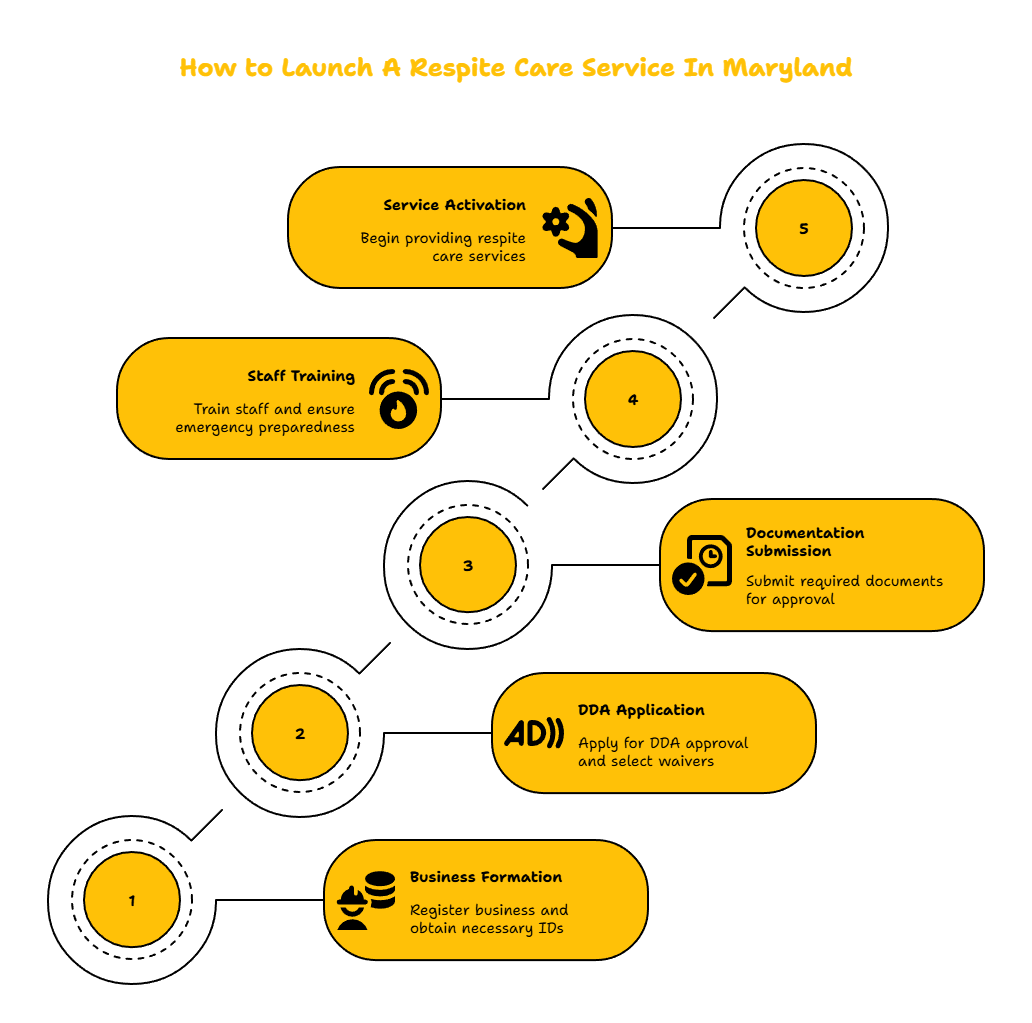
Becoming an approved DDA provider is a structured, multi-phase process that requires meticulous attention to administrative detail. Before initiating services, an agency must establish its legal foundation by registering with the Maryland Department of Assessments and Taxation (SDAT) and securing an Employer Identification Number (EIN) and a Type 2 National Provider Identifier (NPI). This foundational work serves as the prerequisite for formal enrollment through the DDA Provider Portal.
Once the business is legally established, the provider must draft a comprehensive Policy and Procedure manual. This document is essential, as it outlines how the agency will manage intake, emergency protocols, staff supervision, and compliance with DDA quality assurance measures. The application process requires the selection of specific waivers—Family Supports, Community Supports, or Community Pathways—and the submission of detailed evidence regarding the agency’s ability to meet staffing and safety standards.
Managing Staffing Requirements and Professional Training
The quality of a respite program is inextricably linked to the competency of its Direct Support Professionals (DSPs). Providers are responsible for ensuring that all staff meet stringent minimum requirements, including a high school diploma or GED, successful completion of background checks, and active certifications in CPR and First Aid. Furthermore, all staff must demonstrate proficiency in DDA Core Competency training to ensure they are prepared for the complexities of disability support.
Beyond basic onboarding, agencies must implement a robust system for ongoing professional development. This includes regular competency evaluations, training on the implementation of individual Person-Centered Plans, and specific education regarding abuse prevention and mandated reporting. For agencies requiring the administration of medications, staff must also undergo training in medication administration as delegated by a registered nurse under the Maryland Board of Nursing standards.
- DDA Orientation and mandatory Core Competency certification.
- Person-Centered Planning and Individual Plan implementation strategies.
- Emergency response, behavior management, and crisis de-escalation.
- Abuse prevention and legal obligations regarding mandated reporting.
- Annual continuing education and clinical competency refreshes.
Essential Documentation and Operational Compliance
Maintaining accurate documentation is a cornerstone of regulatory compliance in the Maryland HCBS system. Providers must be prepared for periodic audits and must maintain an organized system for record-keeping. This includes maintaining up-to-date business formation documents, liability insurance policies, and detailed logs of all services rendered. Every interaction with a participant should be documented in accordance with DDA and LTSS Maryland requirements to ensure eligibility for reimbursement.
The internal Policy and Procedure manual serves as the operational blueprint for the organization. This manual should explicitly detail how the agency handles incidents, reports suspected abuse, and maintains HIPAA-compliant confidentiality. By keeping these records readily accessible and systematically filed, providers can ensure they are always audit-ready and capable of demonstrating their commitment to high-quality service delivery.
Frequently Asked Questions
What waivers fund respite services in Maryland?
Respite services are primarily funded through the DDA’s Family Supports Waiver, Community Supports Waiver, and Community Pathways Waiver. Each waiver serves different populations based on age and intensity of support needs, ranging from children under 21 to individuals requiring intensive, long-term residential support.
How does the referral process work for new providers?
Once an agency is DDA-approved, they typically receive referrals through Coordination of Community Services (CCS) providers. These coordinators manage the participant’s plan and work with families to identify providers that have the capacity and specific skillset required to meet the participant’s needs.
What is the typical timeline for launching a new respite agency?
The timeline varies based on administrative readiness, but generally, business formation takes 1–2 weeks, DDA provider application and approval processes can take 4–8 weeks, and final training and readiness setup requires an additional 1–3 weeks. Ongoing referral networking is essential from the moment the provider is authorized to begin service delivery.
WAIVER CONSULTING GROUP'S START-UP ASSISTANCE SERVICE — MARYLAND RESPITE CARE PROVIDER
We support professionals and agencies in launching licensed, DDA-compliant respite care programs to serve families across Maryland.
Scope of Work:
- Business registration (LLC, EIN, NPI)
- DDA respite care service enrollment (Family, Community, and Community Pathways Waivers)
- Policy & procedure manual development for emergency and routine respite
- Templates for care logs, consent forms, and emergency response plans
- Staff training schedules and credentialing trackers
- Website, email, and client intake system setup
- Referral outreach tools for CCS providers and family organizations
- Audit-preparation tools and staff supervision documentation
Key Takeaway: Successful operation of a respite care agency in Maryland requires strict adherence to DDA regulatory standards, a commitment to ongoing staff competency, and meticulous documentation management. By aligning business operations with the specific requirements of the Family, Community, and Community Pathways Waivers, providers can effectively bridge the gap in support for families while building a sustainable, compliant organization.
Last verified: May 2024. This information is provided for educational purposes and should not be considered legal or financial advice. Regulations for Medicaid HCBS programs are subject to change; providers should consult the Maryland DDA provider portal and official state communications for the most current requirements and statutes.