RESPITE CARE SERVICES PROVIDER IN MAINE
By Fatumata Kaba · 2025-08-12 · 6 min read
Supporting family caregivers by providing temporary relief and safe, compassionate substitute care.
Respite Care Services in Maine provide essential short-term relief to primary caregivers of individuals with disabilities, chronic illnesses, or age-related conditions. These services allow families to take scheduled breaks or manage emergencies while ensuring their loved one receives professional care, supervision, and companionship in a safe environment.
Respite care is primarily available through MaineCare (Medicaid) Home and Community-Based Services (HCBS) waivers and is complemented by various state-funded caregiver support programs. For prospective providers, navigating these systems requires a deep understanding of the regulatory landscape established by the Department of Health and Human Services (DHHS) and the specific operational standards required for enrollment and service delivery.
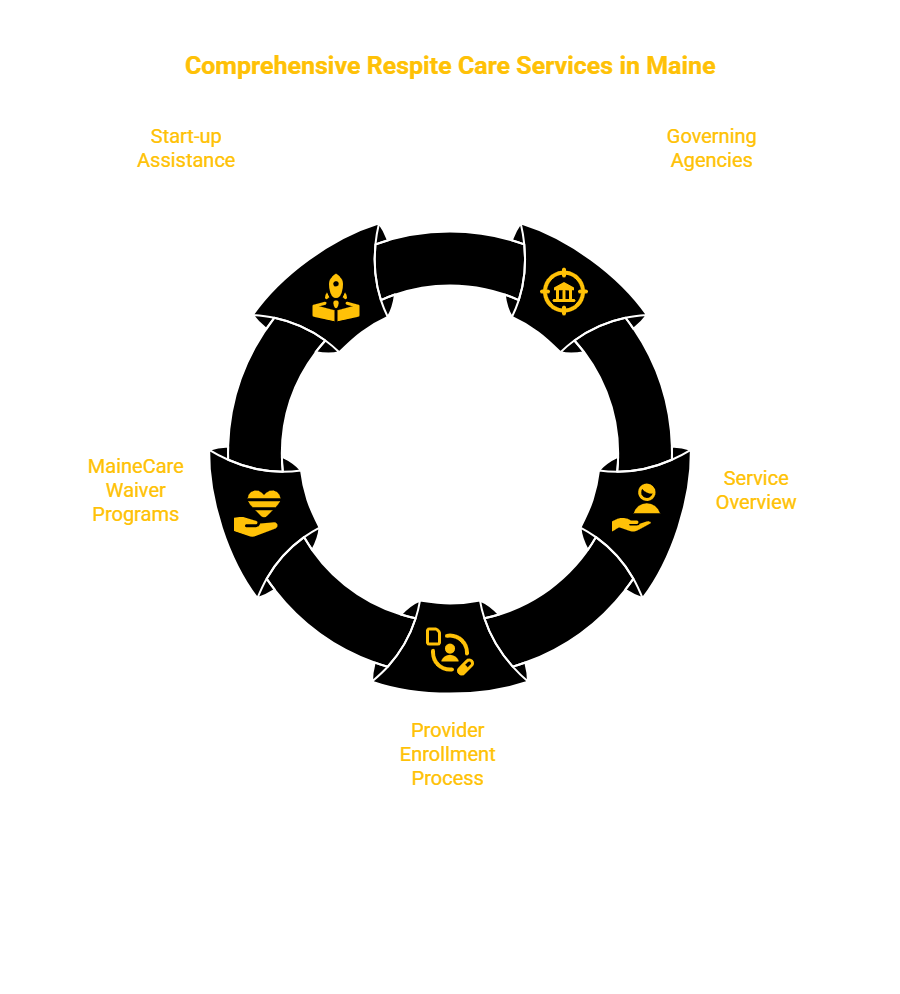
What Are the Governing Agencies and Regulatory Frameworks?
The delivery of respite care in Maine is governed by a network of state and federal agencies designed to ensure high standards of care and fiscal accountability. At the state level, the Maine Department of Health and Human Services (DHHS) acts as the primary oversight authority. The Office of Aging and Disability Services (OADS) holds responsibility for the programmatic administration of respite care for aging adults and individuals with intellectual or developmental disabilities. This office ensures that services align with the participant's specific support needs.
Concurrently, the Office of MaineCare Services (OMS) manages the administrative aspects of the Medicaid waiver programs. This includes overseeing the rigorous provider enrollment process, establishing billing policies, and conducting ongoing compliance audits. At the federal level, the Centers for Medicare & Medicaid Services (CMS) mandates that all 1915(c) HCBS waivers meet strict federal compliance guidelines, ensuring the safety and health of all participants.
Beyond the primary waiver programs, Area Agencies on Aging (AAAs) play a critical role in the broader care ecosystem. They coordinate respite options through the National Family Caregiver Support Program and Section 63 Older Americans Act services, providing an additional layer of support for families who may not qualify for or require full-scale Medicaid waiver enrollment.
How Do You Define and Structure Respite Care Service Offerings?
Respite Care is defined as temporary substitute care, which is intended to provide necessary relief to unpaid family caregivers. The service can be delivered in-home, where a provider enters the participant’s residence, or in an out-of-home setting, such as a licensed day program or a residential facility. Every service model must be explicitly included in the participant’s individual Plan of Care (POC) to ensure compliance with waiver requirements.
Providers generally structure their service offerings to meet the diverse needs of the population, ranging from planned hourly care to emergency interventions. Authorized activities often include:
- In-home respite: Short-term caregiving provided directly within the participant’s private residence.
- Out-of-home respite: Scheduled care provided at a licensed facility or day program.
- Emergency respite: Rapidly deployed support when caregivers face unexpected health crises, family emergencies, or work-related disruptions.
- Overnight or weekend care: Extended support intervals as authorized by the participant's care team.
- Clinical and daily support: Assistance with Activities of Daily Living (ADLs) and Instrumental Activities of Daily Living (IADLs), medication reminders, continuous safety monitoring, and behavioral support.
What Are the Licensing and Provider Approval Prerequisites?
Launching a respite care agency involves several legal and operational prerequisites. Business owners must first register their entity with the Maine Secretary of State and obtain an IRS Employer Identification Number (EIN) and a Type 2 National Provider Identifier (NPI). These are the foundational building blocks required before entering the MaineCare provider enrollment portal.
For those intending to offer facility-based respite, obtaining licensure through the Division of Licensing and Certification is a mandatory step. This process involves a facility inspection and a review of operational safety protocols. Regardless of the service model, all providers must maintain adequate general liability and workers’ compensation insurance to protect the business, the staff, and the participants.
Finally, providers are responsible for developing a robust Respite Care Policy & Procedure Manual. This document must clearly outline staff training, HIPAA-compliant documentation methods, time-tracking procedures, and specific protocols for care delivery. Maintaining a rigorous, written policy manual is often the primary focus during state audits, as it demonstrates the agency's commitment to regulatory standards.
What Is the Step-by-Step Provider Enrollment Process?
The enrollment process is a sequential journey that begins with formal application through the MaineCare Provider Enrollment Portal. Providers must specifically select the waiver or service categories they intend to support, such as Section 19 (Elderly and Adults with Disabilities), Section 21 (Comprehensive Waiver), or Section 29 (Support Waiver). Precision during this initial application stage prevents delays in credentialing and billing access.
Once the MaineCare enrollment is initiated, providers should concurrently work on the following:
- Licensure verification: For those operating out-of-home settings, the Division of Licensing and Certification must confirm that the physical environment meets state requirements.
- Staff Credentialing: Hiring and training staff, ensuring they meet the specific background check and competency standards required by MaineCare for Direct Support Professionals (DSPs).
- Referral Coordination: Establishing active communication channels with case managers and Area Agencies on Aging (AAAs) to facilitate participant placement once the agency is officially active.
- System Implementation: Setting up the electronic or manual systems required to track time, capture care notes, and submit claims for billing purposes.
How Do You Maintain Compliance and Staffing Standards?
The quality of a respite program is inherently tied to the competence of its staff. All Respite Workers and Direct Support Professionals (DSPs) must meet minimum requirements, including a high school diploma or GED, successful completion of comprehensive background checks, and active CPR/First Aid certification. Preferred candidates typically possess prior experience in personal care or disability support, which reduces the learning curve for specialized care delivery.
Beyond individual staff qualifications, the agency must implement a structured training program that addresses essential operational competencies. These include, but are not limited to, HIPAA and confidentiality training, protocols for elder and disability abuse prevention, ADL/IADL support techniques, and emergency evacuation planning. Consistent documentation of these training sessions is vital, as the agency must be able to produce these records during any state or federal monitoring audit.
Frequently Asked Questions
How long does the provider enrollment process typically take?
The total timeline for launch is multi-phased. Business setup and policy manual development typically require 1–2 months. MaineCare and licensing enrollment generally takes 60–90 days, while staff hiring and system setup can take an additional 3–4 weeks. Referral intake begins once the agency is fully credentialed.
What documentation must be kept for audit compliance?
Providers must maintain comprehensive participant intake records, daily care logs, incident reports, emergency response protocols, staff training records, and client consent documentation. Medicaid billing logs must be meticulously kept to ensure they reconcile with documented services provided.
Can an agency offer both in-home and facility-based respite?
Yes, providers may offer both models; however, each requires distinct adherence to state rules. In-home services focus on personal care within the residence, while facility-based respite requires specific licensure from the Division of Licensing and Certification for the physical space.
Key Takeaways
Establishing a successful respite care agency in Maine requires a methodical approach to regulatory compliance, staff credentialing, and administrative documentation. By aligning your operational practices with the requirements set forth by OADS and OMS, and by fostering strong referral relationships with AAAs and case managers, providers can build a sustainable, high-impact organization that supports the vital needs of Maine’s family caregivers.
Last verified: October 2023. The information provided in this article is for educational purposes only and does not constitute legal or professional advice. Always consult the official Maine Department of Health and Human Services (DHHS) resources for the most current regulatory updates and requirements.