RESPITE CARE SERVICES PROVIDER IN KANSAS
By Fatumata Kaba · 2025-07-24 · 5 min read
GIVING CAREGIVERS A BREAK WHILE PROVIDING SAFE, SUPPORTIVE CARE FOR PARTICIPANTS
Respite Care Services in Kansas provide essential short-term relief and supervision for individuals with disabilities, chronic illnesses, or age-related needs when their primary caregivers are unavailable. These services are authorized under Kansas Medicaid (KanCare) through various Home and Community-Based Services (HCBS) waiver programs to prevent caregiver burnout, maintain residential stability, and ensure the safety of participants.
What Are the Governing Agencies for Kansas Respite Care?
The administration of Respite Care in Kansas is a multi-layered regulatory effort involving state and federal oversight. The Kansas Department for Aging and Disability Services (KDADS) serves as the primary governing body responsible for managing HCBS waiver programs and defining the specific clinical and administrative standards for service delivery. Their guidelines ensure that every provider operates in alignment with state-mandated quality benchmarks.
The Kansas Department of Health and Environment (KDHE), specifically the Division of Health Care Finance, acts as the primary authority for Medicaid provider enrollment, participant eligibility determinations, and the processing of claims under the KanCare system. Additionally, the Managed Care Organizations (MCOs)—Sunflower Health Plan, UnitedHealthcare, and Aetna Better Health of Kansas—play an operational role by authorizing specific respite services, reviewing Individualized Service Plans (ISPs), and facilitating reimbursements to enrolled providers. Finally, the Centers for Medicare & Medicaid Services (CMS) provides the overarching federal framework to ensure that state programs comply with national Medicaid regulations.
How to Establish a Compliant Respite Care Provider Business
Establishing a Respite Care agency requires meticulous attention to business infrastructure and regulatory compliance. The initial phase involves formal registration with the Kansas Secretary of State, obtaining an Employer Identification Number (EIN) from the IRS, and securing a Type 2 National Provider Identifier (NPI). These foundational steps are necessary before moving into the specialized realm of Medicaid enrollment.
Prospective providers must also focus on risk management by securing comprehensive general liability and professional liability insurance. Establishing a robust set of internal policies—covering emergency care, safety protocols, supervision standards, and participant rights—is not merely a best practice; it is a prerequisite for state and MCO credentialing. Agencies must demonstrate that they have the internal infrastructure to manage the complexities of Medicaid-funded service delivery before they are cleared to accept referrals.
Navigating the Medicaid Enrollment and Credentialing Process
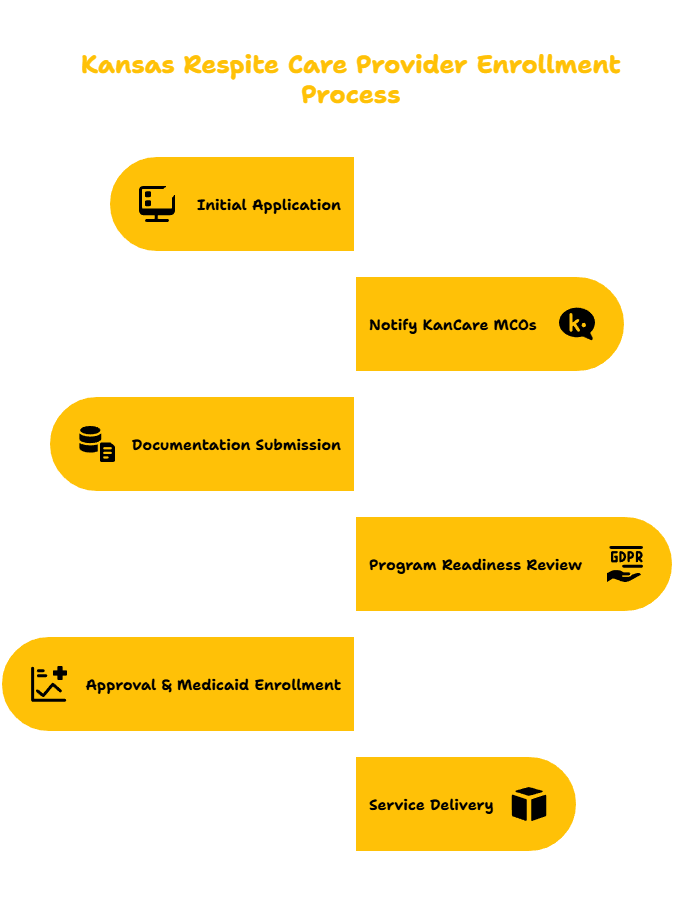
The provider enrollment process is centered on the Kansas Medical Assistance Program (KMAP) portal. Agencies must first register as a Medicaid provider through this system, which serves as the primary gateway for all subsequent billing and service authorization activities. Once the KMAP registration is complete, the agency must initiate the credentialing process with each of the three KanCare MCOs to ensure they are authorized to serve participants across the state’s managed care networks.
The documentation requirements for this phase are rigorous. Applicants must be prepared to submit Articles of Incorporation, proof of business registration, NPI confirmation, detailed policy and procedure manuals, and proof of insurance coverage. In some instances, KDADS or an MCO may require a service readiness interview or a formal program review. This phase is designed to verify that the provider is operationally prepared to deliver safe, compliant care. Once approved, the agency will be assigned specific billing codes—typically structured in 15-minute units or daily rates—to facilitate reimbursement.
Staffing, Training, and Documentation Requirements
The quality of Respite Care is entirely dependent on the competence of the staff. Agencies are responsible for appointing a Respite Program Supervisor, who generally should possess a professional background in health, human services, or caregiving coordination, along with a clean background check. All Direct Support Professionals (DSPs) or respite care workers must meet baseline requirements, which include a high school diploma or GED, valid CPR/First Aid certification, and documented completion of personal care assistance instruction.
- Mandatory HIPAA and confidentiality training protocols.
- Comprehensive emergency response and abuse prevention training.
- Specific training regarding participant rights, safety monitoring, and documentation.
- Regular competency evaluations and mandatory continuing education cycles.
Documentation is the backbone of audit readiness. Providers must maintain meticulous records that include intake forms, detailed care planning documentation, and incident reporting logs. These records must clearly demonstrate that the services delivered align with the participant’s Person-Centered Service Plan (PCSP) and that no overlapping services have been billed to the Medicaid program.
Overview of Waiver Programs and Service Delivery
Respite Care is authorized under a specific suite of Kansas HCBS waivers, each serving distinct populations. These include the Intellectual/Developmental Disability (IDD) Waiver, Physical Disability (PD) Waiver, Frail Elderly (FE) Waiver, Brain Injury (BI) Waiver, Autism Waiver, and, when applicable, the Technology Assisted (TA) Waiver. Regardless of the waiver, the objective remains the same: providing safe, temporary, and professional support to the participant.
Providers may be authorized to deliver care in various environments, including in-home settings or licensed off-site facilities. Services can encompass planned breaks for primary caregivers or emergency/crisis respite during unplanned absences. Whether the care is hourly, overnight, or weekend-based, the provider must ensure the level of supervision and assistance—including personal care, meal preparation, and mobility assistance—strictly adheres to the approved service authorization provided by the MCO.
Frequently Asked Questions
What is the difference between planned and crisis respite care?
Planned respite care is scheduled in advance to allow caregivers time for self-care or personal errands, as outlined in the participant's service plan. Crisis or emergency respite is designed for unexpected situations where the primary caregiver is suddenly unavailable, ensuring the participant’s safety without interruption to their support system.
Can an agency provide respite care in both home and facility settings?
Yes, provided the agency is appropriately licensed and authorized to perform both types of services. In-home respite occurs within the participant's primary residence, while out-of-home respite occurs in a licensed provider setting. Each setting must meet specific health and safety standards defined by KDADS.
How are providers reimbursed for respite services?
Reimbursement is managed through the KanCare MCOs following the submission of clean, audit-ready claims. Services are typically reimbursed based on units of time, such as 15-minute increments or daily rates, depending on the specific waiver requirements and the service authorization issued by the MCO.
Strategic Implementation Timeline
The journey to launching a Respite Care agency requires a phased approach. The first 1–2 months should be dedicated to business formation, the drafting of comprehensive policy manuals, and the procurement of necessary insurance. The subsequent 2–3 months are typically consumed by staff recruitment, credentialing, and rigorous training efforts. The Medicaid enrollment and MCO credentialing phase generally requires an additional 60–90 days for administrative processing. Finally, the setup of billing systems and the initial service launch typically require 30–45 days to ensure all financial and clinical workflows are operational.
Key Takeaway: Successfully operating as a Respite Care provider in Kansas requires a steadfast commitment to administrative compliance, rigorous staff training, and ongoing coordination with KanCare MCOs. By focusing on audit-ready documentation and adhering strictly to the standards set by KDADS, providers can effectively bridge the gap in care for participants while ensuring the long-term sustainability of their agency.
Last verified August 2024. The information provided is intended for educational purposes and does not constitute legal or professional advice. Always consult with the Kansas Department for Aging and Disability Services (KDADS) or the relevant Managed Care Organization (MCO) to verify the most current regulations and requirements for your specific agency.