RESPITE CARE SERVICES PROVIDER IN INDIANA
By Fatumata Kaba · 2025-07-19 · 5 min read
SUPPORTING CAREGIVERS AND PROMOTING PARTICIPANT WELL-BEING THROUGH SHORT-TERM RELIEF SERVICES
Respite Care Services in Indiana provide essential, short-term relief for the unpaid caregivers of individuals living with disabilities, chronic health conditions, or age-related limitations. By offering temporary, high-quality substitute care, these services are designed to prevent caregiver burnout, maintain the stability of the family unit, and ensure that waiver participants receive consistent, safe, and professional support through Indiana’s Medicaid Home and Community-Based Services (HCBS) waiver programs.
What Are the Roles of Governing Agencies in Indiana Respite Care?
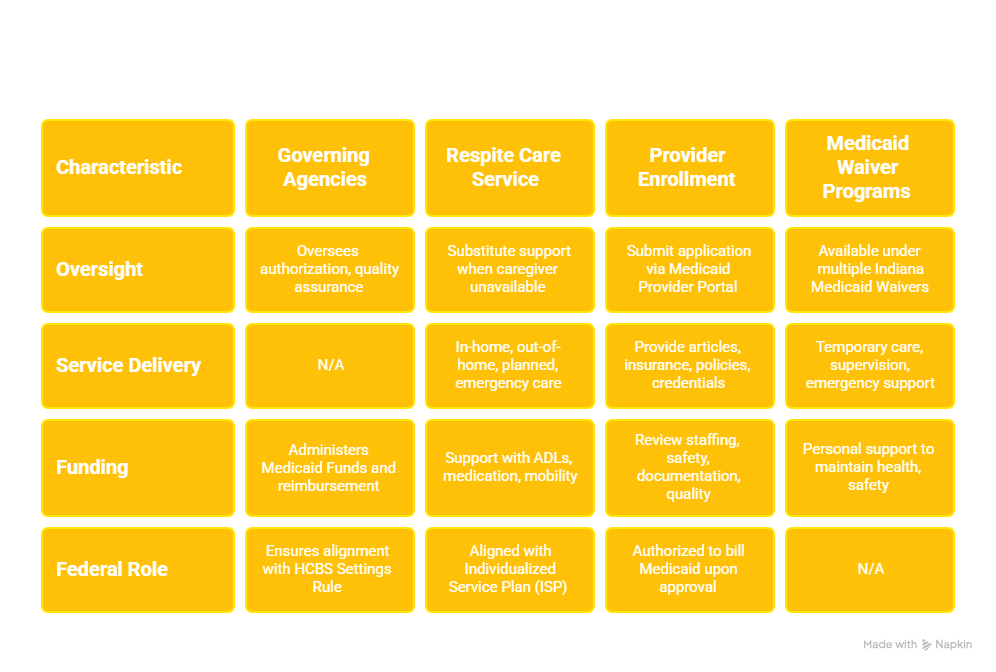
The landscape of Medicaid-funded respite care is governed by a multi-tiered regulatory structure. At the state level, the Indiana Family and Social Services Administration (FSSA) serves as the primary authority, specifically through the Division of Disability and Rehabilitative Services (DDRS) and the Division of Aging. These divisions are responsible for the critical functions of authorizing service delivery, overseeing provider enrollment, enforcing quality assurance measures, and ensuring the protection of participants under HCBS waivers.
Beyond the FSSA, the Indiana Office of Medicaid Policy and Planning (OMPP) acts as the financial engine for these services, managing the administration of Medicaid funding and the technical processes related to provider enrollment and claims reimbursement. On a federal level, the Centers for Medicare & Medicaid Services (CMS) provides overarching regulatory guidance, ensuring that all Indiana-based respite services remain strictly compliant with the HCBS Settings Rule, person-centered care requirements, and established federal safety standards.
How Are Respite Care Services Structured and Delivered?
Respite care is defined as substitute support and supervision provided to a participant when their primary, unpaid caregiver is unavailable. Whether the need arises from a planned vacation, a medical appointment, or an unexpected family emergency, providers must be prepared to offer consistent care that aligns with the participant’s Individualized Service Plan (ISP). This ensures that the relief provided is not only helpful to the caregiver but also addresses the unique health and safety needs of the participant.
Services generally fall into several categories, including in-home care, which occurs in the participant’s primary residence, and out-of-home respite, which is provided in a qualified facility or a provider-operated setting. During these sessions, direct support professionals are responsible for activities such as:
- Providing assistance with Activities of Daily Living (ADLs) and instrumental activities of daily living.
- Managing medication reminders and basic health monitoring.
- Offering mobility support and ensuring the participant remains safe in their environment.
- Executing emergency respite protocols during caregiver crises or unexpected hospitalizations.
What Are the Prerequisites for Provider Enrollment and Licensing?
Entering the Indiana Medicaid provider network requires a systematic approach to business registration and compliance. Prospective providers must first formalize their business entity with the Indiana Secretary of State and secure a federal Employer Identification Number (EIN) alongside a Type 2 National Provider Identifier (NPI). These foundational steps are necessary to initiate the application process through the Indiana Medicaid Provider Enrollment Portal.
In addition to these administrative requirements, providers must secure robust insurance coverage, including both general liability and professional liability policies. If the organization intends to provide out-of-home or facility-based respite, specific facility licensure is mandatory. The provider must also develop a comprehensive policy and procedure manual that covers intake protocols, emergency response, incident reporting, and strict adherence to participant rights and HIPAA confidentiality regulations.
How Do Providers Navigate the Enrollment and Readiness Process?
The enrollment timeline follows a structured path managed by the FSSA. After submitting an initial application via the Indiana Medicaid Provider Portal, the agency will perform a program readiness review. This review evaluates the provider’s operational capacity, including their documentation systems, staffing plans, and ability to meet state-mandated service quality standards. Applicants must be prepared to submit evidence of their organizational readiness, including staff credentialing records and participant safety protocols.
Once the FSSA completes the review and grants approval, the agency is formally enrolled as a Medicaid Waiver provider. At this stage, the provider may begin billing for services based on the specific unit structures outlined in the relevant waiver guidelines—typically hourly or daily rates. Maintaining audit readiness throughout this process is crucial, as the state will periodically monitor claims against the documentation of services delivered in accordance with the participant’s ISP.
What Are the Essential Staffing and Training Standards?
The quality of a respite program is defined by the competency of its staff. For the role of a Respite Services Program Director or Supervisor, agencies generally require a bachelor’s degree in a related human services field, alongside proven experience in direct care supervision. For Direct Support Professionals (DSPs), the minimum requirement is a high school diploma or GED, though certifications such as CPR and First Aid are highly recommended to ensure basic life safety.
Regardless of their specific role, all staff members must undergo rigorous training and background screenings before interacting with participants. Mandatory training areas include:
- Person-centered care strategies and individualized support planning.
- Abuse and neglect prevention, including mandatory critical incident reporting procedures.
- HIPAA-compliant data handling and participant confidentiality.
- Infection control and emergency preparedness for diverse care environments.
- Ongoing competency assessments to maintain service quality and continuing education compliance.
Frequently Asked Questions
Which Medicaid Waivers include Respite Care services?
Respite Care is currently available through the Community Integration and Habilitation (CIH) Waiver, the Family Supports Waiver (FSW), the Aged and Disabled (A&D) Waiver, and the Traumatic Brain Injury (TBI) Waiver.
What is the typical timeline to launch a Respite Care agency?
The launch process generally takes between 4 to 9 months, including business formation, policy development (1-2 months), staff hiring (2-3 months), state enrollment and readiness review (60-90 days), and final billing system setup (30-45 days).
Are providers required to have a specific type of insurance?
Yes, providers must maintain both general liability and professional liability insurance to protect against risks associated with direct care services and facility operations.
Key Takeaway
Launching a Medicaid-compliant Respite Care agency in Indiana requires meticulous attention to state regulatory standards, including the development of comprehensive policies, rigorous staff credentialing, and seamless integration with the FSSA’s enrollment and billing systems. By prioritizing person-centered care and maintaining strict operational compliance, providers can successfully support the critical needs of caregivers and their loved ones while building a sustainable, mission-driven organization.
Waiver Consulting Group (WCG) provides specialized start-up assistance for agencies looking to enter the Indiana respite market. Services include business registration, Medicaid enrollment support, the development of customized Policy & Procedure Manuals, staff credentialing frameworks, and the setup of billing and quality assurance systems. For more information, please visit the Indiana FSSA DDRS, Division of Aging, or the Indiana Medicaid Provider Portal.
Last verified: 2024. This content is for informational purposes only and does not constitute legal or financial advice. Regulations regarding Indiana Medicaid waivers are subject to change; providers should always consult the official FSSA/DDRS policy manuals and administrative code for the most current requirements.