RESPITE CARE SERVICES PROVIDER IN FLORIDA
By Fatumata Kaba · 2025-07-11 · 5 min read
Respite Care Services in Florida provide essential short-term, temporary relief to primary caregivers by offering professional supervision and support to individuals with disabilities, chronic illnesses, or age-related needs. These Medicaid Home and Community-Based Services (HCBS) waiver programs are designed to prevent caregiver burnout, maintain family stability, and ensure that participants receive high-quality care that supports their well-being and independence within their home or community environment.
What are the regulatory roles and governing agencies for Florida respite providers?
The delivery of respite services in Florida is governed by a multi-layered regulatory framework. The Florida Agency for Persons with Disabilities (APD) serves as the primary oversight body for individuals with developmental disabilities, specifically managing the iBudget Waiver. APD is responsible for assessing provider readiness, ensuring compliance with state-level disability service standards, and approving organizations to participate in the waiver network.
Complementing this, the Florida Agency for Health Care Administration (AHCA) manages the broader Medicaid provider enrollment process, service authorization, and reimbursement protocols. AHCA ensures that billing practices and service delivery align with statewide Medicaid requirements. At the federal level, the Centers for Medicare & Medicaid Services (CMS) provides oversight to ensure that all Florida HCBS waiver programs adhere to federal compliance standards, protecting participant rights and service quality.
How is the respite care service model structured for participants?
Respite care is designed to be highly flexible, catering to the specific needs of the caregiver while supporting the participant’s person-centered plan. Providers may offer in-home respite services, where support is delivered in the participant's primary residence, or out-of-home respite care, which takes place in licensed facilities when appropriate. These services are intended to offer both daytime and overnight care, depending on the specific requirements of the family or primary caregiver.
A core component of these services is the provision of supervision and assistance with Activities of Daily Living (ADLs). Approved providers are expected to facilitate engagement in recreational, educational, and community activities, ensuring that the participant remains active during the respite period. Additionally, staff may perform non-nursing tasks such as medication reminders. All activities must be clearly defined in the participant's person-centered plan and must not duplicate other supports already being funded by Medicaid.
What are the essential licensing and provider approval requirements?
To operate as a formal provider of respite services, organizations must satisfy several foundational business and operational prerequisites. Initial steps include registering the business entity with the Florida Division of Corporations (Sunbiz), obtaining an Employer Identification Number (EIN) from the IRS, and securing a Type 2 National Provider Identifier (NPI). If the business model involves facility-based respite, the provider must also obtain the appropriate residential facility licensure directly from AHCA.
Operational compliance is equally critical. Providers are required to develop comprehensive policies and procedures that address care delivery, emergency response, participant safety, and rigorous incident reporting protocols. Furthermore, the organization must maintain adequate general liability insurance and implement robust internal systems for managing staff background screenings and ongoing training requirements. Failure to demonstrate these operational capacities during the review phase can delay or prevent program entry.
How does the provider enrollment process function for APD and AHCA?
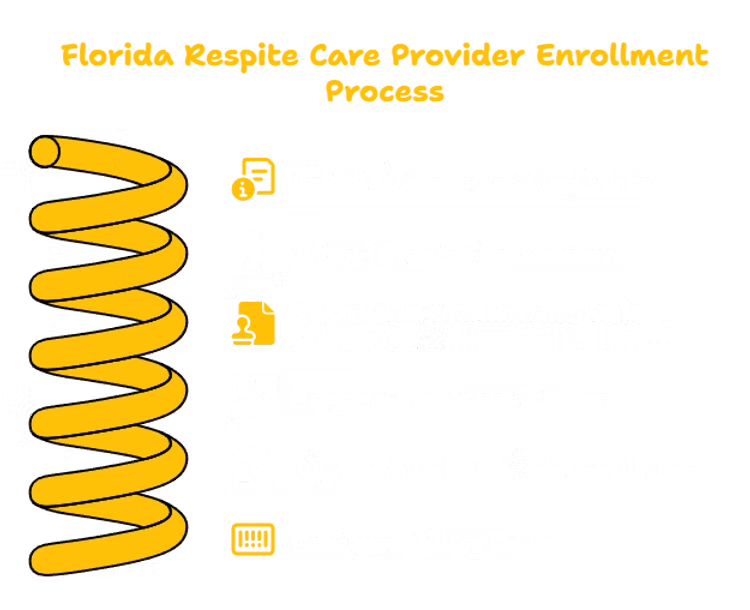
The path to becoming an approved provider begins with initial outreach to the APD to request the necessary application materials. It is highly recommended that prospective agency administrators attend APD or Medicaid HCBS waiver provider orientation sessions to gain a comprehensive understanding of current expectations and regulatory nuances. Once the application is submitted, it must include vital documentation such as Articles of Incorporation, staff training plans, and established operational policies.
Following the submission, the agency will undergo a program readiness review. During this stage, APD assesses the provider’s capacity for service delivery, including their systems for maintaining participant safety and ensuring Medicaid documentation compliance. If the provider intends to offer facility-based services, they should anticipate site inspections. Once the APD grants approval, the provider must complete the final steps of Medicaid enrollment through the Florida Medicaid Provider Enrollment Portal and configure billing codes specifically for respite services under the relevant waiver programs.
What staffing and documentation standards must be maintained?
Professional staffing is a cornerstone of compliance. A Respite Services Program Manager or Supervisor must possess demonstrated experience in healthcare, disability services, or home care supervision, alongside cleared background screenings. Direct Support Professionals (DSPs) should possess a high school diploma or GED equivalent and maintain current CPR and First Aid certifications. All staff must be vetted through stringent background checks before interacting with participants.
Documentation requirements are extensive and strictly enforced. Providers must maintain a robust Policy & Procedure Manual that covers participant intake, health and safety monitoring, emergency evacuation protocols, medication assistance, and HIPAA compliance. Furthermore, the agency must implement a systematic method for tracking services and generating daily documentation. These records are subject to audit and serve as the foundation for successful Medicaid billing and reimbursement.
Frequently Asked Questions
Which Medicaid waivers currently authorize respite care in Florida?
Respite services are authorized under the iBudget Florida Waiver, which supports individuals with intellectual and developmental disabilities. Additionally, services are covered under the Statewide Medicaid Managed Care (SMMC) Long-Term Care (LTC) Program for elderly and disabled adults, as well as the Traumatic Brain Injury/Spinal Cord Injury (TBI/SCI) Waiver.
How long does the provider application process typically take?
The timeline varies based on operational readiness. Generally, business formation takes 1–2 weeks, followed by a 60–90 day window for APD/AHCA provider application and readiness review. Staffing and system development typically require 30–45 days, while final Medicaid enrollment and billing configuration takes 45–60 days.
What are the primary responsibilities of a Respite Care Worker?
Direct Support Professionals are responsible for providing protective oversight, assisting with Activities of Daily Living (ADLs), ensuring medication compliance through reminders, and engaging participants in approved recreational or educational activities consistent with their person-centered care plan.
Key Takeaway
Launching a respite care agency in Florida requires careful navigation of the APD and AHCA regulatory landscapes, prioritizing formal credentialing, rigorous staff training, and meticulous adherence to Medicaid billing documentation. By establishing strong operational foundations and maintaining compliance with HCBS waiver standards, provider agencies can effectively support the essential needs of both caregivers and participants.
Last verified: October 2023. This information is for educational purposes only and does not constitute legal or professional advice. Always consult directly with the Florida Agency for Persons with Disabilities (APD) or the Agency for Health Care Administration (AHCA) for the most current regulatory updates and individual program requirements.