RESPITE CARE SERVICES PROVIDER IN ARIZONA
By Fatumata Kaba · 2025-07-02 · 5 min read
Respite Care Services in Arizona serve as a vital support system for primary caregivers, offering short-term, professional relief for individuals with developmental disabilities or chronic health conditions. By navigating the regulatory requirements of the Arizona Health Care Cost Containment System (AHCCCS) and the Division of Developmental Disabilities (DDD), qualified agencies can provide the essential oversight necessary to prevent caregiver burnout and ensure continuous, high-quality care for vulnerable populations.
Understanding the Governing Structure of Arizona Respite Care
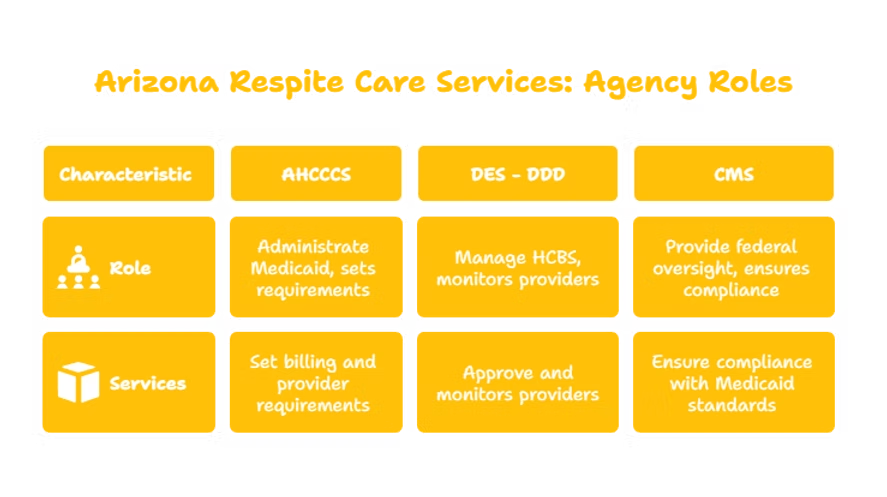
The provision of respite care in Arizona is governed by a rigorous regulatory framework involving federal and state oversight. The Arizona Health Care Cost Containment System (AHCCCS) acts as the state’s Medicaid agency, responsible for the administration of the Arizona Long Term Care System (ALTCS) and the establishment of essential billing and provider standards. Compliance with AHCCCS policy is mandatory for any agency seeking to participate in Medicaid-reimbursed services.
On the operational side, the Arizona Department of Economic Security (DES) – Division of Developmental Disabilities (DDD) oversees the day-to-day management of Home and Community-Based Services (HCBS) waivers. Providers must work closely with the DDD to monitor compliance and adhere to the person-centered service plans developed for each participant. Finally, the Centers for Medicare & Medicaid Services (CMS) provides the overarching federal authority, ensuring that all Arizona waiver programs remain in full compliance with national Medicaid standards.
Defining the Scope of Respite Services
Respite care is designed to be intermittent and short-term, providing a necessary bridge for families. These services are delivered in the individual's own home or other authorized settings, intended strictly to support the caregiver’s need for rest or to handle personal responsibilities. Because these services are funded through specific waivers, they must remain distinct from other ongoing supports such as habilitation or attendant care.
Approved respite providers are responsible for delivering a specific set of supportive activities that maintain the participant's safety and well-being. Responsibilities often include:
- Supervision and assistance with Activities of Daily Living (ADLs), including bathing, dressing, and hygiene.
- Engagement in age-appropriate recreational or therapeutic activities.
- Coordination of overnight or daytime care during planned breaks or emergency situations.
- Medication reminders and general monitoring of the individual's condition.
- Rigorous documentation of service delivery, including incident reports and significant changes in participant health.
Navigating the DDD Qualified Vendor Enrollment Process
Becoming an authorized provider begins with the Qualified Vendor Application and Directory System (QVADS). Prospective vendors must first attend a mandatory DDD Qualified Vendor orientation to understand the expectations of the state. This foundation is essential for ensuring that the subsequent application accurately reflects the agency’s ability to meet DDD’s stringent operational standards.
The application phase requires a comprehensive submission of business documentation, including proof of financial viability, staff qualifications, and a complete set of internal policies and procedures. Once the DDD completes its review, successful applicants are required to sign a Qualified Vendor Agreement. Following this, the provider must complete the enrollment process with AHCCCS to obtain a Medicaid ID, activate relevant billing codes, and configure the systems necessary for claims processing.
Establishing Essential Compliance and Documentation
Compliance is the cornerstone of a successful HCBS provider agency in Arizona. Beyond initial registration with the Arizona Corporation Commission, an EIN, and a Type 2 NPI, providers must maintain a physical office within the state. The agency must operate under a robust Policy and Procedure Manual that addresses the entirety of the service lifecycle, from intake to emergency response.
Documentation requirements are extensive to ensure accountability and participant safety. Agencies must maintain organized systems for:
- Participant rights, informed consent, and confidentiality protocols.
- Standardized procedures for ADLs and IADL assistance.
- Incident reporting systems and clear pathways for emergency medical response.
- Detailed staff training records, including proof of background checks and current certifications.
- Structured billing and service note tracking to ensure compliance with Medicaid audit requirements.
Meeting Staffing and Training Requirements
The quality of respite care is directly linked to the competency of the direct support staff. Providers must ensure that all employees meet specific baseline requirements, including a minimum age of 18, a high school diploma or GED, and clear results from mandated background checks. Furthermore, every staff member must maintain active CPR/First Aid certification.
Training goes beyond basic certification, as all staff must undergo specialized instruction to work within the Arizona Medicaid system. This includes mandatory Article 9 training, which covers participant rights and permissible behavioral interventions. Agencies are responsible for facilitating ongoing, annual refresher courses to ensure that all direct support staff and program coordinators remain current with the latest Arizona Administrative Code requirements.
Frequently Asked Questions
What is the primary difference between respite care and habilitation?
Habilitation is typically a long-term service focused on helping an individual reach specific developmental goals and gain independence. In contrast, respite care is designed specifically to provide short-term relief to the primary caregiver and is not intended to replace ongoing skill-building programs.
How long does the provider enrollment process typically take?
The timeline varies based on the completeness of the submission, but providers should generally anticipate a 60–90 day window for the QVADS application and review, followed by an additional 45–60 days for AHCCCS Medicaid enrollment and billing setup.
Are respite services available for all Medicaid recipients in Arizona?
Respite care is authorized under specific waiver programs, including the ALTCS Elderly and Physically Disabled (EPD) waiver, the ALTCS DDD waiver, and, in limited instances, the Arizona Early Intervention Program (AzEIP). Eligibility is determined through the individual's person-centered service plan.
Key Takeaways for Prospective Providers
Launching a respite care agency in Arizona requires meticulous attention to the regulatory standards set by AHCCCS and the DDD. By focusing on compliant infrastructure, rigorous staff training, and transparent documentation, providers can establish a sustainable agency that fulfills a critical role in the state's caregiving ecosystem. Success is predicated on adhering to the Arizona Administrative Code and maintaining consistent engagement with the Qualified Vendor system throughout the life of the organization.
Last verified: 2024. The information provided in this article is for educational purposes only and does not constitute legal or professional advice. Always consult directly with the Arizona Health Care Cost Containment System (AHCCCS) or the Division of Developmental Disabilities (DDD) for the most current regulations and policy guidance.