Respite Care Provider in Alabama
By Fatumata Kaba · 2025-06-24 · 5 min read
Respite Care services in Alabama provide essential temporary relief to primary caregivers of individuals with intellectual and developmental disabilities (IDD) by offering short-term supervision and support. These services, which can be delivered in the home or at a community-based setting, are strictly regulated by the Alabama Department of Mental Health (ADMH) and reimbursed through Alabama Medicaid Home and Community-Based Services (HCBS) waivers.
Understanding the Regulatory Landscape for Alabama Respite Providers
To successfully operate a respite care program in Alabama, providers must navigate a multi-layered regulatory environment. The primary oversight body is the Alabama Department of Mental Health (ADMH), which is responsible for the licensing and certification of HCBS waiver providers. ADMH ensures that organizations meet rigorous quality standards and possess the clinical and administrative infrastructure necessary to support vulnerable populations safely.
Beyond state-level licensing, providers must coordinate with the Alabama Medicaid Agency, which serves as the fiscal authority for waiver enrollment and reimbursement. At the federal level, the Centers for Medicare & Medicaid Services (CMS) provides the overarching regulatory framework for HCBS waiver programs. Compliance with all three entities is mandatory, as federal regulations dictate the scope and quality requirements for services reimbursed by Medicaid funds.
- Alabama Department of Mental Health (ADMH): Licenses and certifies providers, ensuring service delivery compliance.
- Alabama Medicaid Agency: Manages provider enrollment, billing, and reimbursement protocols.
- Centers for Medicare & Medicaid Services (CMS): Sets federal oversight requirements for HCBS programs.
How to Establish a Compliant Respite Care Business
The journey to becoming an approved provider begins with establishing a formal legal entity that meets state business requirements. Founders must register their business with the Alabama Secretary of State and obtain an Employer Identification Number (EIN) from the IRS. Additionally, a Type 2 National Provider Identifier (NPI) is required for organizational billing, and a physical office location within Alabama is generally necessary for administrative and oversight purposes.
Operational success hinges on the development of a comprehensive Policy and Procedure Manual. This document must satisfy ADMH standards, covering critical areas such as admission and discharge protocols, emergency response procedures, incident reporting, medication management, and the protection of individual rights. Establishing these foundational documents before the application phase significantly streamlines the approval process.
The ADMH Provider Enrollment and Approval Process
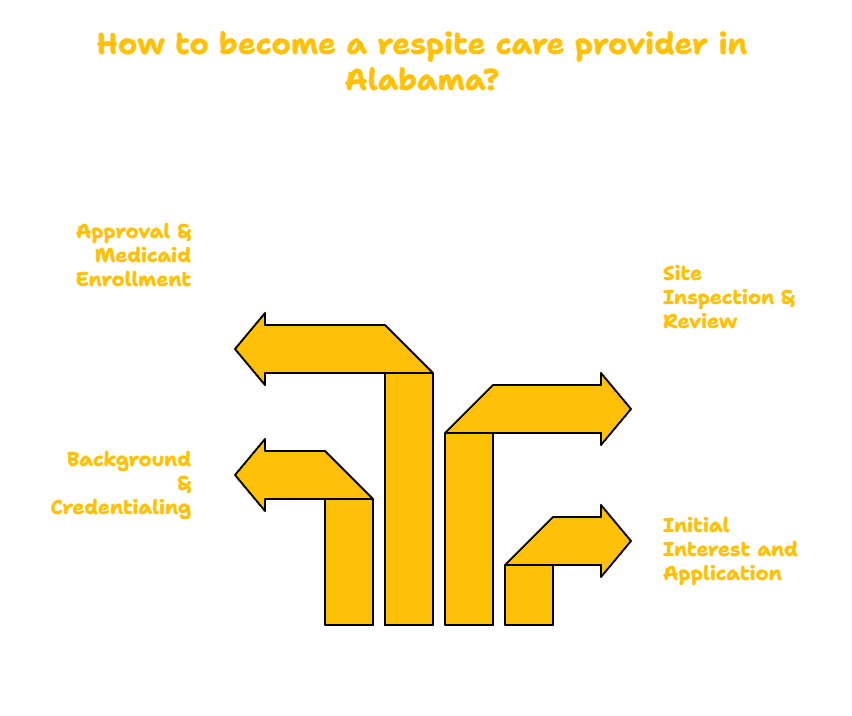
The enrollment process is structured to ensure that only qualified, well-prepared agencies enter the waiver network. Prospective providers must begin by submitting an ADMH Provider Application Packet, which includes a detailed business plan, an organizational chart, and a comprehensive staffing model. This submission serves as the blueprint for the organization's capacity to deliver safe and reliable respite care.
Following the initial application, the agency will undergo a thorough vetting of its personnel and facilities. This includes mandatory fingerprint-based criminal background checks, central registry checks for abuse and neglect, and rigorous staff eligibility validation. For agencies providing out-of-home respite, a physical site inspection is required, focusing on fire safety, ADA accessibility, emergency exits, and general infection control protocols. Upon successful review and certification by ADMH, the agency must then enroll with the Alabama Medicaid Agency to add specific respite service lines to their provider profile.
Staffing Requirements and Clinical Competency
Respite care is only as effective as the professionals delivering it. Alabama standards dictate that agencies must employ a qualified administrator with documented experience in managing developmental disability services. This leader is responsible for ensuring that all Direct Support Professionals (DSPs) and respite staff are adequately trained to support the unique needs of individuals with IDD.
All staff members are required to complete ADMH-mandated orientation programs and ongoing annual in-service hours. Core training competencies include CPR, First Aid, abuse prevention, and client-specific care protocols. Depending on the complexity of the needs of the individuals served, staff may also require specialized training or certification as paraprofessionals or Certified Nursing Assistants (CNAs) to ensure health and safety monitoring is handled according to the person-centered plan.
Managing Waiver Services and Operational Timelines
Alabama offers respite services through several key Medicaid waivers, including the ID Waiver (Intellectual Disabilities), the LAH Waiver (Living at Home), and the State of Alabama Community Waiver Program. These programs allow for flexible delivery models, including in-home respite, out-of-home respite, and, where applicable, certified emergency respite services. Providers must align their billing codes—typically T1005 or S5150 depending on the setting—with the specific waiver program authorized for the individual.
The timeline to launch a respite program requires patience and meticulous planning. From initial business formation to final Medicaid enrollment, the process generally spans several months. The ADMH application review typically takes 60–120 days, followed by site inspections (30–60 days) and final Medicaid enrollment (60–90 days). Founders should anticipate a total development cycle of approximately six to nine months to ensure full compliance and operational readiness.
Frequently Asked Questions
What is the difference between in-home and out-of-home respite?
In-home respite is provided within the individual’s own residence to allow caregivers a break. Out-of-home respite occurs in a specialized respite home or community-based residential facility, which must meet additional life safety and facility licensing requirements as mandated by ADMH.
Are there specific insurance requirements for respite providers?
Yes, while specific coverage limits are determined by the agency's business model, providers must maintain necessary liability insurance to cover both the business entity and the care environment, ensuring protection for both the clients and the staff during service delivery.
How often must staff training be updated?
ADMH requires initial orientation training for all new staff, followed by mandatory annual in-service training hours. Furthermore, staff must receive individual-specific training tailored to the needs of the persons they are assigned to support, which should be updated whenever a client’s person-centered plan changes.
Key Takeaways for Prospective Providers
Entering the Alabama respite care market requires a commitment to rigorous documentation, professional staff training, and ongoing collaboration with the Alabama Department of Mental Health. By focusing on compliant business formation, meticulous adherence to the ADMH provider manual, and a deep understanding of the HCBS waiver requirements, agencies can build sustainable programs that provide vital support to families and individuals with developmental disabilities throughout the state.
Last verified: October 2023. This content is for informational purposes only and does not constitute legal or professional advice. Requirements for Medicaid waiver programs are subject to change. Always consult directly with the Alabama Department of Mental Health and the Alabama Medicaid Agency for the most current regulatory guidance and application materials.