RESIDENTIAL SUPPORT SERVICES PROVIDER IN PENNSYLVANIA
By Fatumata Kaba · 2025-10-07 · 5 min read
PROVIDING PERSON-CENTERED HOUSING SUPPORTS TO PROMOTE INDEPENDENCE, STABILITY, AND COMMUNITY INCLUSION
Residential Support Services in Pennsylvania are Medicaid-funded programs designed to offer 24/7 or intermittent supervision and assistance for individuals with intellectual or developmental disabilities (IDD). These services provide a vital framework for individuals to live safely in community-based settings while receiving the daily supports necessary to develop essential life skills, maintain health, and participate meaningfully in society under the Consolidated and Community Living Waivers through the Office of Developmental Programs (ODP).
What Are the Governing Agencies and Regulatory Frameworks?
The delivery of residential services is governed by a multi-tiered regulatory structure that ensures the health, safety, and rights of program participants. At the state level, the Pennsylvania Department of Human Services (DHS) and its Office of Developmental Programs (ODP) serve as the primary authorities, responsible for certifying, funding, and conducting ongoing monitoring of all residential service providers. They establish the standards for care and the requirements for reimbursement under the Medicaid waiver system.
On a federal level, the Centers for Medicare & Medicaid Services (CMS) provides the overarching federal regulations and oversight for all Medicaid waiver services, ensuring that Pennsylvania’s programs remain compliant with federal mandates regarding community integration. Additionally, Administrative Entities (AEs) and local County MH/ID offices play a hands-on role by coordinating provider qualifications, managing service authorizations, and conducting local quality monitoring. Business-level compliance is further overseen by the Pennsylvania Department of State, which manages the legal registration of all entities operating within the commonwealth.
How Do Providers Structure Residential Support Services?
Residential support is not a one-size-fits-all model; it is a suite of individualized services delivered in certified settings to help people live with maximum dignity and autonomy. Providers must be equipped to deliver care across various modalities, ensuring that the environment matches the unique needs of the individual as outlined in their service plan.
Approved providers generally deliver the following types of residential support:
- Community Homes (licensed): These are small group homes providing 24/7 support for 1–4 individuals.
- Life Sharing (unlicensed): Individuals live with host families and receive supports in a personalized, shared home environment.
- Supported Living (unlicensed): Tailored support for individuals living in their own private apartment or house.
- Daily Living Support: Hands-on assistance with cooking, hygiene, laundry, medication administration, and household management.
- Community Participation Support: Facilitation of outings, recreational activities, and broader social engagement.
- Health and Safety Monitoring: Clinical oversight to ensure nutritional, behavioral, and medical needs are met consistently.
What Are the Prerequisites for Licensure and Enrollment?
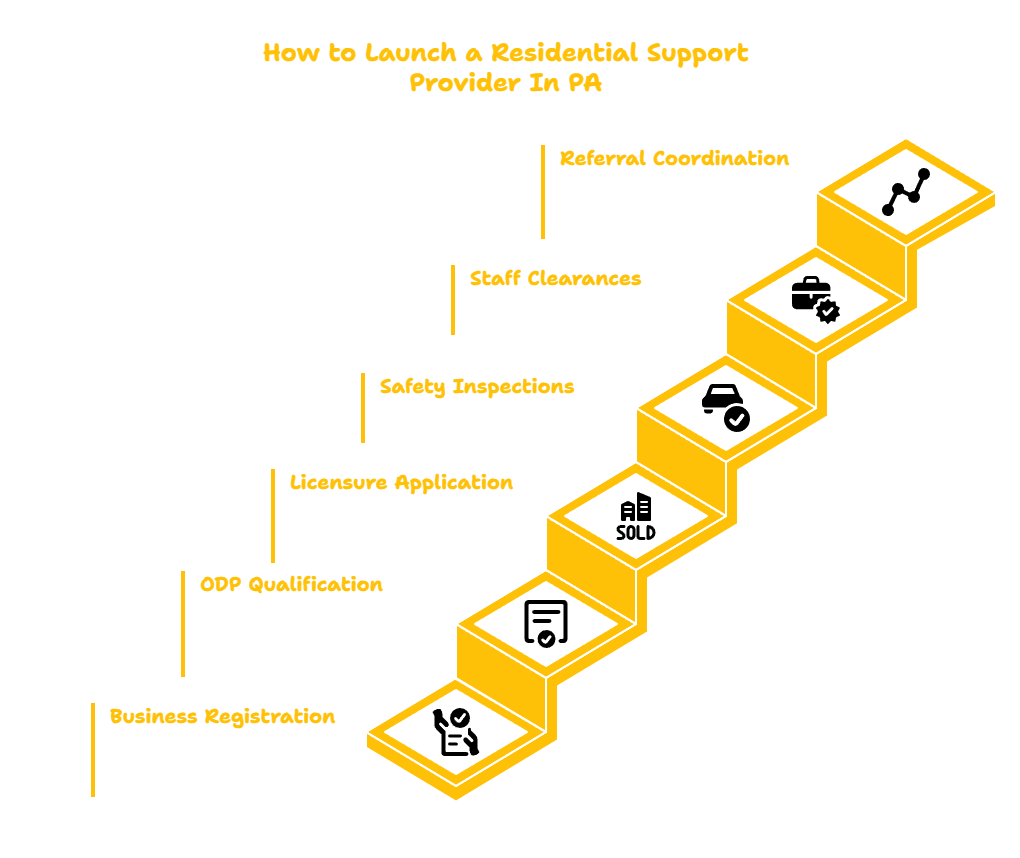
Launching a residential support agency requires a rigorous commitment to documentation and site readiness. Before a provider can bill for services, they must establish a formal business structure and navigate the specific requirements set by the ODP. This begins with registering the business with the Pennsylvania Department of State and securing both an EIN and a Type 2 NPI, which are mandatory for Medicaid billing purposes.
Beyond basic business registration, providers must qualify through the ODP’s Home and Community Services Information System (HCSIS). For those intending to operate licensed community homes, obtaining Chapter 6400 licensure is a critical step, requiring comprehensive inspections and documentation. All providers must also maintain adequate liability and workers’ compensation insurance and develop a robust Residential Services Policy & Procedure Manual that aligns strictly with ODP and CMS standards.
What Is the Required Documentation for Compliance and Audit Readiness?
Documentation acts as the primary evidence of care and compliance during state audits. Providers are expected to maintain comprehensive files that demonstrate the legality of their operations and the quality of their service delivery. This includes maintaining up-to-date Articles of Incorporation, proof of business registration, and valid certificates of insurance at all times.
Equally important are the operational documents that dictate daily care. An effective Policy & Procedure Manual must cover:
- Individual Support Plan (ISP) implementation procedures and tracking.
- Strict protocols for medication administration and incident reporting.
- Staff supervision, training, and documented ratio standards.
- Participant rights, formal grievance processes, and confidentiality/HIPAA safeguards.
- Comprehensive safety drills and emergency preparedness protocols.
- Daily documentation templates, including shift notes and billing audit readiness tools.
How Are Staffing and Training Managed?
Staffing quality is the cornerstone of successful residential support. The Direct Support Professional (DSP) role is the most critical, requiring extensive background checks, orientation training, and certifications in First Aid and CPR. Beyond initial hiring, all staff must demonstrate competency in ODP-mandated areas to ensure they can meet the specific needs of the individuals they support.
Supervisory staff must oversee daily operations, including compliance monitoring, staff scheduling, and resident well-being. Furthermore, any staff involved in the distribution of medication must complete the ODP-certified Medication Administration Training. Ongoing professional development is mandatory, with all employees required to participate in ODP-approved orientation, annual refresher courses, and training regarding abuse prevention, incident management, and person-centered planning.
Frequently Asked Questions
Which waivers cover residential support services?
Residential support is primarily funded through the Consolidated Waiver and the Community Living Waiver. It is important to note that the Person/Family Directed Support (P/FDS) Waiver does not cover residential services.
What is the typical timeline to launch a residential program?
The timeline varies based on complexity, but generally, business registration and policy creation take 1–2 months, ODP qualification and licensing take 3–4 months, and staff onboarding and training require 30–60 days. Referral coordination begins once all approvals are secured.
How are new provider referrals managed?
Once a provider is fully qualified and licensed, referrals are typically coordinated through local County MH/ID offices and individual Supports Coordinators who match available residential vacancies with the needs of individuals in the community.
Key Takeaway
Establishing a successful residential support provider agency in Pennsylvania requires a methodical approach that balances rigorous administrative compliance with the delivery of person-centered, high-quality care. Success depends on navigating the specific ODP and CMS regulatory environments while maintaining meticulous records and investing in a well-trained, competent workforce to support individuals with IDD in their pursuit of independence and community inclusion.
Last verified: 2024. Waiver Consulting Group provides professional guidance; however, all regulatory requirements should be verified directly with the Pennsylvania Department of Human Services (DHS) and the Office of Developmental Programs (ODP). Laws and regulations governing Medicaid HCBS programs are subject to change, and providers are responsible for maintaining current compliance with all state and federal statutes.