RESIDENTIAL SUPPORT SERVICES PROVIDER IN OKLAHOMA
By Fatumata Kaba · 2025-09-03 · 6 min read
CREATING SAFE, INCLUSIVE LIVING ENVIRONMENTS FOR INDIVIDUALS WITH DISABILITIES THROUGH STRUCTURED, PERSON-CENTERED SUPPORTS
Residential Support Services in Oklahoma function as a critical component of the state’s long-term care infrastructure, providing individuals with intellectual and developmental disabilities (IDD) and behavioral health needs the necessary oversight to live successfully within their communities. By offering a stable, home-like environment, these services integrate essential personal care, skill-building, and clinical supports, all of which are funded and governed through Oklahoma Medicaid Home and Community-Based Services (HCBS) waiver programs.
What Are the Roles of Governing Agencies in Oklahoma?
The successful operation of a residential support agency requires strict adherence to oversight from both state and federal authorities. The Oklahoma Health Care Authority (OHCA) serves as the single state agency for the administration of SoonerCare (Medicaid). Their primary role is to manage the waiver programs, handle provider enrollment, and oversee the billing systems that allow agencies to receive reimbursement for services provided to eligible participants.
Simultaneously, the Oklahoma Department of Human Services (OKDHS), through its Developmental Disabilities Services (DDS) division, acts as the certifying body for residential providers. OKDHS DDS is responsible for authorizing specific services for individuals, monitoring the quality of care provided, and ensuring that agency operations remain compliant with state standards. At the federal level, the Centers for Medicare & Medicaid Services (CMS) provides the overarching regulatory framework, ensuring that all Oklahoma residential services align with federal HCBS requirements, specifically those prioritizing person-centered planning and full community inclusion.
How Do Residential Support Models Function?
Residential support services are delivered in certified settings, ranging from group homes and agency companion homes to supported living arrangements. Regardless of the specific setting, the objective is to empower the individual while maintaining a baseline of safety and health. Service delivery is tailored to the specific needs of the participant as identified in their Individual Plan (IP).
Approved providers generally deliver a suite of services designed to enhance the quality of life and independence of the participant, including:
- 24-Hour Residential Habilitation: Continuous, round-the-clock support in licensed or certified homes, complete with dedicated overnight staffing.
- Agency Companion Homes: A model where the participant lives with trained caregivers within a private, residential setting.
- Assisted Living / Supported Living Services: Targeted, scheduled assistance provided directly in the participant’s own home or apartment.
- Skill Development: Hands-on training in daily living activities such as cooking, personal hygiene, laundry, budgeting, and fostering social interaction.
- Health & Medication Oversight: Comprehensive medication administration, scheduling of essential medical appointments, and active coordination with the individual's healthcare team.
- Community Engagement: Facilitating access to vocational training, schooling, volunteer roles, and recreational opportunities to ensure meaningful community participation.
What Are the Prerequisites for Provider Approval?
Transitioning into an approved Medicaid residential provider involves a structured sequence of business and clinical preparations. Before a provider can be certified, they must establish a formal legal entity, secure necessary insurance, and develop a comprehensive Policy & Procedure Manual. This manual is the cornerstone of an agency’s operations and must explicitly address how the agency meets HCBS standards for care, safety, and documentation.
Beyond administrative setup, the provider must obtain an Employer Identification Number (EIN) from the IRS and a Type 2 National Provider Identifier (NPI). Once the business infrastructure is in place, the applicant must seek certification from OKDHS DDS for their specific residential models. This process involves proving that the agency is capable of maintaining high standards of care, which includes vetting all staff through rigorous background screenings and ensuring that all personnel complete the mandatory DDS-required training programs.
What Is the Required Enrollment Process?
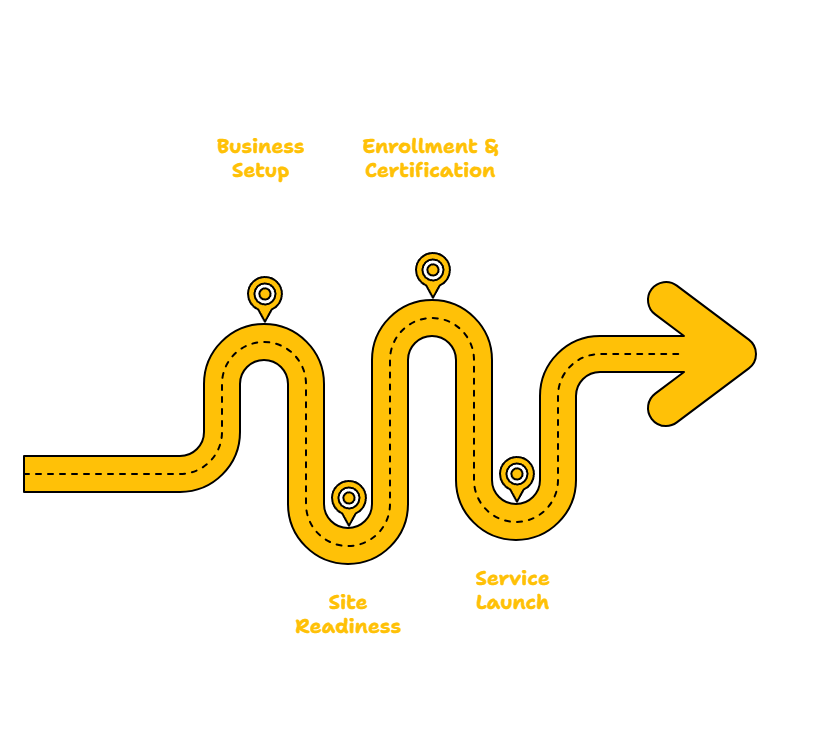
The enrollment process for becoming a residential support provider is a multi-step journey that requires coordination between the applicant, the OKDHS DDS, and the OHCA. The first step involves legal formation and credentialing, where the business model is defined and liability insurance is secured. Once the foundation is laid, the agency submits an application to OKDHS DDS, which includes detailed descriptions of staffing qualifications, program models, and site specifics.
Following the submission, the agency may undergo a Site Readiness Review, particularly for group homes or agency companion residences, to verify that fire, safety, and zoning requirements are met. Once certified by DDS, the agency proceeds to the SoonerCare enrollment phase via the OHCA. During this final stage, the NPI is linked to the DDS certification. Only after this link is verified can the agency begin providing services under a participant’s Individual Plan and commence billing the Medicaid system.
How Are Staffing Requirements Managed?
Human capital is the most critical asset in residential services, and Oklahoma maintains specific mandates for both administrative and direct-care personnel. A Program Administrator or House Manager is typically required to oversee the daily operations, ensuring that the agency remains in compliance with both HCBS and DDS regulations. These individuals must possess relevant experience in residential care and program management.
Direct Support Professionals (DSPs) serve as the primary caregivers and must hold at least a high school diploma or GED, alongside cleared background checks and CPR/First Aid certification. If the residential model involves skilled medical care, licensed nursing staff, such as an RN or LPN, must be involved to handle medication delegation and health monitoring. Regardless of role, every staff member must complete standardized training covering participant rights, HIPAA compliance, crisis prevention, and emergency preparedness.
Frequently Asked Questions
Which Medicaid waivers cover these services?
Residential support services are primarily delivered through the Community Waiver, the In-Home Supports Waiver (IHSW), the Living Choice Program, and the Medically Fragile Waiver. Each waiver serves a specific population and has unique limitations regarding the intensity and scope of residential support.
What documentation must an agency maintain?
Agencies must maintain meticulous records, including daily logs, incident reports, behavior data, and Individual Plan (IP) progress notes. Policies and procedures regarding HIPAA, emergency evacuation, medication protocols, and grievance resolution must also be documented and available for review during audits.
What is the typical timeline for launching an agency?
While timelines vary based on readiness, the process generally takes six to nine months. This includes 1–2 months for business setup, 2–3 months for site readiness and staff training, 60–90 days for DDS/OHCA certification, and 30–45 days for final billing setup and participant intake.
Key Takeaway
Launching a residential support agency in Oklahoma requires a rigorous commitment to person-centered care and regulatory compliance. By aligning business operations with the specific requirements of the Oklahoma Department of Human Services (DDS) and the Oklahoma Health Care Authority (OHCA), providers can create high-quality, stable living environments that empower individuals with disabilities to thrive within their communities.
WAIVER CONSULTING GROUP’S START-UP ASSISTANCE SERVICE — OKLAHOMA RESIDENTIAL SUPPORT SERVICES PROVIDER
WCG supports new agencies launching Medicaid-compliant residential programs across Oklahoma with: business registration, OHCA Medicaid enrollment, and DDS provider certification; Residential Services Policy Manual tailored for Oklahoma DDS requirements; staff training schedules, documentation templates, and onboarding tools; Medicaid billing system setup and audit-readiness preparation; branding, website design, and referral outreach planning; site inspection checklists and licensing readiness coaching; and quality assurance plans and participant satisfaction tracking.
Last verified: 2024. This content is for informational purposes only and does not constitute legal or medical advice. Always consult the Oklahoma Health Care Authority (OHCA), the Oklahoma Department of Human Services (OKDHS), and the Centers for Medicare & Medicaid Services (CMS) official resources for the most current regulatory guidance and requirements.