RESIDENTIAL SUPPORT SERVICES PROVIDER IN NORTH CAROLINA
By Fatumata Kaba · 2025-09-15 · 6 min read
Residential Support Services in North Carolina are essential programs designed to assist individuals with disabilities, mental health challenges, or chronic conditions in living independently or semi-independently within community-based settings. By providing structured care that includes daily living assistance, health monitoring, and social integration, these services empower participants to remain in their homes rather than institutional settings. Operating as an authorized provider requires rigorous alignment with North Carolina Department of Health and Human Services (NCDHHS) regulations, Medicaid waiver requirements, and federal standards set by the Centers for Medicare & Medicaid Services (CMS).
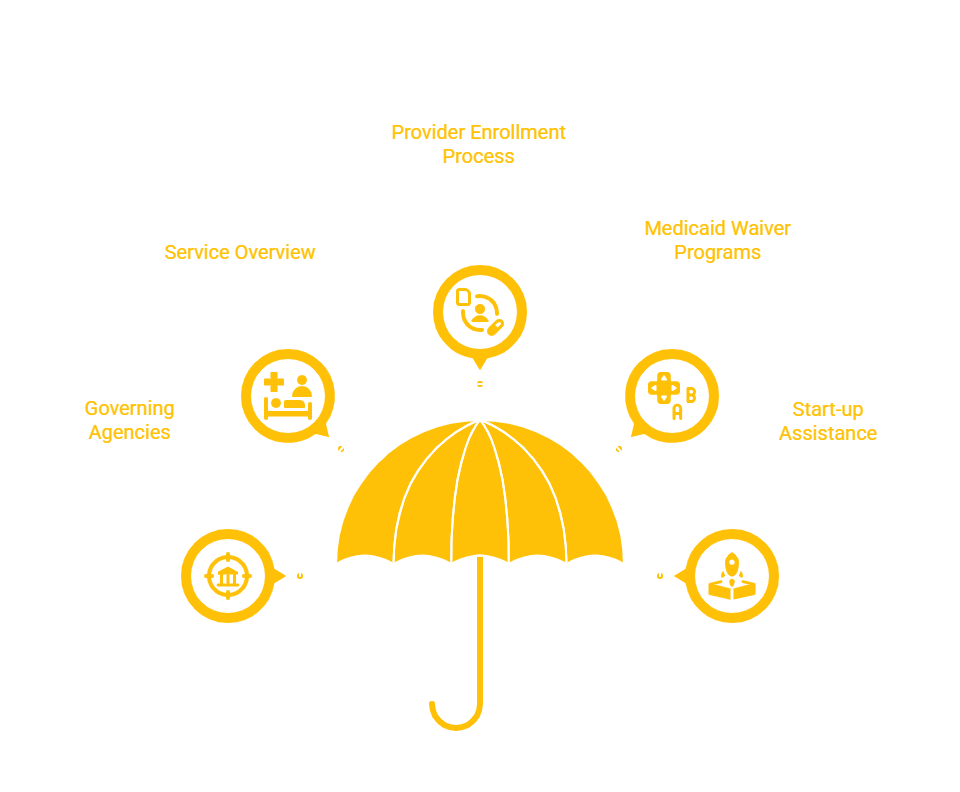
What Are the Governing Agencies Overseeing Residential Support Services?
The regulatory framework for Residential Support Services in North Carolina is multilayered, involving both state and federal oversight to ensure the safety and quality of life for program participants. The North Carolina Department of Health and Human Services (NCDHHS) serves as the primary entity, administering Medicaid waiver funding and managing the critical infrastructure for provider enrollment, service authorization, and reimbursement protocols.
Working in tandem with NCDHHS, the North Carolina Division of Health Benefits (NC Medicaid) handles the management of Medicaid waiver services and monitors provider participation requirements. Furthermore, the North Carolina Division of Mental Health, Developmental Disabilities, and Substance Abuse Services (DMH/DD/SAS) provides specialized oversight for residential services that specifically target individuals with complex developmental disabilities and behavioral health needs. At the federal level, the Centers for Medicare & Medicaid Services (CMS) provides the overarching mandate, ensuring that all Medicaid-funded services adhere to national standards for person-centered care, safety, and operational excellence.
How Do Residential Support Services Foster Participant Independence?
Residential Support Services are intentionally designed to replace traditional institutional care with a model that prioritizes community integration and self-determination. By offering support within group homes, supported apartments, or individual residences, providers help participants bridge the gap between needing assistance and achieving a meaningful, independent lifestyle. This support is flexible and tailored to the unique goals identified in the participant’s person-centered plan.
Approved providers are responsible for a broad spectrum of care activities, which may include:
- Personal Care Assistance: Providing hands-on support with bathing, dressing, grooming, and mobility.
- Daily Living Skills Training: Teaching essential life skills such as cooking, cleaning, budgeting, and personal organization.
- Health Monitoring: Managing medications and coordinating the oversight of chronic health conditions.
- Behavioral Support: Implementing strategies to address behavioral challenges and encourage positive social interactions.
- Social Integration: Facilitating community participation, volunteerism, and the development of natural support networks.
- Crisis Intervention: Delivering immediate support during behavioral or health-related emergencies.
- Household Management: Supporting meal planning, general housekeeping, and ongoing home maintenance.
- Transportation Support: Ensuring access to medical appointments, community activities, and essential errands.
- Safety Monitoring: Maintaining a secure and supportive living environment that prevents accidents and promotes wellness.
- Documentation: Rigorously maintaining accurate records of services provided, participant progress, and adherence to care plans.
What Are the Mandatory Licensing and Provider Enrollment Steps?
The path to becoming a provider begins with foundational business compliance. Prospective providers must first register their business entity with the North Carolina Secretary of State and secure a federal Employer Identification Number (EIN) from the IRS. Obtaining a Type 2 National Provider Identifier (NPI) is a prerequisite for all organizational billing, as it identifies the business as a distinct entity in the healthcare system. Providers must also maintain comprehensive general and professional liability insurance to protect their operations and those they serve.
Once the business is legally established, the agency must enroll as a Medicaid Waiver Residential Support provider via the NCTracks Provider Portal. This portal serves as the centralized hub for all administrative interactions, including application submission and ongoing maintenance of provider information. During the enrollment process, agencies must demonstrate that they have developed robust policies governing residential care, safety management, and staff supervision. Furthermore, the agency must implement a system for performing thorough background checks and health screenings on all employees to ensure they meet the rigorous standards required for working with vulnerable populations.
The North Carolina provider enrollment process follows a structured trajectory:
- Initial Interest and Application: Completing the formal request through the NCTracks Portal.
- Documentation Submission: Providing legal, financial, and operational evidence, including Articles of Incorporation and insurance certificates.
- Program Readiness Review: Subjecting the agency to an evaluation by NCDHHS and DMH/DD/SAS to confirm that protocols, safety measures, and staff qualifications are sufficient.
- Approval & Medicaid Enrollment: Final authorization, allowing the agency to begin billing for approved services using specific codes.
Which Documentation Must Be Maintained for Compliance?
A high standard of documentation is the hallmark of a successful Residential Support provider. Auditors and state agencies require evidence that every aspect of the service delivery is intentional, regulated, and aligned with Medicaid guidelines. Providers must maintain a comprehensive Policy & Procedure Manual that serves as the blueprint for agency operations. This manual must explicitly outline how the agency handles the complexities of daily living assistance, emergency response, and HIPAA-protected health information.
- Legal Documentation: Articles of Incorporation, proof of NPI, and IRS confirmation.
- Operational Policies: Detailed protocols for personal care, safety, crisis intervention, and infectious disease control.
- Personnel Records: Verified documentation of staff credentials, thorough background checks, and ongoing professional development training.
- Clinical and Financial Records: Standardized formats for recording daily service delivery, monitoring progress toward participant goals, and compliant Medicaid billing practices.
- Quality Assurance: Evidence of regular self-auditing, grievance procedures, and active adherence to the participant rights mandated by the state.
What Are the Staffing and Timeline Requirements?
Success in this sector relies heavily on the quality and preparation of the workforce. The Residential Program Director is responsible for the overall operational integrity and must hold a Bachelor’s or Master’s degree in a relevant field such as social work or healthcare administration, along with demonstrable experience in residential management. Direct Support Professionals (DSPs) are the core of service delivery and must possess a high school diploma or GED, alongside clear background checks and specialized training in personal care and safety.
The timeline to launch is a sequential process requiring patience and meticulous planning. Initial business formation and the drafting of compliance manuals typically span one to two months. The phase involving staff hiring, credentialing, and intensive program development generally requires two to three months. Following this, the NCTracks enrollment and readiness review process takes approximately 60 to 90 days. Finally, setting up billing systems and finalizing the operational rollout can take an additional 30 to 45 days. Adhering to this timeline ensures that the agency is fully prepared to provide safe and reimbursable services from the first day of operations.
Frequently Asked Questions
What waivers allow for Residential Support Services in North Carolina?
These services are authorized under several Medicaid waiver programs, including the Innovations Waiver, the Community Alternatives Program for Disabled Adults (CAP/DA), the Community Alternatives Program for Children (CAP/C), the Traumatic Brain Injury (TBI) Waiver, and the broader Home and Community-Based Services (HCBS) waiver framework.
Is a residential site inspection required for enrollment?
Yes. As part of the Program Readiness Review, the NCDHHS and associated divisions evaluate the residential settings, care protocols, and safety measures of the provider to ensure the environment meets the established standards for participant health and welfare.
How often must staff receive training and competency evaluations?
Staff members are required to undergo initial orientation and training in areas such as HIPAA, emergency response, and participant rights. Furthermore, agencies must implement annual competency evaluations and provide ongoing professional development to ensure that staff remain current on all residential support best practices.
Key Takeaway
Establishing a Residential Support Services agency in North Carolina is a complex undertaking that requires strict adherence to NCDHHS and Medicaid standards, starting with proper business registration and culminating in a rigorous readiness review. By prioritizing documentation, staff qualification, and a robust, policy-driven infrastructure, agencies can successfully navigate the enrollment process and provide essential, person-centered support to individuals within the HCBS waiver programs.
Last verified: November 15, 2024. This information is provided for general educational purposes and does not constitute legal or professional advice. Always consult directly with the North Carolina Department of Health and Human Services (NCDHHS) or a qualified consultant for the most current regulations and specific application requirements.