RESIDENTIAL SUPPORT SERVICES PROVIDER IN MISSISSIPPI
By Fatumata Kaba · 2025-08-06 · 5 min read
Becoming a residential support services provider in Mississippi is a strategic way to support individuals with disabilities while participating in the state’s robust Home and Community-Based Services (HCBS) framework. By providing safe, person-centered housing and daily living assistance, providers play a vital role in enabling Mississippians to remain in their communities rather than institutional settings.
This guide outlines the regulatory landscape, essential licensing steps, and operational requirements necessary to launch a compliant residential service agency in Mississippi. Navigating these requirements involves coordination between the Mississippi Division of Medicaid, the Department of Mental Health, and federal oversight bodies to ensure quality and accountability.
Understanding the Governance of Mississippi HCBS Residential Programs
The delivery of residential support services is governed by a multi-tiered regulatory structure. At the federal level, the Centers for Medicare & Medicaid Services (CMS) sets the standards for HCBS compliance, ensuring that all state-run waiver programs uphold the principles of community integration, choice, and participant safety.
In Mississippi, the Mississippi Division of Medicaid (DOM) serves as the primary administrator, managing the funding and overall waiver administration. Simultaneously, the Mississippi Department of Mental Health (DMH) oversees the coordination of care, ensuring that providers meet the clinical and programmatic standards necessary to serve individuals with intellectual, developmental, and physical disabilities.
- Mississippi Department of Mental Health (DMH): Oversees the coordination of HCBS Waiver services, including residential support.
- Mississippi Division of Medicaid (DOM): Administers Medicaid and HCBS Waiver programs, including funding for residential support services.
- Centers for Medicare & Medicaid Services (CMS): Provides federal oversight and ensures waiver compliance.
Defining Residential Support Services and Scope of Care
Residential support services are designed to provide a stable living environment for individuals who require ongoing assistance to navigate their daily lives. These services are not one-size-fits-all; they are strictly governed by an Individual Support Plan (ISP) or a Person-Centered Plan (PCP). These plans dictate the specific intensity and frequency of support each participant receives, ensuring that their unique needs are met with precision.
Providers must be prepared to offer comprehensive care that goes beyond simple housing. This includes maintaining 24/7 supervision where necessary, ensuring medication adherence, and facilitating social integration. The objective is to foster independence while maintaining a safety net that allows individuals to participate fully in their local community.
- 24/7 residential supervision and assistance
- Support with personal care, hygiene, and daily activities
- Medication administration and health monitoring
- Meal preparation and nutritional support
- Skills training for independent living
- Community integration and social support
Navigating Licensing and Provider Approval Prerequisites
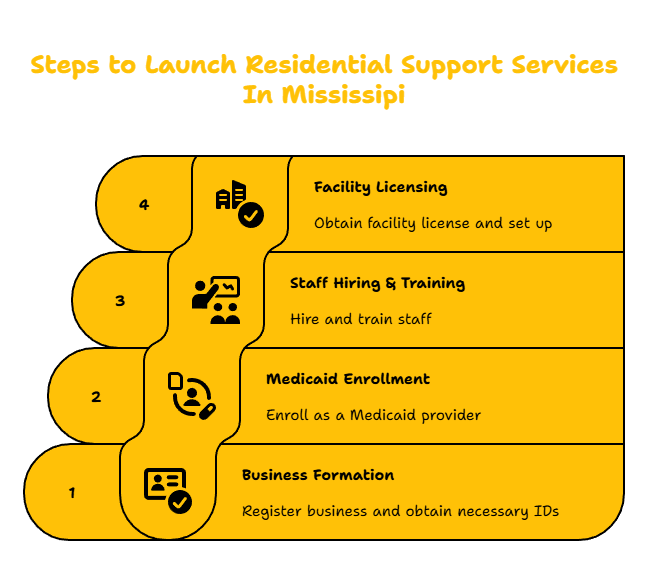
Launching an agency requires meticulous attention to both business formation and health-specific licensing. Prospective providers must first establish the legal entity with the Mississippi Secretary of State and secure a federal Employer Identification Number (EIN). Following standard business registration, providers must obtain a National Provider Identifier (NPI Type 2), which is essential for all Medicaid billing processes.
Beyond standard business documentation, the facility must secure a Residential Support License through the Mississippi Department of Health. This is a critical regulatory hurdle that involves inspections and proof of compliance with fire, safety, and health standards. Maintaining liability insurance throughout this process is a mandatory requirement to protect both the agency and the individuals being served.
The Medicaid Provider Enrollment Sequence
The process of becoming a Medicaid-approved provider is a structured, multi-step journey. The first step involves reaching out to the Mississippi Division of Medicaid to review the specific requirements for the residential support category. This preemptive step helps avoid common errors in the application process and ensures the agency is aligned with current state policies.
Once the facility is established and the appropriate license is secured, the applicant submits their formal enrollment package. This package includes business documentation, proof of insurance, and detailed service descriptions. Following the review and approval, the agency is assigned a Medicaid provider number, which serves as the authorization to bill for services under the various HCBS waiver programs.
Staffing, Training, and Operational Documentation
Successful agencies rely on qualified, well-trained staff. The Residential Program Manager plays a central role in ensuring quality of care, typically requiring a background in disability services or social work. Direct Support Professionals (DSPs) are the heartbeat of the service, and their qualifications must be strictly documented, including high school diplomas, CPR/First Aid certifications, and valid background checks.
Beyond hiring, a robust agency maintains a comprehensive policy and procedure manual. This manual is the "source of truth" for the organization, covering everything from emergency response protocols and medication management to resident intake procedures and incident reporting. Documenting every aspect of care is essential for maintaining compliance during annual audits.
Integrating with Mississippi HCBS Waiver Programs
Residential support providers in Mississippi primarily operate under specific waiver authorities. These programs target distinct populations, each with their own eligibility criteria and service delivery requirements. Providers must be familiar with the 1915(c) waivers, which allow Medicaid to provide long-term care services in home and community-based settings rather than institutional facilities.
Whether working with the Intellectual and Developmental Disabilities (IDD) waiver, the Independent Living waiver, or the Traumatic Brain Injury/Spinal Cord Injury (TBI/SCI) waiver, the provider's goal remains the same: to deliver high-quality, person-centered support. By staying informed about the requirements of these specific waivers, providers can ensure they are meeting the needs of their target population while staying fully compliant with the state's Medicaid guidelines.
Frequently Asked Questions
How long does the typical enrollment process take?
The Medicaid provider enrollment process generally takes between 60 to 90 days. Other phases, such as business formation (1–2 weeks) and staff hiring (30–45 days), should be managed concurrently to maintain momentum.
What are the primary documents needed for an application?
Providers must prepare their Articles of Incorporation, IRS EIN letter, NPI confirmation, Residential Support License, and certificate of liability insurance. Additionally, a comprehensive policy and procedure manual is required for the application review.
What role does the Department of Mental Health play for providers?
The DMH is responsible for the clinical and programmatic oversight of HCBS waiver services. They ensure that residential support providers are delivering care that meets state standards and aligns with the needs defined in the Individual Support Plan (ISP) of each participant.
Key Takeaway: Establishing a residential support services agency in Mississippi requires a disciplined approach to regulatory compliance, encompassing business registration, facility licensing through the Department of Health, and formal enrollment with the Division of Medicaid. By meticulously maintaining documentation and adhering to the guidelines of the 1915(c) waivers, providers can build a sustainable, mission-driven organization that improves the lives of individuals with disabilities across the state.
Last verified: October 2023. Disclaimer: This article is provided for informational purposes only and does not constitute legal or professional advice. Always verify current state requirements with the Mississippi Division of Medicaid and relevant regulatory agencies before initiating any business activity.