RESIDENTIAL SERVICES PROVIDER IN COLORADO
By Fatumata Kaba · 2025-07-06 · 6 min read
Providing residential services in Colorado requires a commitment to offering safe, stable housing environments integrated with personalized supports for individuals with intellectual and developmental disabilities (IDD). These services, delivered under the Home and Community-Based Services for Persons with Developmental Disabilities (HCBS-DD) waiver, are essential for fostering independence and community inclusion through a combination of 24-hour or part-time supervised living models.
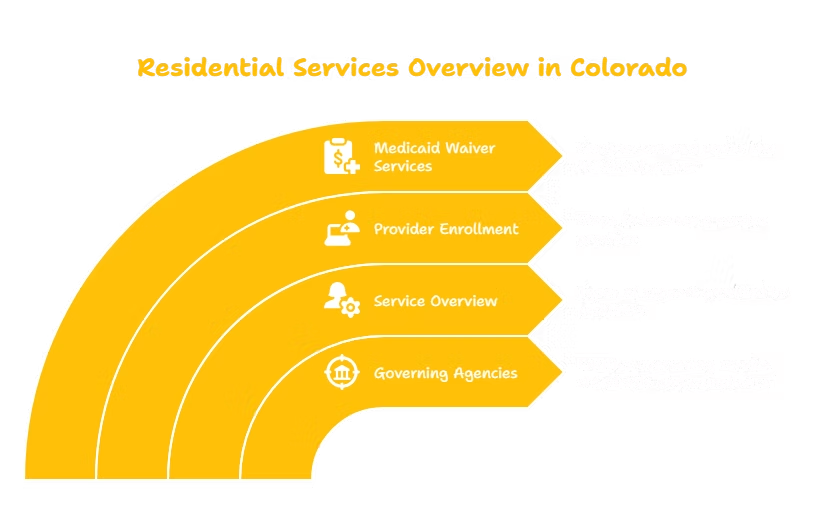
Operating a successful residential program necessitates strict adherence to state and federal oversight, including rigorous licensing through the Colorado Department of Public Health and Environment (CDPHE) and Medicaid provider enrollment via the Colorado Department of Health Care Policy and Financing (HCPF). For prospective and current providers, understanding the intersection of HCBS waiver requirements, the federal HCBS Settings Rule, and local Community-Centered Board (CCB) coordination is the foundation for delivering compliant, high-quality care.
Who are the primary governing agencies for Colorado residential services?
The regulatory framework for residential services in Colorado is multi-layered, ensuring that providers maintain high standards of care, safety, and fiscal responsibility. The Colorado Department of Health Care Policy and Financing (HCPF) acts as the primary administrator for the HCBS-DD waiver. HCPF is responsible for setting the reimbursement methodologies and defining the compliance standards that govern how residential services are delivered and billed across the state.
Complementing HCPF’s role, the Colorado Department of Public Health and Environment (CDPHE) handles the facility-level licensing. This agency ensures that the physical environments—whether they are group homes, host homes, or intermediate care facilities (ICFs)—meet stringent health, fire, and safety regulations. For programs serving individuals under the age of 21, the Colorado Department of Early Childhood (CDEC) may also have oversight responsibilities. Finally, the federal Centers for Medicare & Medicaid Services (CMS) maintains overall authority, ensuring that the state’s residential offerings remain compliant with federal HCBS Settings Rule requirements regarding resident rights and community integration.
What models of care fall under residential services?
Residential services are designed to be flexible, supporting individuals based on their unique needs as outlined in their Individualized Service Plan (ISP). These services range from intermittent, drop-in support for those living independently to intensive 24/7 care in supervised group settings. The goal is always to promote autonomy while providing the necessary guardrails for health and safety.
Providers generally operate through three primary delivery models. Group homes offer a structured environment, typically housing three to eight residents with constant staff presence. Host homes provide a more intimate, family-like setting where the individual lives with a contracted caregiver. Independent living with drop-in support serves those who require minimal assistance with daily living, allowing them to reside in their own apartments or homes while receiving scheduled support for medication management, financial oversight, and community integration.
- Daily living assistance (ADLs/IADLs) and personal hygiene support.
- Medication administration and complex health oversight.
- Coordination of medical, therapeutic, and behavioral health services.
- Community participation, recreational activities, and transportation assistance.
- Life skills development and ongoing safety monitoring.
How do you navigate the licensing and provider enrollment process?
The path to becoming a qualified residential service provider begins with formal business registration. Founders must establish their entity with the Colorado Secretary of State, secure an Employer Identification Number (EIN) from the IRS, and obtain a Type 2 National Provider Identifier (NPI). These foundational steps are necessary before seeking facility-specific licensure from the CDPHE. During this phase, providers must submit detailed site plans, staffing models, and operational policies that demonstrate a commitment to safety and regulatory compliance.
Once the facility is licensed, the provider must enroll in the Colorado Medicaid program. This is facilitated through the Gainwell Technologies Provider Portal, where the provider selects the HCBS-DD waiver and identifies their specific service categories, such as Residential Habilitation or Support Services. A critical, final step involves networking with Community-Centered Boards (CCBs) and Case Management Agencies (CMAs). These entities are the gatekeepers of service authorizations and play a pivotal role in connecting licensed providers with individuals in need of placement.
What documentation and internal policies are required for compliance?
Maintaining institutional compliance requires a robust library of internal documentation. Beyond basic business filings like Articles of Incorporation and NPI confirmations, providers must maintain a comprehensive Policy and Procedure Manual. This manual serves as the operational blueprint for the facility and must address essential areas such as admission and discharge criteria, resident rights, and the internal grievance process. Auditors will expect to see proof that these policies are not just written, but actively practiced.
In addition to policies, providers must maintain meticulous logs for health, safety, and staff activity. This includes documentation for fire and safety inspections, daily routine schedules, goal tracking for individual residents, and medication administration records. Incident reporting protocols must be clearly established and strictly followed, as these are critical for ensuring abuse prevention and HIPAA compliance. Having organized, audit-ready files for each resident and staff member is essential for long-term operational success.
- Emergency preparedness, evacuation plans, and safety drill logs.
- Staff training records, credentialing, and ongoing supervision documentation.
- Medication administration records and health services coordination.
- Detailed resident grievance policies and abuse prevention protocols.
How do you manage staffing and training requirements?
The quality of care in any residential setting is directly tied to the competency of the Direct Support Professionals (DSPs) and the effectiveness of the Residential Supervisors. All staff members must meet minimum requirements, including a high school diploma or equivalent, successful completion of comprehensive background checks, and active CPR/First Aid certification. Training must be ongoing and specifically tailored to the needs of the IDD population.
Residential supervisors are responsible for managing daily operations, ensuring that the facility remains in compliance with state regulations, and overseeing the scheduling of care. All staff must be trained in person-centered care, crisis prevention, and de-escalation techniques. For those involved in medical care, QMAP (Qualified Medication Administration Personnel) certification is often required. Maintaining an organized tracking system for CEUs and annual training refreshers is a mandatory administrative burden that ensures providers remain in good standing with the state.
Frequently Asked Questions
What is the typical timeline to launch a residential program in Colorado?
The launch process generally follows a multi-phase timeline. Business formation typically takes 1–2 weeks, while obtaining CDPHE licensure, including site inspections, can take 60–90 days. Medicaid enrollment via Gainwell Technologies typically requires 30–60 days, depending on the volume of applications and the completeness of the documentation submitted.
What is the HCBS Settings Rule?
The HCBS Settings Rule is a federal requirement designed to ensure that individuals receiving home and community-based services have full access to the benefits of community living. This includes the right to privacy, dignity, and independence, and the ability to control personal resources. Providers must ensure their physical facilities and operational policies strictly align with these federal expectations to maintain eligibility for Medicaid reimbursement.
How does a provider receive referrals for residential services?
Referrals are primarily managed through the Community-Centered Boards (CCBs) and Case Management Agencies (CMAs). These agencies coordinate with individuals and their families to identify needs and match them with authorized providers. Building professional relationships with local CCBs and CMAs is a vital step for any new provider to ensure steady occupancy and fulfill their mission of serving the IDD community.
Key Takeaway: Successful operation of a Colorado residential service program hinges on the proactive alignment of facility licensing, Medicaid enrollment, and ongoing staff training. By maintaining rigorous documentation and fostering strong collaborative relationships with state agencies and local case management, providers can ensure both regulatory compliance and the delivery of high-quality, person-centered support for individuals with intellectual and developmental disabilities.
Last verified: 2024. The information provided is for educational purposes and does not constitute legal or professional advice. Always refer to the most recent guidance published by the Colorado Department of Health Care Policy and Financing (HCPF) and the Colorado Department of Public Health and Environment (CDPHE) for the latest regulatory requirements.