RESIDENTIAL HABILITATION SERVICES PROVIDER IN WYOMING
By Fatumata Kaba · 2026-04-14 · 6 min read
SUPPORTING INDIVIDUALS WITH INTELLECTUAL AND DEVELOPMENTAL DISABILITIES IN HOME-LIKE SETTINGS THAT FOSTER INDEPENDENCE, COMMUNITY INCLUSION, AND DAILY LIFE SKILLS
Residential Habilitation Services in Wyoming serve as a cornerstone of the state’s support system for individuals with intellectual and developmental disabilities (I/DD), providing 24-hour care in structured, home-like environments. These services are vital for promoting personal autonomy, teaching daily living skills, and ensuring meaningful community engagement within a safe, consistent residential setting.
As a core service under the Wyoming Department of Health’s (WDH) Developmental Disabilities Division (DDD) Comprehensive Waiver, Residential Habilitation is highly individualized. Providers are responsible for delivering care that strictly adheres to the participant’s Individualized Plan of Care (IPC), ensuring that every aspect of the service supports the resident's unique goals and health needs.
What Are the Governing Agencies and Their Roles in Wyoming?
Navigating the regulatory landscape of Wyoming’s Medicaid waiver programs requires understanding the specific mandates of the oversight agencies. The primary agency, the Wyoming Department of Health (WDH) – Developmental Disabilities Division (DDD), is responsible for establishing the clinical standards, service definitions, provider enrollment requirements, and ongoing monitoring protocols for all Residential Habilitation providers. Their certification process is the foundational step for any organization seeking to operate in this space.
Financial management and administrative oversight are handled by Medicaid Provider Services, which operates under the Division of Healthcare Financing. This entity manages the complexities of billing, claims processing, and provider reimbursement. Complementing these state-level bodies are Case Management Agencies, which serve as the direct link between the provider and the participant. Case managers are responsible for the development and monitoring of the IPC, the coordination of service authorizations, and the tracking of client outcomes to ensure compliance with the waiver program requirements.
What Scope of Services Does Residential Habilitation Include?
Residential Habilitation is designed to provide 24/7 support in certified settings that balance safety with the promotion of independent living. Because these services are deeply person-centered, they must be tailored to the specific outcomes identified in each resident's IPC. Providers are expected to maintain an environment that not only ensures health and safety but also encourages the acquisition of new skills and the maintenance of current capabilities.
Covered services within these residential settings typically include:
- Support with activities of daily living (ADLs), such as bathing, dressing, toileting, and mobility.
- Nutritional support, including meal planning and preparation.
- Medication assistance and health monitoring, managed through nurse delegation protocols when necessary.
- Skill-building in essential areas such as personal budgeting, hygiene, home care, and communication.
- Active support for community participation and recreational activities.
- Behavioral support as outlined in a professional behavioral intervention plan.
- Overnight supervision to ensure emergency response readiness and ongoing security.
How Do Providers Obtain Certification and Approval?
The path to becoming an approved Residential Habilitation provider involves a rigorous sequence of business registration and clinical certification. Before initiating the DDD certification process, providers must ensure their legal foundation is solid by registering with the Wyoming Secretary of State and obtaining a Federal Employer Identification Number (EIN) and a Type 2 National Provider Identifier (NPI). This administrative setup is required before any application for waiver participation can be processed.
Once the business is registered, the provider must navigate the DDD certification process. This includes submitting a detailed Residential Habilitation Policy & Procedure Manual, which must be drafted in alignment with WDH guidelines. The process also requires that all prospective staff members undergo thorough background checks. Furthermore, the provider must demonstrate compliance with strict residential safety standards, including the implementation of established emergency evacuation protocols and secure medication storage procedures. Liability and property insurance coverage must also be secured to meet state-mandated protection requirements.
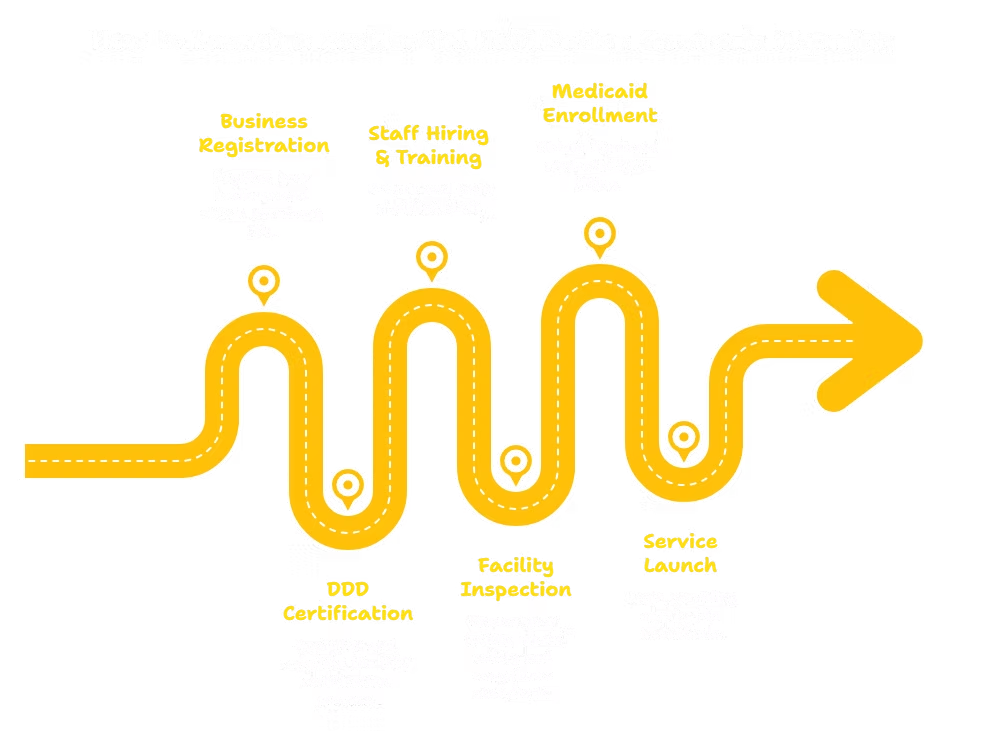
The enrollment process follows a logical sequence:
- Register the business and obtain all necessary tax and identification credentials.
- Apply for DDD provider certification.
- Complete required pre-service orientation and submit the Policy & Procedure Manual.
- Undergo a formal home inspection and compliance review.
- Receive official Medicaid enrollment credentials and a billing ID.
- Begin accepting referrals from case managers upon final approval of the IPC.
What Documentation Is Necessary for Compliance?
Compliance in Residential Habilitation is heavily dependent on documentation. Providers must maintain a robust record-keeping system that validates the delivery of services in accordance with the IPC. A primary component of this is the Policy & Procedure Manual, which must contain specific protocols for admission, transition, and discharge. It must also detail daily routines, health tracking, and incident reporting procedures.
Beyond the policy manual, providers are expected to maintain comprehensive files that document the day-to-day life of participants. This includes monthly summaries, progress notes that align with the IPC, staff supervision logs, and internal training records. Safety documentation, such as fire drill logs and equipment maintenance checklists, is equally critical. All records must clearly demonstrate that the provider is meeting the participant's needs in alignment with their rights and the established grievance policies.
How Do Staffing Requirements Impact Program Operations?
The quality of Residential Habilitation services is directly tied to the competency of the Direct Support Professionals (DSPs). All DSPs must meet minimum age requirements (18+), pass rigorous background checks, and clear the state’s abuse registry. Training is a continuous process; before starting, staff must complete the DDD pre-service orientation. Ongoing in-service training is mandatory and must cover essential topics such as fire safety, participant rights, HIPAA confidentiality, and behavior intervention.
For administrative oversight, it is highly recommended that providers employ a Program or House Manager. This role is vital for supervising staff schedules, ensuring that staff are adequately trained, and monitoring the success of client outcomes. The Program Manager ensures that all agency procedures are implemented consistently and that the facility remains in constant alignment with the WDH regulations, acting as the primary point of contact for service compliance and quality improvement initiatives.
Frequently Asked Questions
Which Medicaid waivers cover Residential Habilitation in Wyoming?
Residential Habilitation is covered under the Comprehensive Waiver for individuals with I/DD who meet specific level-of-care criteria. It is generally provided in provider-owned or -operated homes housing 1–3 residents. The Supports Waiver does not cover 24/7 Residential Habilitation.
What is the typical timeline for launching a provider agency?
The launch process is phased. Business registration and manual development typically take 2–3 weeks. Hiring and training staff generally spans 30–60 days. The DDD certification and Medicaid enrollment phase usually takes 2–4 months, with facility inspections occurring prior to final approval and the receipt of initial referrals.
What is the primary role of the Residential Habilitation Policy & Procedure Manual?
The manual is the governing document for your agency. It must include protocols for participant admission and discharge, service delivery routines, emergency preparedness, medication assistance, and behavioral intervention. It serves as the framework for daily operations and is reviewed during state compliance audits.
WAIVER CONSULTING GROUP’S START-UP ASSISTANCE SERVICE — WYOMING RESIDENTIAL HABILITATION PROVIDER
WCG provides professional assistance to agencies looking to launch or maintain high-quality residential habilitation programs. Services include guiding providers through DDD certification, Medicaid enrollment, the creation of robust Policy & Procedure Manuals, and the development of documentation templates for staff and management to ensure full regulatory alignment.
The key takeaway for prospective providers is that Residential Habilitation requires a strict balance between clinical compliance and the delivery of person-centered care. Success depends on maintaining meticulous documentation, rigorous staff training, and a clear understanding of the regulatory mandates set forth by the Wyoming Department of Health.
Last verified: 2024. This information is provided for educational purposes and does not constitute legal or professional advice. Please consult directly with the Wyoming Department of Health (DDD) or the Wyoming Medicaid Provider Portal for the most current regulatory updates and official policy documentation.