RESIDENTIAL HABILITATION SERVICES PROVIDER IN MARYLAND
By Fatumata Kaba · 2025-09-03 · 5 min read
Supporting independent living through Residential Habilitation requires a commitment to providing 24/7 supervision, individualized skill development, and robust community inclusion for individuals with intellectual and developmental disabilities. In Maryland, these essential services are facilitated through the Developmental Disabilities Administration (DDA) under the Community Pathways Waiver, enabling participants to reside in home-like environments tailored to their unique needs and personal goals.
Understanding the Governing Framework for Residential Habilitation
The delivery of Residential Habilitation services in Maryland is governed by a multi-layered regulatory structure designed to ensure the safety, health, and civil rights of participants. At the federal level, the Centers for Medicare & Medicaid Services (CMS) sets the overarching standards for Home and Community-Based Services (HCBS), ensuring that residential settings are fully integrated into the community. These federal mandates are interpreted and enforced locally to align with Maryland’s specific waiver requirements.
The Maryland Department of Health (MDH) serves as the primary regulatory body for all Medicaid-funded services. Under its umbrella, the Developmental Disabilities Administration (DDA) carries the direct responsibility for overseeing service delivery, provider certification, and ongoing compliance. Providers must also interact with the Office of Long-Term Services and Supports (LTSS Maryland), which serves as the centralized platform for billing, service authorization tracking, and documentation. Navigating these agencies requires a precise understanding of the reporting requirements and quality assurance standards set by the state.
What Does Residential Habilitation Entail for Participants?
Residential Habilitation is not merely a housing arrangement; it is a clinical and supportive intervention designed to foster independence. These services are provided in various settings, including group homes, Alternative Living Units (ALUs), or homes owned by the individual. Regardless of the setting, the goal is to provide a structured environment that empowers the individual to lead a self-determined life while receiving necessary support for daily living.
Supports provided under this service category are heavily individualized, rooted in the participant’s Person-Centered Plan (PCP) and Individual Plan (IP). Core service components typically include:
- 24/7 supervision and comprehensive personal care support.
- Assistance with Activities of Daily Living (ADLs) and Instrumental Activities of Daily Living (IADLs).
- Active engagement in community integration and social inclusion activities.
- Skill development in areas such as financial literacy, meal preparation, hygiene, and home safety.
- Consistent medication administration and ongoing health status monitoring.
- Formal implementation of behavioral support plans to ensure safety and emotional well-being.
Licensing and Provider Approval: Essential Prerequisites
Becoming an approved provider is a rigorous process that demands high standards of organizational readiness. Before approaching the DDA for program approval, an organization must establish a formal business entity. This begins with registering the business with the Maryland Department of Assessments and Taxation (SDAT) and obtaining a federal Employer Identification Number (EIN) and a Type 2 National Provider Identifier (NPI). These foundational steps are non-negotiable for Medicaid enrollment.
Furthermore, prospective providers must secure and prepare residential sites that meet strict DDA licensure and life-safety standards. This involves evaluating potential properties for accessibility and ensuring they meet local zoning requirements. Providers must also develop comprehensive operational frameworks, including detailed floor plans, emergency evacuation procedures, and specific staffing models. Maintaining appropriate insurance coverage, including general liability, property, and workers' compensation, is required to protect both the agency and the individuals receiving services.
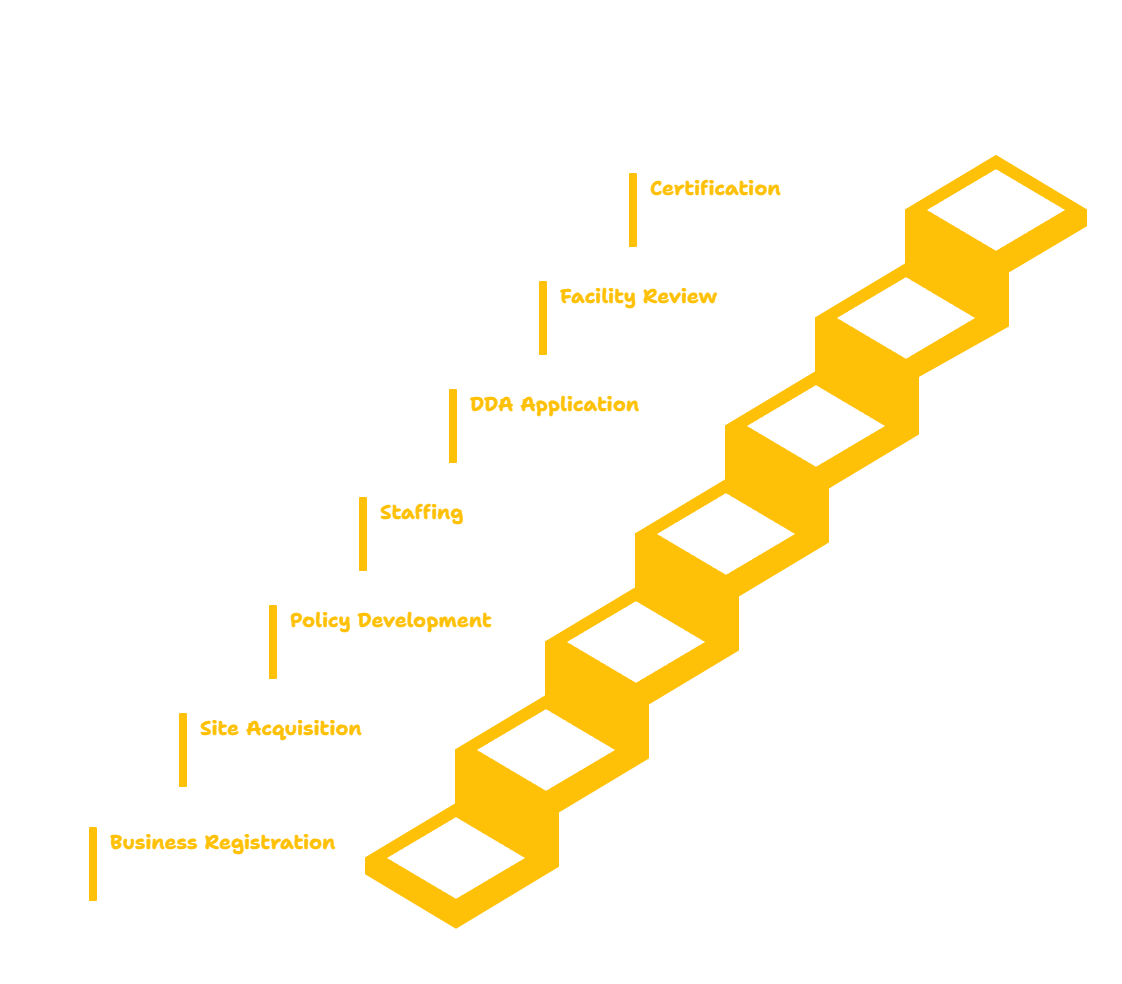
Navigating the DDA Enrollment and Licensing Pipeline
The transition from a prospective provider to a certified agency follows a sequential pathway. The initial phase focuses on site development, where the provider identifies properties that are not only ADA-accessible but also conducive to the therapeutic goals of the participants. During this phase, internal policies regarding supervision, incident reporting, and skill-building routines must be drafted to align with DDA expectations.
Following site development, the provider must formally apply to the DDA, selecting Residential Habilitation as a primary service. The DDA will conduct a thorough review of the application, which includes assessing site details, lease or ownership documentation, and the viability of the proposed staffing model. Once the documentation is approved, the agency undergoes a pre-licensure inspection. DDA officials will physically inspect the site for fire safety, accessibility, and overall adequacy of the space before granting official certification. Once certified, the provider can begin accepting referrals through Coordination of Community Services (CCS) and start documentation in the LTSS Maryland platform.
Establishing Documentation and Staffing Standards
Administrative excellence is the cornerstone of a successful Residential Habilitation program. A provider’s policy and procedure manual serves as the primary document for audits and compliance reviews. This manual must explicitly cover daily schedules, shift change reporting, emergency response, medication administration—often requiring Registered Nurse (RN) delegation—and client rights. Clear protocols for hygiene, nutrition, and behavioral support ensure that all staff members are operating under the same set of high-quality standards.
Staffing requirements are equally stringent to ensure the safety of participants. Essential roles and requirements include:
- Direct Support Professionals (DSPs): Must hold a high school diploma or GED, pass criminal background checks, maintain First Aid/CPR certification, and complete DDA Core Competency training.
- Residential Managers: Must possess significant experience in disability services and demonstrated ability to oversee daily operations and regulatory compliance.
- Registered Nurses: Required for medical oversight in many residential models, responsible for managing health plans, delegating medication administration, and verifying staff clinical competencies.
- Mandatory Training: All staff must undergo training in disaster response, infection control, person-centered planning, and de-escalation techniques.
Frequently Asked Questions
What is the typical timeline for launching a Residential Habilitation program?
The timeline varies based on organizational readiness, but the full lifecycle from business registration to operational readiness typically spans several months. The business formation and site acquisition phase usually takes 2–4 weeks, policy development requires 3–6 weeks, and the DDA application and facility approval process generally takes 8–12 weeks. Licensing inspections follow thereafter.
Is RN delegation required for all medication administration?
In Maryland, if a participant requires medication that does not require specialized clinical judgment but must be administered by a non-licensed professional, the tasks may be delegated by a Registered Nurse. The RN must train and verify the competency of the DSP (often through CMT certification) to perform these tasks safely according to state regulations.
How does a provider receive referrals for their residential program?
Referrals are managed through the Coordination of Community Services (CCS). Once an agency is a DDA-approved provider, they should network with local CCS agencies and resource coordinators. These coordinators match the specific needs of an individual on the DDA waiting list or those transitioning into new settings with the capacity and service offerings of your certified residential site.
Key Takeaway
Establishing a Residential Habilitation program in Maryland requires a rigorous alignment of business development, regulatory compliance, and clinical oversight. By meticulously adhering to DDA standards for site safety, staff training, and participant-centered service delivery, providers can create sustainable, high-quality living environments that meaningfully improve the lives of individuals with developmental disabilities.
Last verified: September 2023. This information is intended for educational purposes and does not constitute legal or professional advice. Requirements for Medicaid waiver programs are subject to change by the Maryland Department of Health and the Developmental Disabilities Administration; please consult official state documentation or a professional consultant for the most current regulatory guidance.