RESIDENTIAL CARE SERVICES PROVIDER IN RHODE ISLAND
By Fatumata Kaba · 2025-10-09 · 5 min read
Understanding Residential Care Services for Rhode Island Medicaid
Residential care services in Rhode Island provide essential, long-term, round-the-clock support for individuals living with developmental disabilities, behavioral health needs, or complex medical conditions. By utilizing a home-like environment, these programs facilitate both safety and independence, ensuring that individuals receive the supervision necessary to thrive within their community rather than in institutional settings.
These services are primarily administered under the state’s Medicaid 1115 Global Waiver. Programs are overseen by the Department of Behavioral Healthcare, Developmental Disabilities & Hospitals (BHDDH) and the Executive Office of Health and Human Services (EOHHS), which work in tandem to ensure that service delivery aligns with federal standards for home and community-based services (HCBS).
Navigating the Regulatory Landscape and Oversight Agencies
Establishing a residential care program in Rhode Island requires strict adherence to regulations set forth by both state and federal authorities. The Rhode Island Executive Office of Health and Human Services (EOHHS) serves as the primary entity overseeing Medicaid funding, provider enrollment, and compliance with the 1115 waiver mandates. Their oversight ensures that fiscal and programmatic integrity is maintained across all Medicaid-funded housing initiatives.
Operational compliance is largely managed by the Department of Behavioral Healthcare, Developmental Disabilities & Hospitals (BHDDH), which licenses and monitors providers serving individuals with intellectual and developmental disabilities (IDD). Furthermore, the Rhode Island Department of Health (RIDOH) plays a critical role in regulating facility safety, infection control, and clinical oversight. Providers must also remain aligned with Centers for Medicare & Medicaid Services (CMS) standards, which dictate federal HCBS compliance and ensure that residential settings are truly integrated into the community.
- EOHHS: Manages Medicaid funding and provider enrollment.
- BHDDH: Licenses and monitors residential service providers.
- RIDOH: Oversees facility safety and health-related clinical compliance.
- CMS: Ensures federal HCBS Final Rule compliance.
Core Components of Residential Support Services
Residential care providers are tasked with creating a structured yet person-centered environment that focuses on individualized goals. This goes beyond basic shelter; it encompasses a holistic approach to personal development, health maintenance, and social integration. Approved providers are expected to deliver a high standard of care tailored to the specific needs of each participant as outlined in their Individualized Service Plan (ISP).
A successful residential operation must incorporate 24-hour supervision, ensuring trained staff are available for safety and assistance at all times. Services include medication administration, often with RN oversight or delegated staff, and comprehensive behavioral support. Additionally, providers assist with Activities of Daily Living (ADL), such as grooming and mobility, while fostering life skills like cooking, laundry, and self-advocacy to maximize resident autonomy.
Steps to Licensure and Provider Enrollment
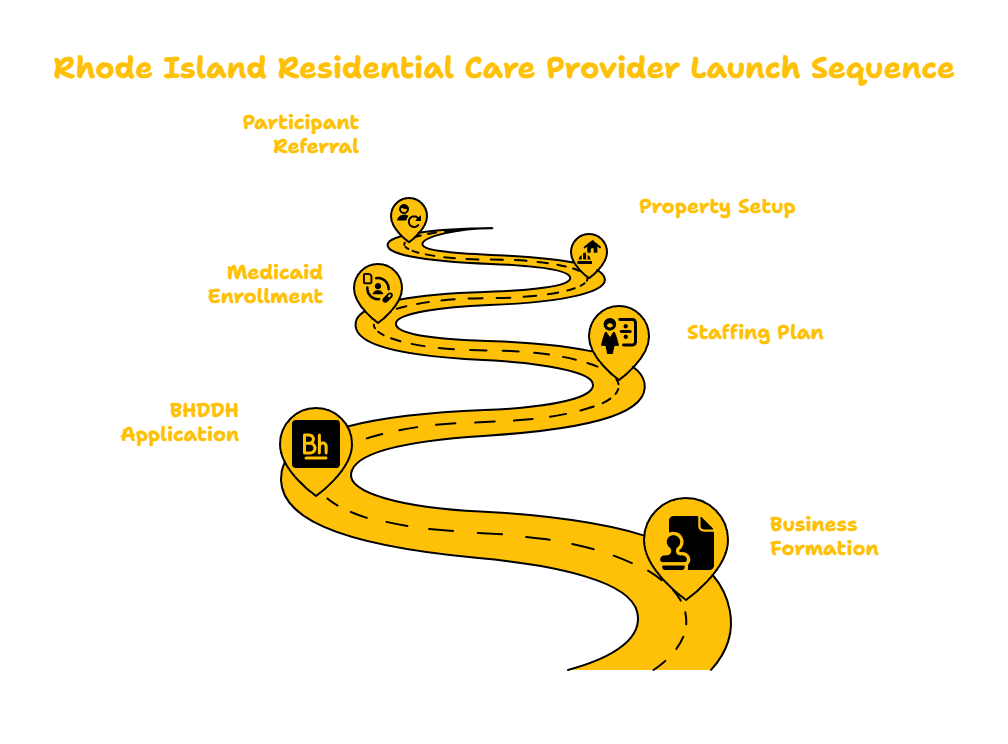
Becoming an approved residential care provider involves a multi-phased startup process that begins with formal business organization. Applicants must register their business entity with the Rhode Island Secretary of State and obtain an EIN and Type 2 NPI. Following these foundational steps, the applicant must submit a comprehensive residential services provider application to the BHDDH and ensure that the proposed physical location meets all RIDOH health and safety regulations.
The enrollment journey also necessitates strict alignment with the HCBS Final Rule, which emphasizes person-centered, integrated living. Providers are required to develop a robust Residential Services Policy & Procedure Manual that codifies safety, staffing, ISP implementation, and documentation protocols. Once the internal framework is established, the provider must enroll with the Medicaid provider portal to finalize credentials before receiving participant referrals.
- Form a legal business entity and acquire an EIN and NPI.
- Submit the provider application and supporting policy manuals to BHDDH.
- Complete the Medicaid enrollment process through the state provider portal.
- Pass site readiness and safety inspections conducted by state authorities.
Staffing Standards and Operational Requirements
Staffing represents the most significant investment for a residential provider. The primary role is the Direct Support Professional (DSP), who must possess current CPR/First Aid certification, complete comprehensive background checks, and participate in mandated abuse prevention training. House Managers or Residential Supervisors provide the necessary oversight, managing staff schedules, ISP coordination, and the day-to-day operations of the residential site.
Continuous education is a mandatory requirement for all staff members. Training curriculums must cover HIPAA compliance, mandatory reporting, emergency preparedness, and the implementation of behavioral support plans. Whether the setting requires RN clinical oversight or specialized behavior specialists, every team member must be proficient in documenting progress and upholding participant rights, ensuring that the care environment is consistently professional and compassionate.
Waiver Programs and Funding Streams
Residential care services in Rhode Island are facilitated through specific Medicaid waivers designed to offer flexible support options. The BHDDH IDD Waiver is the most common vehicle for funding Community Living Arrangements (CLAs), which function as group homes. For those seeking a more domestic setting, the Shared Living Arrangement Waiver provides a family-style environment supported by stipends and professional oversight.
The broader 1115 Global Waiver allows for innovation in service delivery, accommodating diverse residential models that cater to varying degrees of support needs. Furthermore, self-directed waiver models empower participants to choose their residential services from the pool of approved providers. Understanding the nuances of these specific funding streams is vital for providers to effectively match their program offerings with the administrative requirements of the state.
Frequently Asked Questions
What is the typical timeline for launching a residential care program in Rhode Island?
The timeline varies based on organizational readiness, but generally, business formation and policy creation take 1–2 months. BHDDH application and Medicaid enrollment typically require 2–3 months, while property setup and staff onboarding require an additional 30–60 days.
Are residential providers required to be licensed by the Department of Health?
If the facility provides health-related services or clinical oversight, it must comply with Rhode Island Department of Health (RIDOH) regulations regarding safety, infection control, and occupancy limits.
How does the HCBS Final Rule impact my residential program?
The HCBS Final Rule mandates that all residential settings must be integrated into the community. Providers must demonstrate that their programs are person-centered, provide privacy and dignity to residents, and offer opportunities for residents to participate in community activities.
Key Takeaway
Establishing a successful residential care service in Rhode Island requires a disciplined approach to regulatory compliance, a commitment to high-quality staffing, and a deep understanding of the BHDDH and EOHHS oversight frameworks. By prioritizing documentation, safety, and person-centered service delivery, providers can build sustainable programs that significantly enhance the quality of life for individuals with complex needs while meeting all state and federal Medicaid requirements.
Last verified: October 2023. This information is for educational purposes only and does not constitute legal or professional advice. Always consult with state agencies and professional advisors to ensure your organization complies with the most current Rhode Island laws, regulations, and Medicaid requirements.