RESIDENTIAL CARE SERVICES PROVIDER IN MASSACHUSETTS
By Fatumata Kaba · 2025-08-08 · 5 min read
What Does It Mean to Be a Residential Care Services Provider in Massachusetts?
Residential care services in Massachusetts provide critical, long-term supportive housing environments for individuals who require specialized care due to developmental, physical, or behavioral health needs. These programs are designed to offer a safe, stable alternative to institutionalization, enabling residents to receive 24-hour supervision, medical oversight, and skill-building support within a community-based setting. As a provider, your role is to deliver high-quality, person-centered care that aligns with the rigorous standards set by state oversight agencies, ensuring that every resident achieves their highest level of independence.
Funding for these services is primarily managed through MassHealth Home and Community-Based Services (HCBS) waivers. To operate, providers must interface with key governing bodies, including the Department of Developmental Services (DDS), the Massachusetts Rehabilitation Commission (MRC), the Department of Mental Health (DMH), and the Executive Office of Health and Human Services (EOHHS). Success in this sector requires not only a commitment to compassionate care but also a comprehensive understanding of federal and state regulatory compliance, licensing, and ongoing quality assurance protocols.
Which Agencies Govern Residential Care Services in Massachusetts?
Navigating the regulatory landscape in Massachusetts requires close coordination with several state and federal authorities. Each agency plays a specific role in the oversight, authorization, and funding of residential services. The Centers for Medicare & Medicaid Services (CMS) provide the overarching federal framework through 1915(c) waivers, which allow states to offer home and community-based services as an alternative to nursing facilities.
At the state level, the Executive Office of Health and Human Services (EOHHS) serves as the umbrella for waiver compliance and funding administration. Specific departments manage the daily operations and programmatic requirements for different populations:
- Department of Developmental Services (DDS): Oversees group homes, shared living, and residential habilitation for individuals with intellectual or developmental disabilities.
- Department of Mental Health (DMH): Authorizes residential treatment programs for individuals managing serious mental illness.
- MassHealth (Medicaid): Acts as the primary payer, authorizing services and managing provider reimbursements under various waiver programs.
- Massachusetts Rehabilitation Commission (MRC): Engages in the oversight and coordination of services for individuals with physical or acquired brain injuries.
What Are the Essential Models and Core Supports for Residential Programs?
Residential care models vary depending on the level of clinical intensity and the needs of the population served. Providers may choose to operate 24-hour staffed group homes, shared living arrangements (host families), adult foster care, or specialized behavioral residential treatment homes. Regardless of the specific model, the core objective remains the same: to provide a structured, supportive environment that facilitates personal growth and safety.
The services delivered must be person-centered and clearly defined within an Individual Service Plan (ISP) or Plan of Care (POC). These documents dictate the specific supports required for each resident, ensuring that the care provided is consistent and measurable. Core services typically include:
- Assistance with Activities of Daily Living (ADL) and Instrumental Activities of Daily Living (IADL) such as hygiene, meal preparation, and medication reminders.
- Behavioral and mental health management strategies tailored to the resident’s clinical needs.
- Comprehensive life skills training and integration into the local community.
- Logistical coordination for transportation to appointments and social activities.
- Constant supervision, safety monitoring, and health services coordination with external clinicians.
What Are the Licensing and Provider Enrollment Requirements?
Becoming a licensed residential provider in Massachusetts is a multi-step process that demands meticulous documentation and facility readiness. Before a provider can begin accepting residents, they must establish the legal and structural foundation of the business. This includes registering the entity with the Massachusetts Secretary of the Commonwealth, obtaining a Federal EIN, securing a Type 2 NPI, and acquiring comprehensive liability, property, and workers' compensation insurance.
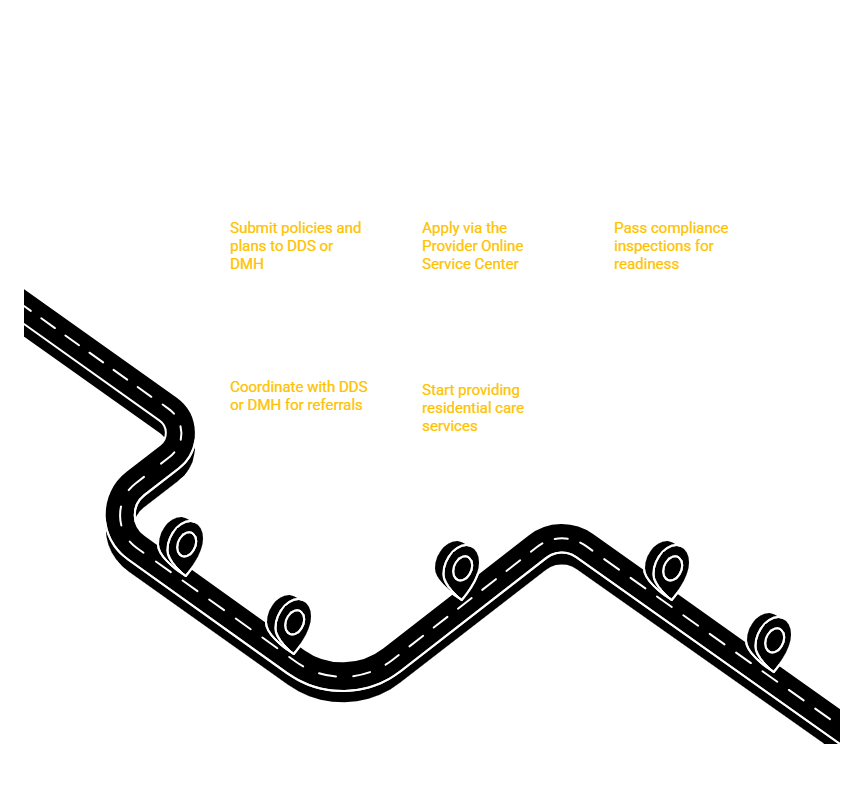
The administrative burden is significant, as providers must demonstrate strict adherence to health, safety, and staffing regulations. The following steps outline the typical progression for new providers:
- Licensure Application: Submit detailed policies, facility blueprints, and operational plans to the DDS or DMH for residential program licensure.
- MassHealth Enrollment: Apply for enrollment through the Provider Online Service Center (POSC) to become an authorized waiver provider.
- Facility Inspection: Pass mandatory fire, health, and ADA compliance inspections to ensure the environment is safe for occupancy.
- Contract Finalization: Coordinate with area offices to receive referrals and finalize service agreements.
What Documentation and Staffing Standards Must Providers Maintain?
Documentation is the backbone of Medicaid compliance. Providers must maintain a robust Policy & Procedure Manual that covers house rules, resident rights, emergency evacuation plans, incident reporting, and Medication Administration Record (MAR) tracking. All staff members are subject to rigorous background checks, including CORI (Criminal Offender Record Information) and fingerprinting, to protect vulnerable populations.
Staffing requirements are contingent upon the complexity of the resident population. Essential roles include Direct Support Professionals (DSPs), who handle day-to-day care; Program Managers, who oversee scheduling and ISP implementation; and often a Nurse Consultant to oversee medical needs. Mandatory staff training topics include:
- Abuse, neglect, and mandatory reporting protocols.
- Person-centered care methodologies and ISP goal tracking.
- Infection control and health safety protocols.
- Emergency procedures, fire safety, and behavioral management techniques.
- Medication Administration Program (MAP) certification.
Frequently Asked Questions
How long does the launch process for a residential care program typically take?
The total timeline varies, but generally, it takes 2–4 weeks for business registration, 60–90 days for licensure application, one month for staffing and policy creation, and 1–2 months for MassHealth enrollment. Successful launch depends on prompt responses to state requests and site inspection readiness.
What specific waivers are used to fund these services?
Residential care is commonly reimbursed through several programs, including DDS Community Living and Intensive Supports waivers, Acquired Brain Injury (ABI) waivers, Money Follows the Person (MFP) Residential Supports, DMH Adult Community Clinical Services (ACCS), and both standard and Group Adult Foster Care (GAFC) programs.
What is the role of the Provider Online Service Center (POSC)?
The POSC is the primary web-based platform where providers manage their relationship with MassHealth. It is essential for initial enrollment, updating provider information, and navigating the billing workflows necessary to receive reimbursement for services rendered under state waivers.
Key Takeaway
Successfully operating a residential care program in Massachusetts requires a deep commitment to regulatory compliance, disciplined operational management, and a focus on person-centered care. By maintaining accurate documentation, investing in well-trained staff, and fostering strong relationships with state agencies like the DDS and DMH, providers can build sustainable programs that provide essential support for individuals with complex needs across the Commonwealth.
Last verified: 2024. The information provided here is for general guidance and is based on public agency documentation. Requirements may change; consult official state manuals and policy notices for the most current information.