RESIDENTIAL CARE SERVICES PROVIDER IN KANSAS
By Fatumata Kaba · 2025-07-24 · 5 min read
Residential Care Services in Kansas provide individuals with disabilities or chronic conditions access to 24-hour support in supervised, home-like settings. As a critical component of the KanCare Medicaid system, these services facilitate independence, safety, and community integration for participants who require ongoing, structured assistance outside of their primary family home.
Establishing a residential care program in Kansas involves navigating a complex intersection of regulatory oversight, Medicaid enrollment, and clinical documentation requirements. This guide outlines the essential steps for providers aiming to deliver high-quality, compliant residential supports under Kansas Home and Community-Based Services (HCBS) waivers.
Who are the Governing Agencies for Residential Care in Kansas?
The regulatory landscape for Kansas residential services is multi-tiered, involving state and federal authorities designed to ensure participant safety and service quality. The Kansas Department for Aging and Disability Services (KDADS) acts as the primary regulator, overseeing HCBS residential services, licensure, and provider compliance. Their role is to ensure that all service delivery meets established state standards for health, safety, and person-centered care.
In addition to KDADS, the Kansas Department of Health and Environment (KDHE) - Division of Health Care Finance manages Medicaid payments and the broader enrollment process. At the federal level, the Centers for Medicare & Medicaid Services (CMS) provides the overarching framework, ensuring that all community-based residential services adhere to federal mandates concerning deinstitutionalization and the protection of participant rights.
Finally, the Managed Care Organizations (MCOs) under KanCare function as the primary point of contact for service delivery. They are responsible for authorizing service plans, credentialing residential providers, and monitoring outcomes. Providers must maintain a collaborative relationship with these organizations to ensure consistent authorization and payment.
What Services are Included Under Residential Care?
Residential Care Services are designed to provide 24/7 structured support in provider-operated homes. The core focus is on enhancing the participant's quality of life while maintaining a safe, stable environment. Services are always tailored to the individual’s needs, as outlined in their specific Individualized Service Plan (ISP).
Authorized services generally include the following core components:
- Assistance with Activities of Daily Living (ADLs), including bathing, dressing, grooming, mobility, and eating.
- Medication administration or supervision, performed in accordance with state regulations.
- Nutritional oversight, meal preparation, and housekeeping or laundry assistance.
- Social skill-building, behavior management, and community integration activities.
- Health and safety monitoring, including transportation to medical and community appointments.
- Development of independent living skills, such as money management, hygiene, and cooking.
What are the Licensing and Provider Approval Requirements?
Before launching a residential care program, an agency must meet a strict set of prerequisites. This begins with formal business registration with the Kansas Secretary of State and the acquisition of an IRS EIN and Type 2 NPI. These foundational steps ensure that the business entity is recognized for healthcare billing purposes.
Providers must then focus on site-specific requirements. This includes obtaining residential care licensure through KDADS and ensuring all residential sites pass rigorous health, safety, and accessibility inspections. Furthermore, agencies must develop a comprehensive Residential Services Policies & Procedures Manual. This document must clearly address HIPAA compliance, emergency preparedness, incident reporting systems, and staff training protocols to satisfy both state and federal oversight expectations.
How Do You Navigate the Provider Enrollment Process?
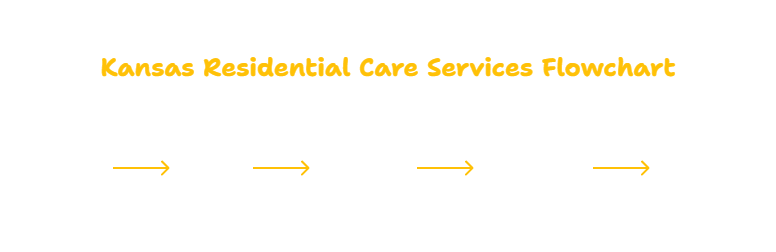
The enrollment process is a sequential journey that moves from regulatory compliance to service authorization. It begins with the regulatory phase, where the provider applies for KDADS licensure or certification. This involves site readiness reviews and inspections to confirm that the physical environment meets HCBS standards.
Once licensure is secured, the provider proceeds to Medicaid enrollment via the Kansas Medical Assistance Program (KMAP) and seeks MCO credentialing. Successful enrollment requires the submission of detailed documentation, including insurance certificates, staffing plans, and operational policies. The final phase involves the actual service launch, which is triggered once the provider collaborates with case managers to develop participant-specific ISPs and receives formal MCO service authorizations.
What Documentation and Staffing Standards Must Be Met?
Documentation is the backbone of Medicaid compliance. Providers must maintain robust records, including Articles of Incorporation, proof of licensure, and comprehensive insurance policies. The internal Residential Services Policies & Procedures Manual must serve as a living document, covering daily care routines, medication management protocols, participant rights, and detailed audit logs. Maintaining these records is essential for surviving state audits and ensuring the continuity of care.
Staffing requirements are equally stringent to ensure the safety of participants. Essential roles include Direct Support Professionals (DSPs) and Residential Managers. All staff must undergo thorough background screenings and complete mandatory training, including:
- HCBS orientation and ISP implementation strategies.
- CPR, First Aid, and behavioral de-escalation techniques.
- Medication administration procedures, where required.
- Emergency preparedness, abuse prevention, and annual continuing education modules.
Frequently Asked Questions
Which Medicaid programs authorize Residential Care services?
Residential Care is authorized under specific HCBS waivers, primarily the Intellectual/Developmental Disability (IDD) Waiver, the Brain Injury (BI) Waiver, and the Technology Assisted (TA) Waiver for case-specific support. Each participant must have an active ISP and MCO authorization to receive these services.
What defines a compliant residential setting?
A compliant residential setting must be home-like, community-based, and non-institutional. It must pass KDADS and fire marshal inspections, support community inclusion, and grant the participant control over their daily routines and personal living space.
What is the typical timeline to launch a residential program?
The launch process usually takes between 5 and 8 months. This accounts for 1–2 months for business registration, 60–90 days for KDADS licensure and site inspections, 1–2 months for Medicaid enrollment, and 30–45 days for final staffing and ISP coordination.
Key Takeaways for Providers
Launching a residential care program in Kansas requires a steadfast commitment to regulatory compliance and person-centered service delivery. Success depends on the early establishment of administrative infrastructure, the careful selection of staff who meet rigorous training standards, and the maintenance of transparent documentation systems. By working closely with KDADS, KMAP, and KanCare MCOs, providers can build sustainable, high-quality programs that fulfill the vital need for safe and structured community-based living.
Waiver Consulting Group provides professional assistance to agencies, behavioral health organizations, and community-based nonprofits in building high-quality, licensed Residential Care programs. From facility readiness checklists and KDADS licensure assistance to the development of policy manuals and Medicaid billing setup, WCG supports the entire organizational lifecycle. Last verified: October 2023. Disclaimer: This information is for educational purposes only and does not constitute legal or professional advice. Always verify current state regulations and waiver requirements directly with KDADS and the applicable KanCare MCOs.