RESIDENTIAL CARE SERVICES PROVIDER IN GEORGIA
By Fatumata Kaba · 2025-07-14 · 5 min read
Residential care services in Georgia provide essential, structured living environments for individuals with disabilities, aging needs, and chronic health conditions who require consistent support. These services are delivered through a combination of licensed facility-based care and Home and Community-Based Services (HCBS) waivers, all overseen by state and federal regulatory bodies to ensure participant safety and quality of care.
Understanding the Governing Agencies and Regulatory Landscape
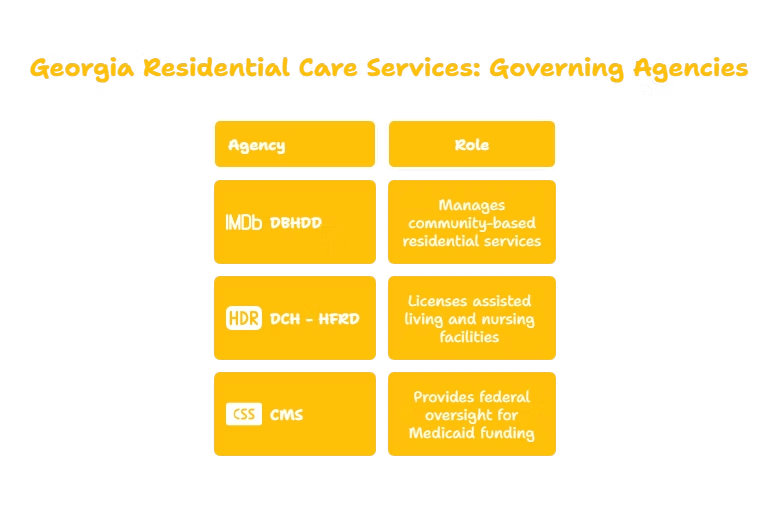
Navigating the Georgia residential care sector requires a clear understanding of the distinct roles played by federal and state agencies. The Georgia Department of Behavioral Health and Developmental Disabilities (DBHDD) is the primary agency responsible for managing community-based residential services under HCBS waivers, specifically the New Options Waiver (NOW) and the Comprehensive Supports Waiver Program (COMP).
Simultaneously, the Georgia Department of Community Health (DCH) through the Healthcare Facility Regulation Division (HFRD) maintains authority over the licensing of physical settings, including Assisted Living Communities, Personal Care Homes, and Nursing Facilities. These state efforts are aligned with federal oversight provided by the Centers for Medicare & Medicaid Services (CMS), which mandates strict compliance with HCBS setting requirements and institutional safety standards.
- DBHDD: Oversees community-based residential services for individuals with intellectual and developmental disabilities.
- DCH HFRD: Responsible for state licensure, regulatory inspections, and health-safety oversight of facilities.
- CMS: Provides the federal framework for Medicaid-funded residential settings to ensure integration and autonomy.
Core Components of Residential Care Service Delivery
Residential care services are designed to facilitate independence while ensuring 24-hour supervision and health monitoring. Providers must deliver a comprehensive range of support, including assistance with Activities of Daily Living (ADLs) such as bathing, dressing, toileting, and mobility, alongside Instrumental Activities of Daily Living (IADLs) like meal preparation, laundry, shopping, and home maintenance. These services are tailored to the specific needs of the individual, whether in a group home or an assisted living setting.
Beyond basic physical support, effective residential programs incorporate medication administration, health maintenance, and community participation. Skilled providers facilitate transportation to medical appointments and social engagements, while simultaneously implementing skill-building activities that promote personal autonomy. In crisis situations, providers must be prepared to deliver immediate intervention and emergency response to ensure the safety and wellbeing of all residents.
Licensing and Provider Enrollment Prerequisites
Establishing a residential care business begins with formalizing the entity with the Georgia Secretary of State and obtaining an Employer Identification Number (EIN) and a Type 2 National Provider Identifier (NPI). Once the business is established, the applicant must secure the appropriate facility license from the DCH HFRD, which varies depending on the specific residential model chosen, such as a Personal Care Home or an Assisted Living Community.
After securing the physical facility licensure, providers must complete the Medicaid enrollment process through the Georgia Medicaid Management Information System (GAMMIS). For those offering services under the NOW or COMP waivers, separate DBHDD provider enrollment is mandatory. Maintaining compliance also involves securing professional, property, and general liability insurance, as well as meeting all Life Safety Code standards established by the National Fire Protection Association (NFPA).
Executing the Application and Site Readiness Workflow
The path to becoming an approved provider is a multi-step process that begins with a Letter of Intent submitted to the DBHDD or a formal application to the DCH HFRD. The applicant must submit detailed documentation, including articles of incorporation, organizational charts, comprehensive policy and procedure manuals, and detailed staff development plans. The state will require evidence of quality assurance programs and emergency management protocols to verify the provider’s readiness to manage resident safety.
Site readiness is a critical gatekeeping phase of the process. Before a provider can begin billing, the physical location must pass a rigorous Fire Marshal inspection and a Life Safety Code compliance review. Upon successful completion of these audits, DBHDD may issue a site certification for HCBS settings. Only after these regulatory hurdles are cleared can the provider finalize their billing profile in GAMMIS to ensure that reimbursement codes for services like Community Residential Alternatives or Assisted Living are correctly configured.
Staffing, Credentialing, and Training Obligations
Staffing requirements are strictly regulated to ensure high-quality care. Residential Managers or Administrators for HCBS settings generally require a bachelor’s degree in a human services field, while Assisted Living Communities must be managed by a state-licensed administrator. Direct Support Professionals (DSPs), Personal Care Aides, or Certified Nursing Assistants (CNAs) must hold at least a high school diploma or GED, possess valid CPR/First Aid certification, and pass comprehensive background screenings.
Training is an ongoing requirement for all personnel. Providers must ensure that every staff member completes standardized training in HIPAA confidentiality, resident rights, abuse prevention, emergency preparedness, and infection control. Furthermore, staff must be trained in person-centered planning and community integration to ensure the services provided strictly adhere to the standards required by the Medicaid waiver programs.
Frequently Asked Questions
What is the typical timeline to launch a residential care business?
The total timeline varies based on the scope of the project. Generally, business formation and facility licensing require 2–3 months. DBHDD site certification and Medicaid enrollment can take an additional 90–120 days, followed by 30–60 days for staff hiring and training, and 45–60 days to finalize billing system configurations.
Are there specific insurance requirements for these providers?
Yes, providers are expected to maintain comprehensive insurance coverage, which typically includes general liability, professional liability, and property insurance. These policies must be active and verifiable during the application and licensing process.
What is the difference between HCBS waiver services and traditional Medicaid services?
HCBS waivers, such as the NOW and COMP waivers, are designed to support individuals in community-based residential settings, such as Community Residential Alternatives (CRA). Traditional Medicaid primarily supports institutional settings, such as Nursing Facilities, which provide a different level of skilled medical oversight and facility-based care.
Waiver Consulting Group’s Start-Up Assistance Service
Waiver Consulting Group assists residential providers, personal care home owners, and community-based living organizations in navigating the complexities of launching Medicaid-compliant residential care services in Georgia. The scope of professional assistance covers the end-to-end development of the provider business, including:
- Business registration and NPI/EIN setup.
- Assistance with Medicaid and state facility licensing applications.
- Creation of customized Residential Care Policy & Procedure Manuals.
- Development of staff credentialing, participant intake, and care planning templates.
- Configuration of Medicaid billing systems and claims management processes.
- Implementation of quality assurance programs and emergency response systems.
Key Takeaway: Successful entry into the Georgia residential care market depends on strict adherence to the regulatory requirements of the DCH HFRD and DBHDD. By maintaining current licensure, ensuring staff receive documented training, and establishing robust operational policies, providers can effectively meet the needs of Medicaid waiver participants while maintaining ongoing compliance.
Last verified: September 2023. Disclaimer: This information is for educational purposes only and does not constitute legal or professional consulting advice. Always refer to the official Georgia Department of Community Health (DCH), Department of Behavioral Health and Developmental Disabilities (DBHDD), and Centers for Medicare & Medicaid Services (CMS) websites for the most current regulatory updates.