RESIDENTIAL CARE SERVICES PROVIDER IN ARKANSAS
By Fatumata Kaba · 2025-07-04 · 5 min read
Understanding Residential Care Services in Arkansas
Residential Care Services in Arkansas provide individuals with disabilities, chronic illnesses, or age-related needs with a structured, supportive living environment authorized under Home and Community-Based Services (HCBS) Medicaid Waivers. These facilities are designed to promote independence, dignity, and community integration while ensuring a high standard of safety, quality of life, and person-centered care for residents who do not require the intensive medical oversight of a nursing facility.
For providers and healthcare entrepreneurs, entering this space requires navigating a complex regulatory landscape overseen by the Arkansas Department of Human Services (DHS). Success depends on establishing a compliant infrastructure that meets the rigorous standards of the Division of Aging, Adult, and Behavioral Health Services (DAABHS) and the Office of Long Term Care (OLTC). By aligning business operations with these federal and state mandates, providers ensure they can effectively serve vulnerable populations while maintaining Medicaid eligibility.
Navigating the Regulatory Oversight Framework
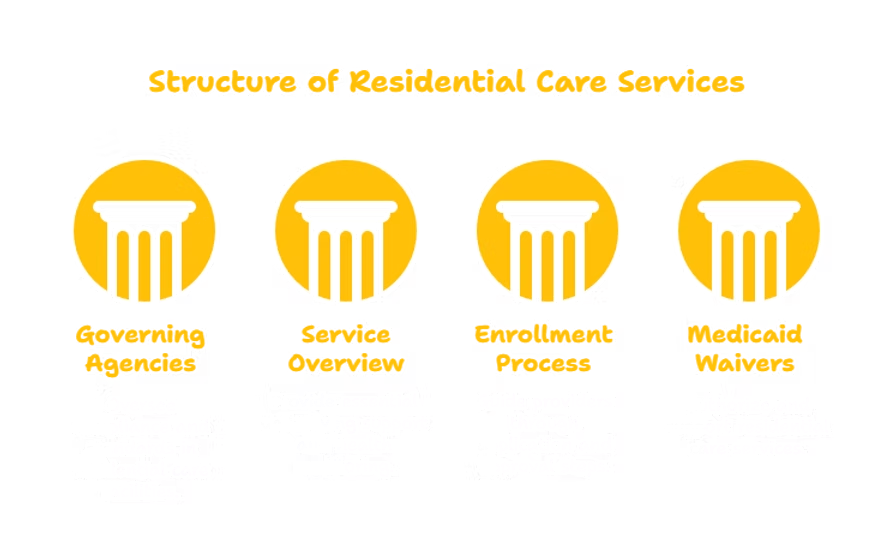
The provision of residential care in Arkansas is governed by multiple state and federal bodies that ensure the safety and health of residents. The Arkansas Department of Human Services (DHS), specifically through the Office of Long Term Care (OLTC), serves as the primary licensing entity. The OLTC is responsible for inspecting facilities to ensure they meet mandatory health, safety, and building code standards before any care can be delivered.
Beyond licensing, the Division of Aging, Adult, and Behavioral Health Services (DAABHS) plays a critical role in monitoring compliance with HCBS standards. Furthermore, Arkansas Medicaid manages the financial and enrollment aspects, while the federal Centers for Medicare & Medicaid Services (CMS) provides the overarching regulatory framework. Providers must maintain ongoing compliance with all these agencies to participate in Medicaid waiver programs, ensuring that all services remain aligned with person-centered requirements and federal quality benchmarks.
Establishing Your Residential Care Facility
Launching a residential care facility begins with solid foundational business steps. First, the entity must be registered with the Arkansas Secretary of State, followed by obtaining a federal Employer Identification Number (EIN) and a Type 2 National Provider Identifier (NPI). These administrative milestones are prerequisites for any further licensing or Medicaid enrollment efforts and serve as the legal basis for the business’s operation within the state.
Once the legal business structure is formed, the provider must secure a Residential Care Facility license from the OLTC. This process involves proving that the physical facility meets all applicable fire safety, sanitation, and building code requirements. Developing a comprehensive set of policies and procedures is essential, as these documents dictate how the facility will handle daily operations, staff management, and resident support. Meeting these requirements is not a one-time event; it is a commitment to continuous quality assurance and adherence to state-mandated residential care regulations.
The DHS Provider Enrollment Process
The transition from a licensed facility to a Medicaid-authorized provider involves a structured enrollment process managed by the Arkansas Medicaid program. Prospective providers should begin by requesting the official application packet from DHS or the OLTC and attending recommended provider orientation sessions to understand current requirements. These sessions are invaluable for clarifying expectations regarding the documentation of services and the integration of person-centered care models.
The application submission requires meticulous attention to detail, including the presentation of staffing plans, emergency preparedness protocols, and sample service agreements. Following the document review, the state may conduct on-site readiness reviews to evaluate the facility’s actual capacity to provide care. Upon receiving approval, the provider must complete the enrollment in the Medicaid portal and configure their internal systems for billing, claims management, and the tracking of service authorizations to ensure seamless reimbursement operations.
Service Delivery and Staffing Standards
The core of residential care lies in the delivery of support services that prioritize the resident's independence. Providers are expected to deliver assistance with Activities of Daily Living (ADLs) such as bathing and mobility, as well as Instrumental Activities of Daily Living (IADLs) like meal preparation and laundry. These services must be delivered by qualified staff members who have undergone rigorous background checks and specific training, including CPR and First Aid certification.
Staffing requirements are strictly monitored to ensure the safety and well-being of residents. Facilities must maintain appropriate staff-to-resident ratios and ensure that all employees receive ongoing training on resident rights, infection control, and person-centered practices. For facilities offering medication administration, employing certified Medication Assistants who have completed a state-approved program is essential to maintaining compliance with health monitoring regulations.
- Provide 24-hour supervision and safety monitoring for all residents.
- Execute personalized service plans that support individual autonomy.
- Facilitate structured recreational and social activities to promote community engagement.
- Maintain comprehensive records of staff credentials, training logs, and competency reviews.
Frequently Asked Questions
What is the difference between ARChoices and Living Choices waivers?
The ARChoices in Homecare Waiver and the Living Choices Assisted Living Waiver serve different needs. While both fall under the umbrella of Arkansas Medicaid, Living Choices is specifically designed for individuals who require more structured residential services in an assisted living environment, whereas ARChoices is generally broader in scope regarding home-based supportive services.
What is the typical timeline for becoming a provider?
The total timeline varies, but generally, business formation takes 2–4 weeks, followed by 60–90 days for OLTC licensing inspections. Staffing and training typically span 30–45 days, and final Medicaid enrollment and claims setup requires an additional 45–60 days. Providers should plan for a total launch horizon of several months.
Are specific policies and procedures required for Medicaid enrollment?
Yes. DHS requires a robust Policy & Procedure Manual covering resident intake, ADL/IADL support, medication assistance, resident rights, grievance policies, emergency and disaster preparedness, infection control, and Medicaid billing procedures. This manual must be available for review during the program readiness phase.
Key Takeaway
Operating a Residential Care Services provider in Arkansas requires a disciplined approach to both regulatory compliance and compassionate service delivery. By aligning your facility's operations with the requirements of the OLTC and the DHS, you build a sustainable foundation that enables you to provide essential, high-quality care to those participating in the state's HCBS waiver programs.
Last verified: November 2024. This content is for informational purposes only and does not constitute legal or professional advice. Requirements for Medicaid provider enrollment and facility licensing are subject to change by the Arkansas Department of Human Services and the Centers for Medicare & Medicaid Services. Readers are encouraged to consult directly with the Division of Aging, Adult, and Behavioral Health Services or a professional consultant to confirm current regulatory mandates.