RESIDENTIAL CARE PROVIDER IN ILLINOIS
By Fatumata Kaba · 2025-07-19 · 5 min read
Becoming a residential care provider in Illinois is a significant undertaking that requires navigating complex regulatory frameworks established by both state and federal authorities. By offering structured living environments and essential daily support, these providers play a critical role in helping individuals with disabilities, chronic health conditions, or aging-related needs maintain independence while avoiding unnecessary institutionalization.
To succeed as a residential provider, organizations must align their operational models with the requirements set forth by the Illinois Department of Healthcare and Family Services (HFS) and the Illinois Department of Human Services (DHS). This involves rigorous adherence to Medicaid waiver standards, the HCBS Settings Rule, and specific licensing mandates such as the Community Integrated Living Arrangement (CILA) requirements.
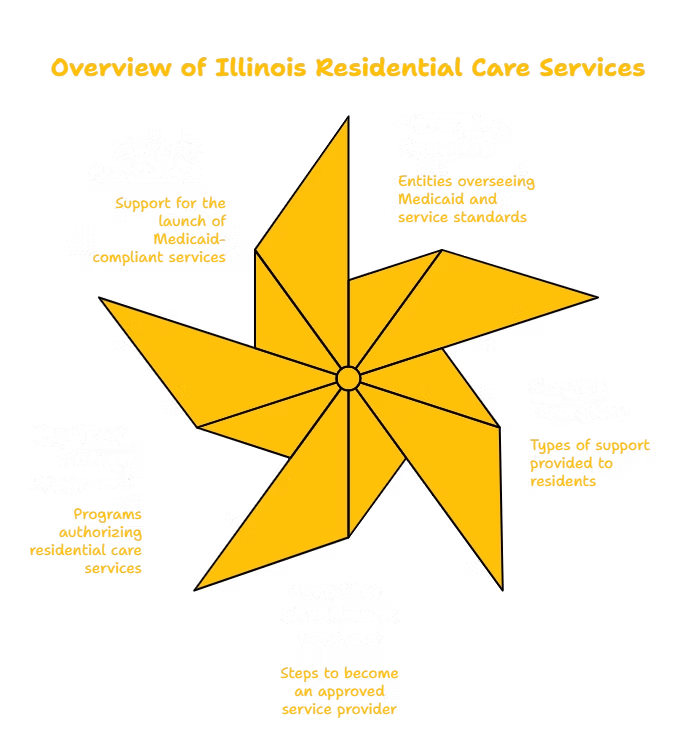
How Does the Regulatory Landscape Govern Residential Care in Illinois?
The provision of residential care in Illinois is governed by a multi-layered hierarchy of agencies that ensure participant safety and fiscal integrity. The Illinois Department of Healthcare and Family Services (HFS) serves as the primary authority for Medicaid program administration. Their responsibilities include authorizing waiver services, managing provider enrollment, and overseeing the reimbursement processes for residential care providers.
Supporting these efforts, the Illinois Department of Human Services (DHS) operates through two primary divisions: the Division of Developmental Disabilities (DDD) and the Division of Rehabilitation Services (DRS). These divisions are tasked with the granular management of service coordination, quality assurance, and ongoing regulatory compliance for providers. Nationally, the Centers for Medicare & Medicaid Services (CMS) provides federal oversight, ensuring that all Illinois services remain consistent with national standards for person-centered care and safety.
What Are the Core Service Requirements for Residential Providers?
Residential care services are designed to bridge the gap between home-based personal care and skilled nursing facilities. Approved providers are expected to deliver a comprehensive suite of supports that facilitate community integration and daily functioning. These services must be tailored to the individual’s Person-Centered Plan, ensuring that every intervention respects the participant’s autonomy and choices.
Providers generally offer the following supports:
- Assistance with Activities of Daily Living (ADLs) such as bathing, dressing, toileting, eating, and mobility.
- Support with Instrumental Activities of Daily Living (IADLs) including meal preparation, housekeeping, shopping, and medication management.
- Health monitoring and basic medical assistance performed under delegation.
- Socialization support, transportation to medical or community appointments, and engagement in community activities.
- Behavioral supports and life skills training to foster independence.
- Coordination with healthcare providers and case managers to ensure integrated service delivery.
How Do Providers Navigate Licensing and the Enrollment Process?
The path to becoming an approved provider begins with establishing a formal business structure and obtaining the necessary credentials. Organizations must register with the Illinois Secretary of State, secure an EIN from the IRS, and obtain a Type 2 NPI number. Following these foundational steps, providers must secure the appropriate facility licensure, such as the CILA license for those serving individuals with developmental disabilities.
Once the business is legally established, the provider must enroll through the Illinois Medicaid Provider Enrollment Portal, known as the IMPACT system. The process involves a rigorous program readiness review conducted by DHS or HFS. During this phase, regulators verify the provider's staffing ratios, residential setting compliance, billing procedures, and participant protection protocols. Successful completion of this review results in the assignment of Medicaid billing codes specific to the approved residential service category.
What Documentation Is Essential for Compliance?
Maintaining a high standard of documentation is a non-negotiable aspect of operating as a Medicaid waiver provider. Regulators require evidence of organizational legitimacy, financial stability, and operational readiness. Providers must be prepared to submit Articles of Incorporation, proof of business licensure, insurance certificates, and confirmation of NPI and EIN registration during the enrollment phase.
Furthermore, an HCBS-compliant Policy & Procedure Manual is a mandatory component of the provider’s operational framework. This manual must explicitly cover:
- Participant intake, assessment, and comprehensive service planning.
- Residential service delivery standards and emergency protocols.
- Staff hiring, training, and ongoing supervision policies.
- Incident reporting and formal participant grievance procedures.
- Documentation regarding participant rights and community integration strategies.
- Medicaid billing and audit-ready documentation protocols.
How Should Providers Manage Staffing and Training?
The quality of residential care is directly linked to the competency and training of the staff. Each residential program must employ a qualified Program Director or Supervisor, typically requiring a bachelor’s degree in a human services field and verified management experience. Direct Support Professionals (DSPs) are the backbone of the operation; they must hold appropriate certifications, such as the DSP certification for developmental disability settings, alongside current CPR and First Aid credentials.
Beyond baseline qualifications, all staff must undergo mandatory training that includes:
- HCBS Settings Rule and individual participant rights training.
- Abuse, neglect, and exploitation prevention.
- Emergency preparedness, infection control, and safety protocols.
- Person-centered planning and individualized support techniques.
- Annual competency evaluations and ongoing continuing education.
Frequently Asked Questions
What Medicaid waiver programs cover residential services in Illinois?
Residential services are authorized under several waivers, including the Adults with Developmental Disabilities Waiver, the Children and Young Adults with Developmental Disabilities Waiver, the Persons with Brain Injury (BI) Waiver, the Persons with Disabilities (PD) Waiver, and the Supportive Living Program (SLP) under the State Plan.
How long does the startup process typically take for a new provider?
The timeline varies by readiness but generally follows a sequence of 1–3 months for business formation, 2–4 months for staffing and policy development, 60–120 days for the IMPACT enrollment and readiness review, and 30–60 days for system configuration and final launch.
What is the HCBS Settings Rule and why is it important?
The HCBS Settings Rule is a federal requirement that ensures participants receive services in settings that integrate fully into the greater community, promote self-determination, and offer the same level of autonomy as individuals not receiving Medicaid services.
Key Takeaway
Launching a residential care program in Illinois requires a meticulous approach to regulatory compliance, encompassing everything from initial business registration to the successful completion of the DHS or HFS readiness reviews. By prioritizing person-centered care and maintaining robust, audit-ready documentation, providers can effectively support individuals within the state's Medicaid waiver framework while ensuring long-term operational success.
Last verified: October 2023. Disclaimer: This article is for informational purposes only and does not constitute legal or professional advice. Requirements for Medicaid providers are subject to change by the Illinois Department of Healthcare and Family Services (HFS) and the Illinois Department of Human Services (DHS). Prospective providers should consult official state guidance and qualified professional counsel when initiating the enrollment process.