REHABILITATION SERVICES PROVIDER IN MONTANA
By Fatumata Kaba · 2025-08-06 · 5 min read
SUPPORTING RECOVERY AND INDEPENDENCE THROUGH REHABILITATION SERVICES
Rehabilitation Services in Montana serve as a vital component of the state’s Home and Community-Based Services (HCBS) ecosystem, assisting individuals with disabilities, injuries, or chronic conditions in improving their physical, cognitive, and social functioning. By facilitating professional therapeutic interventions, these services empower participants to achieve greater independence and successfully integrate into their communities, all while adhering to the person-centered planning requirements mandated by Medicaid waiver programs.
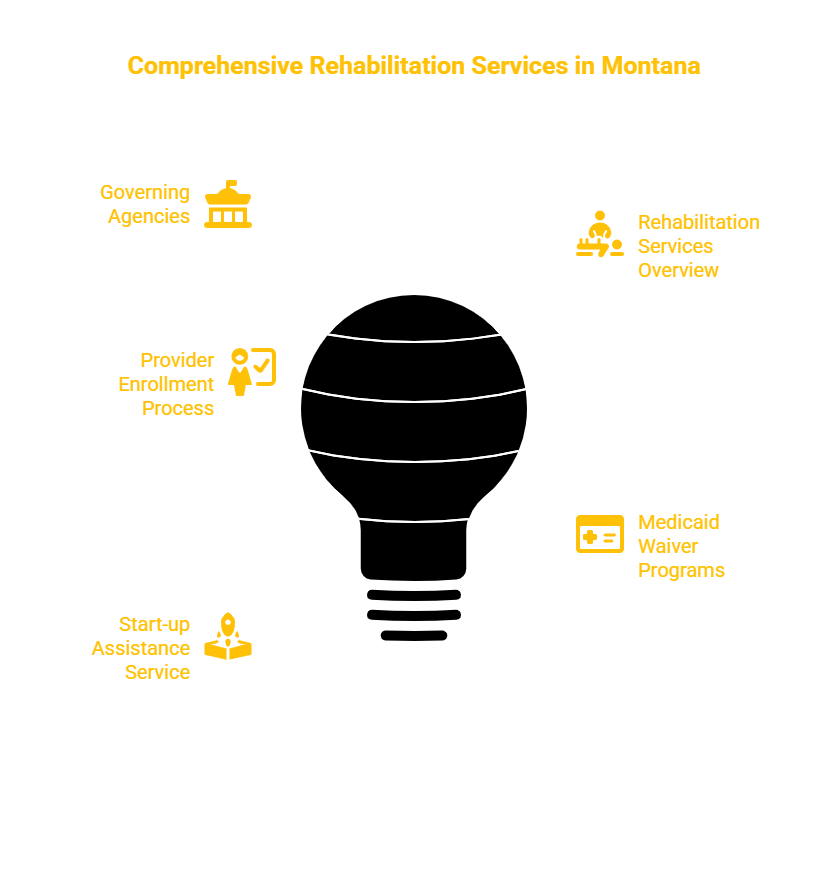
What Are the Governing Agencies and Regulatory Frameworks?
The administration of Rehabilitation Services in Montana is a collaborative effort between state and federal entities designed to ensure participant safety and fiscal accountability. The primary state agency is the Montana Department of Public Health and Human Services (DPHHS), which holds the overarching authority for managing Medicaid waiver funding, provider enrollment, and the critical processes of service authorization and reimbursement.
Within the DPHHS, the Developmental Disabilities Program (DDP) plays a specialized role in overseeing the delivery of services for specific populations. The DDP is responsible for establishing quality standards, monitoring service delivery, and ensuring that providers remain in strict compliance with the policies governing HCBS waiver programs. At the federal level, the Centers for Medicare & Medicaid Services (CMS) provides the essential oversight required to ensure that all Medicaid-funded rehabilitation activities align with national standards for person-centered planning and participant protections.
What Range of Services Do Rehabilitation Providers Offer?
Rehabilitation Services are designed to support individuals at various stages of recovery or those living with long-term disabilities. The services provided are highly customized, reflecting the specific goals and needs outlined in a participant’s Individualized Service Plan (ISP). These interventions focus on restoring functional abilities, preventing further decline, and enhancing the participant's ability to live independently.
Approved providers often deliver a comprehensive suite of therapies and support services, including:
- Physical Rehabilitation: Targeted therapy designed to improve mobility, muscular strength, and physical endurance.
- Occupational Therapy: Hands-on assistance with activities of daily living and the mastery of essential functional tasks.
- Speech-Language Therapy: Clinical support to improve communication, swallowing, and cognitive processing.
- Behavioral Rehabilitation: Strategies focused on addressing behavioral challenges and fostering adaptive life skills.
- Social and Community Integration: Facilitation that promotes active community participation and social engagement.
- Cognitive Rehabilitation: Therapeutic interventions to enhance memory, problem-solving, and independent living skills.
How Do Providers Navigate Licensing and Enrollment Requirements?
The path to becoming a recognized Rehabilitation Services provider in Montana involves a series of mandatory administrative steps and documentation requirements. Before engaging with the Medicaid system, an agency must formally register as a business entity with the Montana Secretary of State. Once registered, the organization must secure a federal Employer Identification Number (EIN) from the IRS and a Type 2 National Provider Identifier (NPI), which are essential for billing and identification purposes.
Following business formation, the agency must enroll as a Medicaid Waiver Rehabilitation provider via the official Montana Medicaid Provider Enrollment Portal. This process requires demonstrating operational readiness by maintaining appropriate general and professional liability insurance and ensuring that all clinical staff hold valid professional licenses as required by Montana state law. Providers must also curate a comprehensive internal framework for rehabilitation planning, progress tracking, and rigorous service documentation to ensure every clinical intervention is appropriately logged and justified.
What Are the Key Steps in the Medicaid Enrollment Process?
The enrollment process is a structured sequence that ensures only qualified providers enter the Medicaid HCBS network. Initially, providers must submit an application through the Montana Medicaid Provider Enrollment Portal specifically for Rehabilitation Services. This application acts as a gateway, requiring the submission of foundational documents including Articles of Incorporation, proof of EIN and NPI, professional licenses, and valid insurance certificates.
Once the initial application is submitted, the DPHHS conducts a program readiness review. This phase is critical, as it evaluates the provider’s operational integrity, including staff credentials, established therapeutic protocols, and safety procedures. Upon successful verification of these elements, the provider is officially authorized to bill Medicaid for services rendered using specific, pre-assigned billing codes. Consistency in documentation and strict adherence to Medicaid billing practices are essential to maintain active status and audit readiness throughout the provider's tenure.
What Are the Staffing and Documentation Expectations?
Operational success depends on the caliber of the clinical team and the quality of internal documentation. The program requires a designated Rehabilitation Program Director, who must be a licensed therapist (such as a PT, OT, or SLP) with appropriate experience in program management. Alongside this lead role, all Rehabilitation Therapists must hold current state licensure, CPR/First Aid certification, and pass mandatory background clearances.
In addition to clinical credentials, agencies must maintain detailed records to satisfy audit requirements. This includes keeping thorough documentation of:
- Assessment and therapy planning protocols.
- Safety and risk management procedures.
- Staff credentialing, continuous training, and competency assessment records.
- HIPAA compliance policies and documentation of participant rights.
- Structured Medicaid billing practices and evidence of ongoing quality assurance.
Frequently Asked Questions
What types of Medicaid waivers cover Rehabilitation Services in Montana?
Rehabilitation Services are available under several programs, including the Comprehensive Waiver for Individuals with Developmental Disabilities, the Big Sky Waiver (Aged and Disabled), the Traumatic Brain Injury (TBI) Waiver, the Children's Autism Waiver, and the Community Supports Waiver for Adults with Physical Disabilities.
How long should a provider expect the setup process to take?
The timeline varies by agency, but generally involves 1–2 months for business formation and compliance, 2–3 months for hiring and program development, 60–90 days for Medicaid enrollment and readiness review, and 30–45 days for final billing setup and service launch.
What is the primary role of the Rehabilitation Program Director?
The Program Director is responsible for overseeing the clinical direction of the agency, ensuring staff remain properly credentialed and trained, and maintaining oversight of therapy protocols and service delivery standards to comply with state and federal regulations.
Key Takeaway
Launching a Rehabilitation Services program in Montana requires a rigorous commitment to administrative accuracy and clinical excellence. By focusing on compliant business formation, careful staff credentialing, and strict adherence to the DPHHS enrollment and documentation standards, providers can successfully deliver essential support services that align with the goals of Montana’s HCBS waiver programs.
Waiver Consulting Group (WCG) assists healthcare providers, rehabilitation centers, and community agencies in launching Medicaid-compliant Rehabilitation Services in Montana. Our scope of work includes business registration, Medicaid enrollment, policy manual development, staff credentialing support, and the implementation of audit-prepared billing systems. Our Client Portal offers a wealth of resources that you can explore related to various programs and state requirements.
Last verified: September 2024. The information provided is for educational purposes only and does not constitute legal or financial advice. Readers are encouraged to consult directly with the Montana Department of Public Health and Human Services (DPHHS) and relevant regulatory bodies to confirm the most current requirements for Medicaid waiver provider enrollment and compliance.