PRE-VOCATIONAL SERVICES PROVIDER IN NEW YORK
By Fatumata Kaba · 2025-09-04 · 5 min read
Pre-Vocational Services in New York are specialized Medicaid Home and Community-Based Services (HCBS) designed to prepare individuals with disabilities for competitive or supportive employment through structured skill development. By focusing on foundational work readiness, these services provide the essential building blocks for participants to increase their independence and long-term self-sufficiency.
Operating as a provider in this space requires a rigorous commitment to regulatory compliance, as the programs are strictly overseen by the New York State Department of Health (NYSDOH), the Office for People With Developmental Disabilities (OPWDD), and the Office of Mental Health (OMH). This guide outlines the professional requirements, administrative pathways, and operational standards necessary to establish a successful Pre-Vocational Services program in New York.
What Governing Agencies Oversee Pre-Vocational Services?
The regulatory landscape for Pre-Vocational Services is multifaceted, involving federal and state oversight to ensure that service delivery remains person-centered, safe, and effective. The Centers for Medicare & Medicaid Services (CMS) provides the overarching federal framework, ensuring that Medicaid-funded services meet national quality standards and individual rights requirements.
At the state level, the NYSDOH serves as the primary administrator for Medicaid waiver funding, managing provider enrollment and the authorization of reimbursements. Specialized support for the developmental disability population is handled by OPWDD, while the OMH provides the necessary compliance structure for programs targeting individuals with mental or behavioral health needs. Providers must maintain constant alignment with these agencies to ensure continued eligibility and compliance with ever-evolving state mandates.
How Do Providers Develop an Effective Pre-Vocational Curriculum?
Pre-Vocational Services are not intended to teach a specific trade, but rather to instill the foundational habits and interpersonal skills required to succeed in any professional environment. Approved providers are expected to design curricula that move participants through a logical progression of skill building, beginning with basic job readiness and moving toward practical community integration.
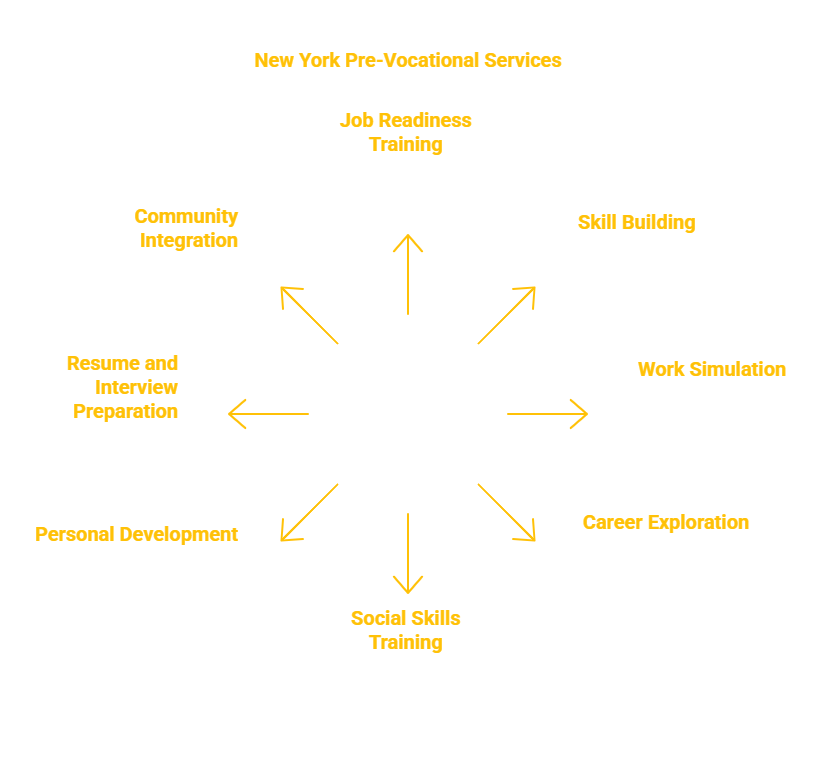
A comprehensive program should offer a blend of classroom-based instruction and real-world simulation. Effective curricula often include the following components:
- Job Readiness Training: Establishing professional habits such as punctuality, time management, and workplace etiquette.
- Skill Building: Enhancing core competencies like verbal communication, teamwork, and critical problem-solving.
- Work Simulation: Providing hands-on practice for tasks commonly encountered in competitive employment settings.
- Career Exploration: Guided activities to help participants identify personal strengths and vocational interests.
- Personal Development: Focusing on self-advocacy, confidence, and internal motivation.
- Community Integration: Utilizing internships or volunteer opportunities to build real-world experience under supervision.
What Are the Licensing and Enrollment Prerequisites for Providers?
Establishing a legally compliant agency begins with formal business entity registration through the New York Department of State. Once the entity is formed, the agency must secure an Employer Identification Number (EIN) from the IRS and a Type 2 National Provider Identifier (NPI), which are essential for all subsequent Medicaid enrollment filings.
Beyond the structural foundations, the organization must invest in comprehensive insurance coverage, including both general and professional liability policies. Potential providers must then demonstrate program readiness by documenting their internal policies. This involves crafting a detailed manual that addresses vocational training methodology, safety protocols, and rigorous staff credentialing processes. Only after these internal systems are matured and documented should an agency initiate the enrollment process via the eMedNY portal.
What Is the Sequence of the New York Provider Enrollment Process?
The enrollment journey is a multi-stage process that requires careful attention to detail to avoid delays. Initially, an agency must express interest and submit the formal Provider Enrollment Application through the eMedNY portal specifically for HCBS waiver programs. This submission must be accompanied by all foundational documentation, including Articles of Incorporation, proof of NPI/EIN, and comprehensive policy manuals.
Following the submission, the relevant state agencies—NYSDOH, OPWDD, or OMH—will conduct a rigorous Program Readiness Review. This phase involves a thorough audit of the provider’s training curricula, safety and emergency protocols, and staff qualification verification. If the review is successful and the organization demonstrates that its operational infrastructure meets all state standards, the provider is officially authorized to begin billing Medicaid for services using the designated codes.
How Should Providers Manage Staffing and Documentation?
Success in this sector relies heavily on the quality of the staff. A Pre-Vocational program typically requires a Program Director—who holds a degree in vocational rehabilitation, human services, or education—to oversee clinical and administrative functions. Additionally, Job Coaches and Career Specialists are essential for day-to-day service delivery, requiring specific certifications and experience in client advocacy and vocational placement.
Documentation is the backbone of Medicaid reimbursement. Providers must maintain meticulous records, including:
- Training and Assessment Records: Evidence of progress for each participant, including initial assessments and updated training goals.
- Credentialing Files: Verified records of all staff background checks, health screenings, and ongoing professional development hours.
- Administrative Policies: Detailed procedures covering HIPAA compliance, participant rights, and formal grievance resolution processes.
- Audit-Ready Billing Documentation: Clear records that map service delivery to the specific Medicaid billing codes utilized.
Frequently Asked Questions
Which Medicaid waiver programs allow for Pre-Vocational Services?
Pre-Vocational Services are authorized under the OPWDD Comprehensive Waiver, the general HCBS Waiver, the Nursing Home Transition and Diversion (NHTD) Waiver, the Traumatic Brain Injury (TBI) Waiver, and the Children’s Waiver.
How long should a new agency expect the launch process to take?
While timelines vary based on organizational readiness, the typical duration is approximately 6 to 9 months. This includes 1–2 months for business formation, 2–3 months for staffing and program development, 60–90 days for Medicaid enrollment and readiness reviews, and 30–45 days for billing system finalization.
What must be included in a Pre-Vocational Policy & Procedure Manual?
The manual must detail training curricula, methods for progress tracking, staff training/background check procedures, HIPAA and participant rights policies, safety protocols for community work, and quality assurance strategies.
Key Takeaway
Launching a Pre-Vocational Services program in New York is a complex undertaking that requires strict adherence to administrative, clinical, and regulatory requirements. By prioritizing a solid infrastructure, hiring qualified personnel, and maintaining rigorous documentation, providers can effectively bridge the gap between skill development and successful community employment for individuals with disabilities.
WAIVER CONSULTING GROUP’S START-UP ASSISTANCE SERVICE — NEW YORK PRE-VOCATIONAL SERVICES PROVIDER. WCG supports agencies in launching Medicaid-compliant Pre-Vocational Services in New York, offering: Business registration, Medicaid enrollment, and licensing assistance; Policy manual development for vocational training and job readiness; Staff credentialing, training program templates, and compliance documentation; Medicaid billing setup and audit-prepared financial management; Branding, website development, and community outreach strategies; Quality assurance systems for vocational services and compliance monitoring; Collaboration with employers, community organizations, and support agencies.
Last verified: October 2023. This information is intended for educational purposes and does not constitute legal or financial advice. Regulations for Medicaid waiver programs are subject to change. Please consult with the New York State Department of Health or the Office for People With Developmental Disabilities for the most current program guidelines and requirements.