PRE-VOCATIONAL SERVICES PROVIDER IN INDIANA
By Watchen Roberts · 2025-07-18 · 5 min read
BUILDING WORKPLACE SKILLS AND PROMOTING EMPLOYMENT READINESS FOR INDIVIDUALS WITH DISABILITIES
Pre-Vocational Services in Indiana provide a critical bridge for individuals with developmental disabilities to transition from traditional day services toward the goal of competitive, integrated employment. These Medicaid Home and Community-Based Services (HCBS) waiver services focus on building the foundational soft skills, work habits, and personal competencies necessary to thrive in a community-based work environment.
What Is the Role of Regulatory Oversight in Indiana?
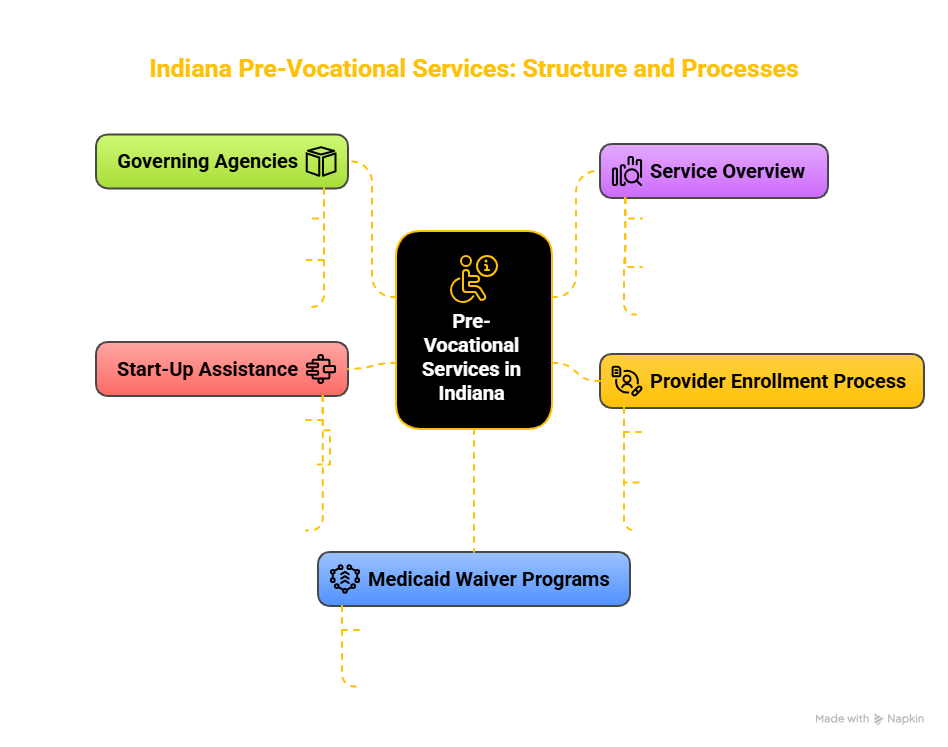
The delivery of Pre-Vocational Services is strictly regulated to ensure high standards of care, participant safety, and compliance with the HCBS Settings Rule. Oversight is divided among several key agencies, each serving a specific function in the provider lifecycle. The Indiana Family and Social Services Administration (FSSA), through the Division of Disability and Rehabilitative Services (DDRS), serves as the primary governing body responsible for provider enrollment, monitoring, and protecting the rights of waiver participants.
Complementing these efforts, the Indiana Office of Medicaid Policy and Planning (OMPP) manages the financial aspect of the program, overseeing Medicaid waiver funding and the reimbursement processes that allow providers to remain sustainable. Nationally, the Centers for Medicare & Medicaid Services (CMS) sets the overarching policy, ensuring that Indiana’s programs align with federal requirements for person-centered planning and the promotion of competitive integrated employment as the primary outcome for all participants.
How Do Pre-Vocational Services Facilitate Skill Development?
Unlike specialized vocational training that focuses on the mechanics of a specific trade, Pre-Vocational Services focus on the general skills needed to maintain employment in any setting. This includes instruction in workplace behaviors such as punctuality, professional attendance, appropriate social interaction with colleagues, and the ability to follow supervisory directions effectively. Providers are tasked with creating environments where participants can practice these behaviors in a supported, low-pressure setting.
In addition to behavioral instruction, providers deliver services aimed at developing soft skills, including teamwork, critical problem-solving, and task persistence. Programs often incorporate activities designed to build the physical stamina and cognitive focus required for a regular work schedule. By utilizing career exploration, volunteer opportunities, and community-based work experiences, providers help individuals identify their own interests and strengths while developing the self-advocacy skills needed to make informed decisions about their career paths.
What Prerequisites Are Required to Become a Provider?
Prospective provider agencies must meet a rigorous set of administrative and operational requirements before they can begin billing for Pre-Vocational Services. The process begins with the formal registration of the business entity with the Indiana Secretary of State and the procurement of an Employer Identification Number (EIN) from the IRS. Furthermore, a Type 2 National Provider Identifier (NPI) is essential for the billing and tracking of Medicaid services.
- Formal registration with the Indiana Secretary of State.
- Obtaining a federal EIN and Type 2 NPI.
- Enrollment as a Medicaid Waiver provider via the Indiana Medicaid Provider Enrollment Portal.
- Procurement of comprehensive general and professional liability insurance.
- Establishment of robust operational policies covering participant rights, HIPAA compliance, and service documentation.
- Implementation of a background screening program for all direct service staff.
How Does the Indiana Provider Enrollment Process Work?
The transition from a business concept to a fully authorized Medicaid provider follows a structured timeline overseen by FSSA and DDRS. The initial phase involves submitting an application through the Indiana Medicaid Provider Portal. This application must include comprehensive supporting documentation, such as Articles of Incorporation, proof of insurance, and a detailed operational policy manual that outlines how the agency will manage intake, service delivery, and participant safety.
Following the submission, the agency enters a program readiness review. During this period, state representatives assess the provider’s ability to meet HCBS standards, including their staffing qualifications, safety protocols, and the efficacy of their proposed skill development curriculum. Once the state confirms that the applicant has met all regulatory benchmarks, the provider is officially authorized to deliver services and begin the reimbursement process.
What Are the Essential Staffing and Training Standards?
Quality of service delivery is contingent upon the competency and professionalism of the staff. The Pre-Vocational Services Program Director or Supervisor role generally requires a bachelor’s degree in a human services or related field, coupled with professional experience in vocational development. Direct Support Professionals (DSPs) must hold at least a high school diploma or GED and undergo thorough background screenings to ensure the safety of program participants.
Beyond baseline qualifications, all staff must complete a standardized training regimen. This curriculum includes instruction on person-centered planning, identifying and preventing abuse or neglect, maintaining HIPAA-compliant confidentiality, and executing emergency response procedures. Providers must implement systems to conduct annual competency evaluations, ensuring that staff members remain current with best practices in vocational support and participant care.
Frequently Asked Questions
Which Medicaid waivers authorize Pre-Vocational Services?
Pre-Vocational Services are authorized under two specific Indiana Medicaid waiver programs: the Community Integration and Habilitation (CIH) Waiver and the Family Supports Waiver (FSW).
How long is the typical launch timeline for a new provider?
The total timeline from business formation to service launch typically ranges from six to nine months, accounting for business registration, staffing, policy development, and the 60–90 day state readiness review period.
What documentation is required for audit readiness?
Providers must maintain organized files for every participant, including their Individualized Service Plan (ISP), intake assessments, progress notes, and records of skill development activities. Additionally, agencies must maintain evidence of staff training, background checks, and incident reports to ensure they are prepared for state audits.
WAIVER CONSULTING GROUP’S START-UP ASSISTANCE SERVICE — INDIANA PRE-VOCATIONAL SERVICES PROVIDER
WCG assists employment service agencies, day service providers, and community rehabilitation programs in launching Medicaid-compliant Pre-Vocational Services across Indiana. The scope of work includes business registration, Medicaid enrollment guidance, the development of comprehensive Policy & Procedure Manuals, staff credentialing, and the establishment of Medicaid billing and quality assurance systems.
Key Takeaway: Successfully establishing a Pre-Vocational Services program in Indiana requires a meticulous approach to administrative compliance, a focus on person-centered skill building, and a commitment to the long-term goal of community employment. By aligning business operations with FSSA/DDRS and CMS regulations, providers can build sustainable, high-quality programs that empower participants to achieve greater independence.
Last verified: September 2024. The information provided in this article is for educational purposes only and does not constitute legal or professional advice. Always refer to the official Indiana Medicaid Provider Manual and relevant FSSA/DDRS policy updates for the most current regulatory requirements.