PHYSICAL THERAPY SERVICES PROVIDER IN ALABAMA
By Fatumata Kaba · 2025-06-28 · 5 min read
Becoming a provider of physical therapy services in Alabama under Home and Community-Based Services (HCBS) Medicaid waivers allows organizations to deliver critical care that improves mobility, strength, and functional independence for individuals with intellectual and developmental disabilities (IDD). By adhering to the standards set by the Alabama Department of Mental Health (ADMH) and federal Medicaid guidelines, agencies can establish sustainable, high-impact clinical operations that support person-centered outcomes across the state.
What Are the Governing Requirements for Alabama Physical Therapy Providers?
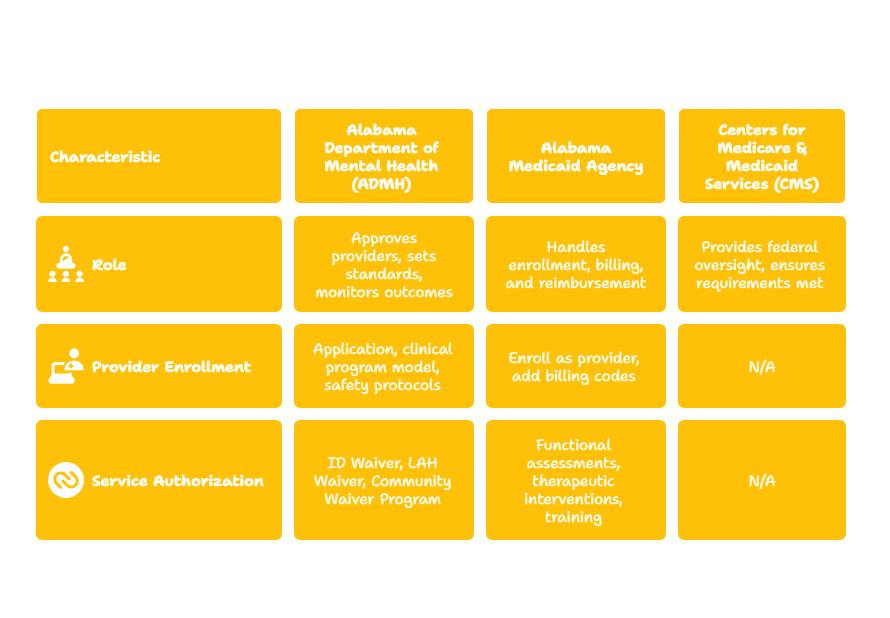
Physical therapy services for individuals with IDD are highly regulated to ensure participant safety and the effectiveness of therapeutic interventions. The primary oversight body is the Alabama Department of Mental Health (ADMH), which is responsible for approving providers, defining scope-of-service standards, and monitoring clinical outcomes for waiver participants. Prospective providers must align their operational models with ADMH directives to ensure that all delivered care meets the rigorous expectations set for the state’s disability support network.
Beyond ADMH oversight, providers must interface with the Alabama Medicaid Agency, which manages the fiscal side of the program, including provider enrollment, claims processing, and reimbursement for services rendered. Furthermore, the Centers for Medicare & Medicaid Services (CMS) provides the overarching federal framework for all HCBS waiver programs. Compliance with CMS regulations ensures that Alabama’s waiver services remain eligible for federal financial participation and strictly adhere to federal clinical care standards.
How Do You Develop an Effective Physical Therapy Clinical Model?
The core of an effective physical therapy service model is the delivery of interventions that are directly tied to an individual’s person-centered service plan. Services must be medically necessary and aimed at overcoming physical limitations that impede an individual's ability to live independently or participate in their community. A successful model integrates standardized evaluations with tailored therapeutic goals to maximize the functional capacity of each participant.
Providers should structure their service delivery around evidence-based practices, which may include comprehensive mobility assessments, gait training, fall prevention strategies, and targeted therapeutic exercises. Additionally, the model must incorporate support for the participant's broader support system. Training caregivers on proper physical support techniques and the safe use of assistive or adaptive devices is essential to maintaining the continuity of care beyond formal therapy sessions.
- Conducting comprehensive, standardized physical therapy evaluations.
- Creating individualized treatment plans focused on improving strength, balance, and coordination.
- Implementing training for caregivers to reinforce physical support and independence.
- Ensuring all clinical documentation aligns with ADMH and state Medicaid billing protocols.
What Are the Essential Steps for ADMH Provider Enrollment?
The enrollment process is a structured, multi-phase journey that confirms a provider's clinical and administrative readiness. It begins with requesting the formal application packet from the ADMH Division of Developmental Disabilities. During this initial stage, agencies must submit a detailed clinical program model that demonstrates how they will manage therapy processes, hire qualified staff, and maintain documentation accuracy. Transparency regarding safety protocols and HIPAA-compliant data management is critical during this review.
Once the application is submitted, the process moves into a background and credentialing review. This phase involves verifying the active licensure of all physical therapists (PT) and physical therapist assistants (PTA), as well as conducting thorough background checks on all personnel. Following this, ADMH conducts a program readiness review to audit internal templates, therapy logs, and data collection procedures. Only after receiving formal approval from ADMH can a provider proceed to enroll with the Alabama Medicaid Agency to begin the configuration of billing codes and start delivering services.
What Documentation and Staffing Standards Must Be Maintained?
Operational success relies on rigorous maintenance of administrative and clinical records. Providers must maintain a robust Policy and Procedure Manual that covers every aspect of agency operations, including referral management, informed consent, client confidentiality, and emergency safety protocols. Furthermore, accurate documentation of progress monitoring and discharge planning is required to demonstrate the therapeutic impact of services to regulatory monitors.
Staffing requirements are equally stringent to ensure high-quality care. Licensed physical therapists must hold a Doctorate or Master’s degree in Physical Therapy, while physical therapist assistants must hold an Associate degree and operate under the supervision of a licensed PT. All staff are required to complete ADMH orientation, ongoing HCBS waiver training, and annual education regarding ethics and therapeutic safety. This commitment to continuous professional development is a cornerstone of maintaining licensure and providing effective disability-specific care.
Which Medicaid Waivers Authorize Physical Therapy Services?
Physical therapy services are accessible through three primary Alabama Medicaid waivers: the Intellectual Disabilities (ID) Waiver, the Living at Home (LAH) Waiver, and the State of Alabama Community Waiver Program. These waivers are specifically designed to provide essential supports that allow individuals to remain in their homes and communities rather than in institutional settings. Providers authorized under these programs play a vital role in the long-term success of the waiver system.
To deliver services effectively, providers must be deeply familiar with the specific requirements of each waiver. The services allowed typically include functional assessments, direct therapeutic interventions, the instruction of families on mobility support, and coordination with environmental adaptations. By focusing on these areas, providers help waiver participants achieve greater independence, reduce the risk of injury, and improve their overall quality of life in their own neighborhoods.
Frequently Asked Questions
What is the typical timeline to launch a physical therapy service?
The timeline involves several distinct phases: business formation (0–1 week), ADMH application review (60–90 days), clinical setup and program readiness (30–60 days), and final Medicaid enrollment (60–90 days). Total time to launch generally spans several months, depending on the completeness of the documentation submitted.
What are the primary clinical qualifications for therapy staff?
Physical therapists must possess a Doctorate or Master’s degree in Physical Therapy and maintain an active Alabama state license. Physical therapist assistants must possess an Associate degree in the field, maintain an active Alabama certification, and operate under the required supervision of a licensed PT.
Where can I find the official contact information for program oversight?
For inquiries regarding ADMH provider requirements, you may contact the Division of Developmental Disabilities at [email protected] or call (334) 242-3702. Further information regarding Medicaid billing and enrollment can be found on the official Alabama Medicaid Agency website at https://medicaid.alabama.gov.
Key Takeaway
Launching a physical therapy service in Alabama is a methodical process that requires strict adherence to ADMH and Alabama Medicaid standards. By prioritizing clinical excellence, comprehensive documentation, and regulatory compliance, providers can effectively address the physical needs of individuals with IDD while contributing to the sustainability of the state's HCBS waiver programs. Success in this sector requires ongoing attention to staff training, quality assurance, and the evolving needs of the participants served.
Last verified: October 2023. This information is provided for educational purposes and should not be considered legal or medical advice. Please consult with the Alabama Department of Mental Health and the Alabama Medicaid Agency for the most current regulations and policy updates.