PERSONAL EMERGENCY RESPONSE SYSTEM (PERS) PROVIDER IN WEST VIRGINIA
By Fatumata Kaba · 2026-04-14 · 5 min read
Personal Emergency Response Systems (PERS) are electronic devices that provide 24/7 monitoring, enabling vulnerable individuals to summon immediate assistance during emergencies such as falls or sudden medical crises. In West Virginia, becoming an authorized PERS provider allows businesses to deliver this life-saving service to participants enrolled in Medicaid waiver programs, including the Aged and Disabled Waiver (ADW) and the Traumatic Brain Injury Waiver (TBIW), under the regulatory oversight of the West Virginia Department of Health and Human Resources (WVDHHR).
How does the West Virginia regulatory framework govern PERS providers?
The delivery of PERS in West Virginia is strictly regulated to ensure the safety and reliability of emergency services for Medicaid participants. Oversight is partitioned among three primary entities. The West Virginia Department of Health and Human Resources (WVDHHR) maintains broad authority over the administration of Medicaid waiver programs, ensuring that provider services align with state welfare goals. The Bureau for Medical Services (BMS) serves as the primary regulatory body for financial and operational compliance, managing provider enrollment, billing protocols, and adherence to established PERS policies.
Operational authorization is managed through Acentra Health (formerly Kepro). Acentra Health plays a critical role in the utilization review process, conducting functional assessments to determine if a participant meets the clinical criteria for PERS. No PERS service can be initiated or billed without formal authorization reflected in the participant’s Person-Centered Service Plan (PCSP) or Individual Service Plan (ISP). Providers must maintain active communication with these agencies to stay informed of policy updates and reimbursement changes.
What are the essential components of a compliant PERS service delivery model?
To serve as a Medicaid waiver provider, a business must offer more than just hardware; it must provide a comprehensive safety net. This includes the installation and maintenance of electronic units and wearable alert devices, such as pendants or wristbands. The core of the service is a continuous, 24/7 connection to a certified emergency response center. This center must be capable of receiving signals and immediately dispatching emergency medical services or contacting designated caregivers as required by the participant’s unique care plan.
Quality assurance is a mandatory aspect of this service. Providers are responsible for the ongoing testing of equipment to ensure functionality and the prompt replacement of any faulty devices. In many cases, modern PERS units include optional features like automatic fall detection. Every aspect of the service, from the initial installation to periodic maintenance checks, must be documented to verify that the equipment is functioning as intended and continues to meet the medically necessary requirements defined in the participant’s ISP.
What is the sequence for enrolling as a Medicaid PERS provider in West Virginia?
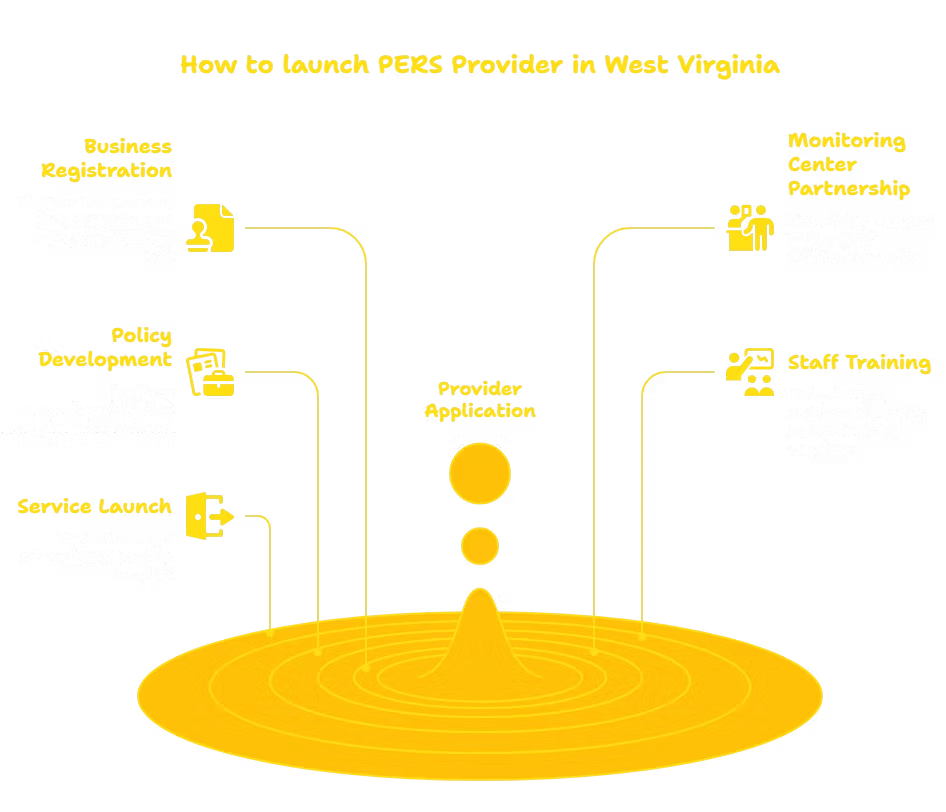
The provider enrollment journey is a multi-step process that demands attention to detail and adherence to state timelines. The process begins with establishing the business entity through the West Virginia Secretary of State, followed by securing a federal Employer Identification Number (EIN) and a Type 2 National Provider Identifier (NPI). These are the foundational credentials required for all subsequent applications.
Once registered, providers must navigate the enrollment system via Gainwell Technologies, which acts as the portal for West Virginia Medicaid. Following enrollment, the business must submit a specific PERS provider application to the BMS. This stage requires the submission of a comprehensive Policy & Procedure Manual. This manual serves as the operational blueprint for the business, detailing installation protocols, emergency workflows, incident reporting procedures, and strict HIPAA compliance measures. Upon approval of these documents and the successful verification of monitoring center partnerships, the provider may begin accepting referrals once authorized by Acentra Health.
What documentation and staffing requirements must be maintained?
Documentation is the backbone of Medicaid compliance. Every interaction with a participant—from the initial installation of the PERS unit to monthly monitoring logs and billing records—must be meticulously recorded. Providers must maintain a robust Policy & Procedure Manual that covers equipment failure procedures, replacement timelines, and specific instructions for user education. Ensuring that clients understand how to use their alert devices is a vital part of the service that must be documented during every installation visit.
Staffing requirements are equally stringent. PERS Technicians or installers must undergo background checks through WV CARES to ensure the safety of the vulnerable populations they serve. These staff members must be trained not only in the technical aspects of equipment setup but also in HIPAA regulations and the documentation standards required by the state. If the monitoring service is subcontracted, the provider remains responsible for ensuring that the monitoring center is available 24/7/365 and that the center maintains accurate, accessible logs of all emergency responses.
What is the expected timeline to launch PERS services?
The launch of a PERS provider agency generally spans several months, depending on the efficiency of the application and review phases. The initial phase involving business registration and Medicaid enrollment through Gainwell Technologies typically takes between two to four weeks. During this time, the provider should concurrently focus on securing a partnership with a certified 24/7 emergency monitoring center and drafting the required Policy & Procedure Manual, which may take another two to three weeks.
The final, and often most variable, phase is the documentation submission and state review process. This phase generally requires one to two months for the BMS and other oversight agencies to audit the provider’s operational plan and approve them for service. Once this approval is secured, the provider is officially eligible to receive referrals for participants whose care plans specifically authorize PERS as a medical necessity. Providers should treat this as a structured project, ensuring all materials are audit-ready before submission to minimize delays.
Frequently Asked Questions
Is PERS coverage available under State Plan Medicaid?
No, PERS is typically reimbursed only under specific Medicaid waiver programs such as the Aged and Disabled Waiver (ADW) or the Traumatic Brain Injury Waiver (TBIW). It is not standardly covered under the general State Plan Medicaid outside of these specific waiver service definitions.
Can the emergency monitoring center be located outside of West Virginia?
Yes, providers may partner with out-of-state monitoring centers, provided the center meets all state requirements for 24/7 availability, HIPAA compliance, and the ability to maintain the necessary documentation logs and emergency response records required by the West Virginia BMS.
What constitutes medical necessity for PERS?
Medical necessity is determined by Acentra Health (formerly Kepro) through a functional assessment. PERS is generally deemed necessary when a participant is at high risk for falls, experiences sudden medical instability, or resides alone, making the device essential to prevent institutionalization and ensure safety within the community.
Key Takeaway
Successfully operating as a PERS provider in West Virginia requires a clear understanding of the regulatory landscape, a focus on strict documentation, and a commitment to participant safety. By aligning business operations with the guidelines set forth by the WVDHHR, BMS, and Acentra Health, and by maintaining a robust service infrastructure, providers can effectively support the independence of West Virginia’s most vulnerable citizens while remaining in full compliance with Medicaid standards.
Last verified: October 2023. This article is intended for informational purposes only and does not constitute legal or professional consulting advice. Always refer to the official West Virginia Bureau for Medical Services provider manuals and state policy updates for the most current regulations and requirements.