PERSONAL EMERGENCY RESPONSE SERVICES (PERS) PROVIDER IN TEXAS
By Fatumata Kaba · 2026-03-30 · 6 min read
Personal Emergency Response Services (PERS) are critical Medicaid-funded systems in Texas that provide 24/7 electronic monitoring for individuals enrolled in Home and Community-Based Services (HCBS) waiver programs. These services offer essential safety and peace of mind by enabling elderly, medically fragile, or isolated participants to summon immediate assistance in an emergency through a wearable or stationary device.
Operating as a PERS provider in Texas requires rigorous adherence to standards set by the Texas Health and Human Services Commission (HHSC) and federal guidelines established by the Centers for Medicare & Medicaid Services (CMS). Agencies authorized to deliver these services must navigate a structured enrollment process to ensure they can reliably manage device installation, participant training, and real-time emergency response coordination.
How Does the PERS Provider Regulatory Framework Operate in Texas?
The oversight of PERS in Texas is a dual-layered effort between state and federal entities. The Texas Health and Human Services Commission (HHSC) acts as the primary regulatory body responsible for authorizing, approving, and reimbursing PERS providers across various waiver programs. HHSC sets the operational expectations for how providers must interact with participants and manage their emergency response workflows.
Simultaneously, the Centers for Medicare & Medicaid Services (CMS) provides federal oversight to ensure that state-level programs remain in compliance with the broader HCBS framework. For a provider, this means maintaining strict operational transparency and financial accountability. PERS is specifically intended for individuals who reside alone or are left alone for significant portions of the day, and whose medical or functional status necessitates an automated link to emergency services.
What Are the Essential Components of a PERS Service Delivery Model?
A PERS provider must be equipped to offer a comprehensive monitoring solution that extends beyond the hardware itself. The service model centers on the provision and installation of specialized electronic devices, which may include landline-based units, cellular-enabled consoles, or sophisticated wearable devices. These tools are designed to be intuitive, ensuring that even participants with significant cognitive or physical limitations can trigger an alert during a crisis.
The infrastructure of a PERS agency must include a reliable 24-hour monitoring center capable of managing incoming signals and coordinating with local emergency personnel, caregivers, or family members. Providers are expected to maintain the equipment's functionality through regular battery testing, troubleshooting protocols, and proactive maintenance, often including advanced features such as fall detection, GPS tracking, and automated medication reminders if they fall within the authorized service scope.
- Provision and professional installation of PERS hardware.
- Continuous 24-hour monitoring by a qualified response center.
- Rapid emergency call management and notification of responders or 911.
- Ongoing maintenance, including battery replacement and system testing.
- Customized user instructions and safety training for each participant.
What Steps Are Required to Become an HHSC-Approved PERS Provider?
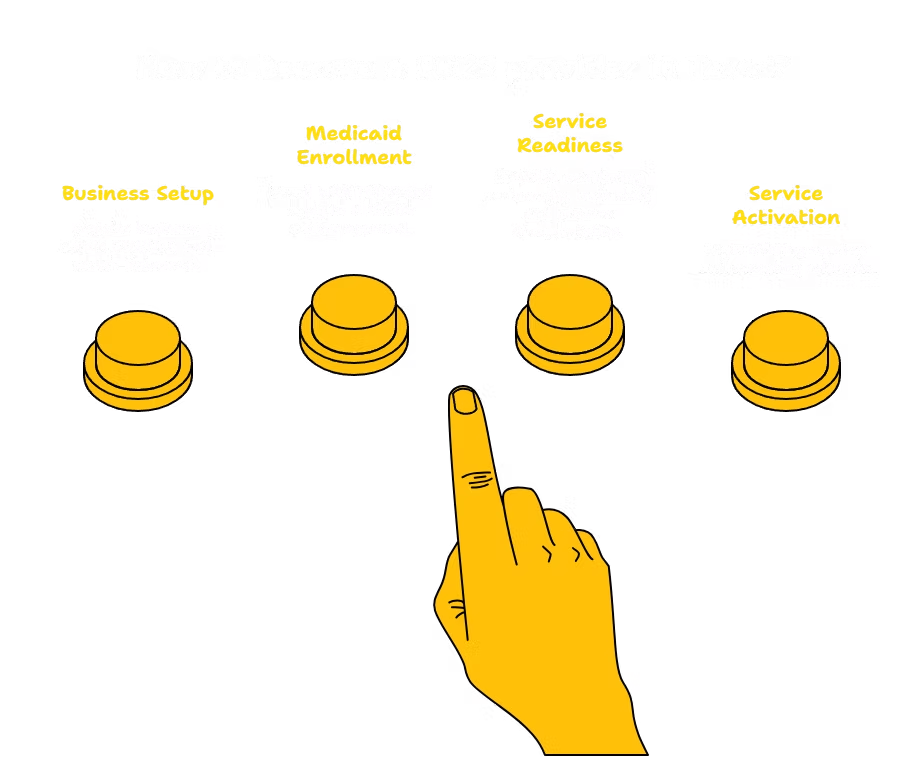
Entering the Texas Medicaid market as a PERS provider requires a disciplined, multi-phased approach. The process begins with the establishment of a formal legal entity, such as a corporation or limited liability company, registered with the Texas Secretary of State. Once the legal foundation is set, the business must secure an Employer Identification Number (EIN) and a Type 2 National Provider Identifier (NPI) to interface with the healthcare system.
After these administrative prerequisites are met, the agency must enroll through the Texas Medicaid & Healthcare Partnership (TMHP). Following TMHP enrollment, the provider must submit an application to HHSC for specific waiver program approval—such as MDCP, CLASS, or STAR+PLUS. This stage involves a detailed readiness review where the provider must demonstrate the capacity to maintain secure monitoring systems, perform background checks on all field technicians, and adhere to strict emergency escalation protocols.
What Documentation and Compliance Standards Must PERS Agencies Maintain?
Documentation is the backbone of Medicaid compliance for PERS providers. Agencies are required to maintain an up-to-date Policy & Procedure Manual that outlines the entire service lifecycle. This manual serves as the primary reference for HHSC auditors and must cover everything from the initial installation protocol and user training checklists to the complex procedures required for monthly system testing and maintenance logs.
Beyond technical manuals, providers must maintain rigorous records regarding staff response times and call documentation. Privacy protection is paramount, and policies must clearly articulate how the agency complies with HIPAA regulations regarding the storage and transmission of participant data. Furthermore, the agency must keep detailed records of billing, service authorizations, and inventory management to ensure that every unit deployed and every service call performed aligns perfectly with the participant’s specific waiver requirements.
- Proof of legal business formation, EIN, and NPI.
- Comprehensive Policy & Procedure Manual.
- Certificate of liability and equipment insurance.
- Participant training forms and installation logs.
- Monthly maintenance and system diagnostic reports.
What Are the Staffing and Training Mandates for PERS Providers?
PERS providers are responsible for ensuring that all staff members, whether in the field or in the response center, are adequately prepared to handle emergency situations. Field technicians—those responsible for the physical installation of equipment in a participant's home—must undergo criminal background checks and demonstrate proficiency in CPR and First Aid. They are also expected to provide clear, accessible instruction to participants on how to use their specific device effectively.
Response center operators hold a critical role, as they are the first point of contact during an emergency. These staff members must be trained in emergency communication protocols, real-time documentation, and the nuances of the waiver programs they serve. All employees, regardless of their specific role, must complete mandatory training on HIPAA compliance, the prevention of abuse and neglect, and the internal escalation procedures that ensure help is dispatched promptly when a call is received.
Frequently Asked Questions
Which Medicaid Waiver Programs in Texas Include PERS?
PERS is a covered benefit under several key HCBS waiver programs in Texas, including the Medically Dependent Children Program (MDCP), Community Living Assistance & Support Services (CLASS), and the STAR+PLUS HCBS waiver. Some PACE (Program of All-Inclusive Care for the Elderly) participants may also receive PERS-like support as part of their integrated care coordination.
How Long Does the Entire Provider Enrollment Timeline Typically Take?
The timeline varies based on organizational readiness, but the process is generally divided into three primary phases. Business setup and establishing a partnership with a monitoring center usually takes 1 to 2 months. Enrollment with TMHP and HHSC typically requires an additional 2 to 3 months. Finalizing hardware inventory, staff training, and completing the HHSC readiness review generally takes another 30 to 45 days.
What Must Be Included in the PERS Policy & Procedure Manual?
The manual must detail the entire service flow, including installation and participant training, monitoring system configurations, and emergency alert processes. It must also incorporate specific protocols for monthly testing, troubleshooting, staff response timelines, HIPAA-compliant privacy and escalation procedures, policies regarding service discontinuation or device replacement, and standardized billing and authorization tracking forms.
Key Takeaway
Launching a PERS agency in Texas is a highly regulated undertaking that requires meticulous attention to both technical infrastructure and administrative compliance. By focusing on a solid foundation of HHSC-compliant policies, robust staff training, and reliable 24/7 monitoring partnerships, providers can effectively support the safety and independence of vulnerable individuals within the state's diverse HCBS waiver programs.
Last verified: February 2025. This article is for informational purposes and does not constitute legal or professional advice. Always verify current Texas Medicaid requirements through official state resources at hhs.texas.gov and tmhp.com before initiating any business or service changes.