PERSONAL CARE SERVICES PROVIDER IN WYOMING
By Fatumata Kaba · 2026-04-14 · 5 min read
Starting a personal care services agency in Wyoming is a vital way to support vulnerable populations, including the elderly, the chronically ill, and individuals with physical or developmental disabilities. By providing hands-on assistance with activities of daily living (ADLs) and instrumental activities of daily living (IADLs), providers play a critical role in helping participants maintain their health, dignity, and independence while successfully aging in place or avoiding unnecessary institutional placement.
Operating a compliant Medicaid provider agency requires a rigorous understanding of state regulations, enrollment protocols, and ongoing service delivery standards. Because these services are funded through the Wyoming Medicaid State Plan and various Home and Community-Based Services (HCBS) waivers—such as the Community Choices Waiver and Developmental Disabilities Waivers—agencies must demonstrate strict adherence to individualized care plans, medical necessity requirements, and professional oversight.
What Are the Governing Agencies and Regulatory Structures in Wyoming?
The regulatory environment for Medicaid personal care services in Wyoming is managed by a network of state entities. The primary governing authority is the Wyoming Department of Health (WDH), specifically the Division of Healthcare Financing. This division oversees the administration of Medicaid programs, ensuring that services remain compliant with state and federal regulations while monitoring the fiscal integrity of the waiver programs.
Day-to-day coordination of care is often managed by local entities. Public Health Nursing (PHN) offices and regional case management entities play a pivotal role in assessing participant needs, developing and approving care plans, and monitoring the delivery of services, particularly within the Community Choices Waiver program. Additionally, Wyoming Medicaid Provider Services manages the administrative side of the business, including provider enrollment, claims processing, and technical support for billing.
What Services Fall Under Personal Care and How Are They Delivered?
Personal Care Services (PCS) are defined as non-medical supports designed to address functional limitations in an individual’s home or community setting. To qualify for reimbursement, all services must be medically necessary, clearly outlined in an authorized care plan, and provided by qualified caregivers working under professional supervision. These tasks are intended to sustain the health and safety of the individual rather than provide clinical medical care.
The scope of authorized services typically includes, but is not limited to, the following:
- Assistance with bathing, grooming, and personal hygiene.
- Support for dressing and undressing.
- Mobility support, including transfers and positioning.
- Toileting assistance and incontinence care.
- Feeding assistance and meal preparation/cleanup.
- Light housekeeping directly related to the individual’s care.
- Medication reminders (not medication administration).
- Escorting the individual to medical appointments (non-transport).
What Are the Core Prerequisites for Provider Enrollment?
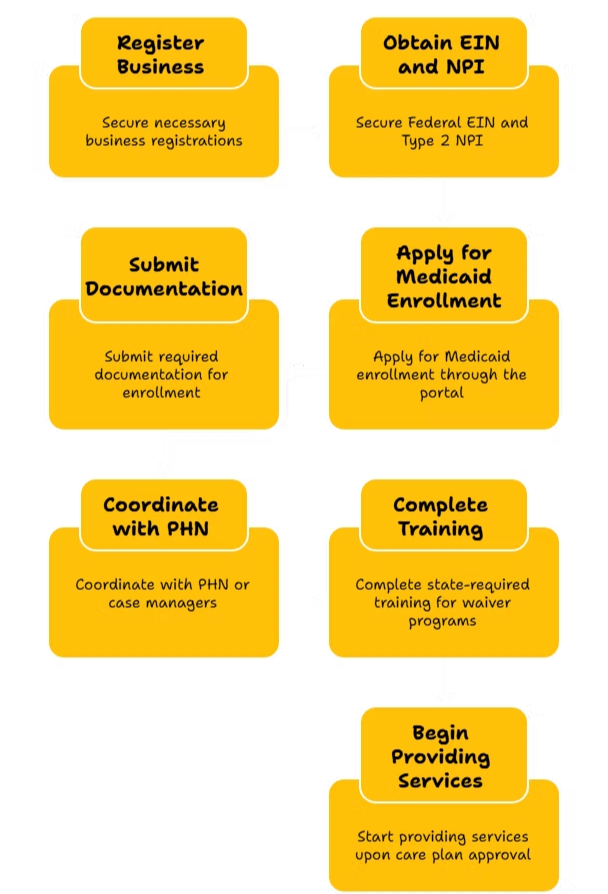
While Wyoming does not mandate that home care agencies obtain a separate license unless they are providing specific clinical or skilled nursing services, providers must fulfill extensive enrollment requirements to participate in the Medicaid program. Business owners must first establish a formal business entity through the Wyoming Secretary of State, obtain a Federal Employer Identification Number (EIN), and secure a Type 2 National Provider Identifier (NPI).
Following initial business setup, the provider must draft a comprehensive Policy & Procedure Manual that aligns with WDH guidelines. This manual serves as the cornerstone of the agency’s operations, outlining everything from clinical protocols and HIPAA safeguards to emergency escalation procedures. Furthermore, agencies must maintain adequate liability insurance, conduct thorough criminal background checks and abuse registry screenings on all staff, and ensure they have the infrastructure to manage detailed service documentation.
How Should New Providers Navigate the Enrollment Process?
The transition from a business concept to an active Medicaid provider is a structured process requiring careful attention to detail. Agencies must apply for enrollment specifically through the Wyoming Medicaid Provider Enrollment Portal. This involves submitting a variety of credentials, including business filings, proof of insurance, and evidence of staff qualifications. Failure to provide accurate documentation at this stage can result in significant delays in approval.
Once the application is submitted, the agency must coordinate with the relevant case management entities or Public Health Nursing offices to understand the specific requirements for care plan implementation in their region. Providers should be prepared for the following sequence of events:
- Finalizing the internal Policy & Procedure Manual.
- Completing state-mandated training or orientation sessions for waiver programs.
- Ensuring that staff credentials, including CPR and First Aid certifications, are current and documented.
- Establishing a system for tracking service delivery against authorized care plan hours.
What Are the Essential Staffing and Training Requirements?
The success and compliance of a personal care agency depend heavily on the competence and integrity of its direct support staff. Personal Care Aides (PCAs) must be at least 18 years of age and preferably possess a high school diploma or GED. Every staff member must pass a comprehensive background check and abuse registry screening before they are allowed to provide care. Furthermore, a licensed Registered Nurse (RN) is often required to oversee the development of care plans, perform clinical assessments, and provide ongoing supervision to the caregiving staff.
To ensure high standards of care, all staff must undergo initial and recurring training on specific topics. These include universal precautions and infection control, abuse and neglect prevention, and the principles of person-centered care. Respecting client dignity and maintaining strict privacy protocols are non-negotiable requirements for all employees representing the agency.
Frequently Asked Questions
What is the typical timeline to launch a new provider agency?
The launch process generally follows three phases: business registration and manual development (2–3 weeks), staff recruitment and training (30–45 days), and Medicaid enrollment (1–3 months). Actual service provision can only begin once the provider is fully credentialed and a participant’s care plan has been approved.
Do I need a clinical license to provide personal care services?
Wyoming does not require a separate license for home care agencies that strictly provide non-medical personal care, provided they comply with Medicaid enrollment and WDH policy requirements. However, agencies that offer skilled clinical care may be subject to additional state licensure requirements.
How does the agency document the delivery of services for Medicaid?
Providers are required to maintain detailed daily service logs and shift notes that correspond to the tasks authorized in the participant’s care plan. These records are essential for the billing process and are subject to audit by the state, necessitating robust, HIPAA-compliant record-keeping practices.
The process of establishing a personal care agency is a commitment to providing essential, high-quality care within the Wyoming Medicaid ecosystem. By prioritizing clinical oversight, staff training, and administrative transparency, providers ensure they remain in good standing with the Wyoming Department of Health while significantly improving the quality of life for the individuals they serve.
Last verified: October 2023. This information is for educational purposes only and does not constitute legal or professional advice. Requirements for Medicaid providers may change; always refer to the official Wyoming Department of Health and Medicaid Provider Services portals for the most current regulations.