PERSONAL CARE SERVICES PROVIDER IN VERMONT
By Fatumata Kaba · 2026-04-09 · 5 min read
Understanding Personal Care Services in Vermont
Personal Care Services (PCS) in Vermont are a critical component of the state’s long-term care infrastructure, designed to provide hands-on support to individuals with disabilities, chronic conditions, or age-related needs. By offering assistance with activities of daily living (ADLs) and instrumental activities of daily living (IADLs), these services enable participants to maintain their independence, dignity, and safety while residing in their own homes or preferred community settings. This care model is person-centered, ensuring that services are tailored to the unique requirements outlined in the participant's Individual Support Plan (ISP).
These services are funded through the Vermont Medicaid State Plan and various Home and Community-Based Services (HCBS) waivers. The delivery and oversight of these services are managed by the Department of Disabilities, Aging and Independent Living (DAIL), which coordinates with local Designated Agencies (DAs) and Specialized Services Agencies (SSAs) to ensure that provider agencies operate in alignment with state-mandated quality standards and participant care goals.
How are Personal Care Services Governed in Vermont?
The regulatory framework for PCS in Vermont involves multiple state entities working in tandem to ensure participant safety and fiscal accountability. The Department of Disabilities, Aging and Independent Living (DAIL) acts as the primary authority, overseeing the policy framework for waiver and Medicaid-funded programs and ensuring that services remain authorized according to the functional needs assessment of each participant.
The Department of Vermont Health Access (DVHA) serves as the primary administrative arm for the state’s Medicaid program, managing the complex processes of provider enrollment and claims processing. Simultaneously, Designated Agencies (DAs) and Specialized Services Agencies (SSAs) function as the operational hubs for service delivery. These agencies are responsible for the development of ISPs, the formal authorization of PCS based on documented functional deficits, and the ongoing monitoring of care quality to ensure compliance with state mandates.
What Tasks are Covered Under Personal Care Services?
Personal Care Services are specifically designed for individuals who possess physical limitations, developmental disabilities, cognitive impairments, or complex medical conditions that prevent them from completing essential daily tasks independently. The care provided must be documented and strictly aligned with the goals established in the participant’s ISP to remain eligible for Medicaid reimbursement.
Covered activities generally fall into two categories: personal care and instrumental support. Providers may assist with:
- Personal hygiene tasks, including bathing, dressing, grooming, and toileting.
- Nutritional support, including meal preparation and feeding assistance.
- Household maintenance, specifically light housekeeping and laundry services.
- Medication reminders and general health-related support tasks.
- Mobility assistance, including transfers, positioning, and physical navigation.
- Escort services for authorized medical appointments or essential errands as specified in the service plan.
What are the Licensing and Provider Approval Requirements?
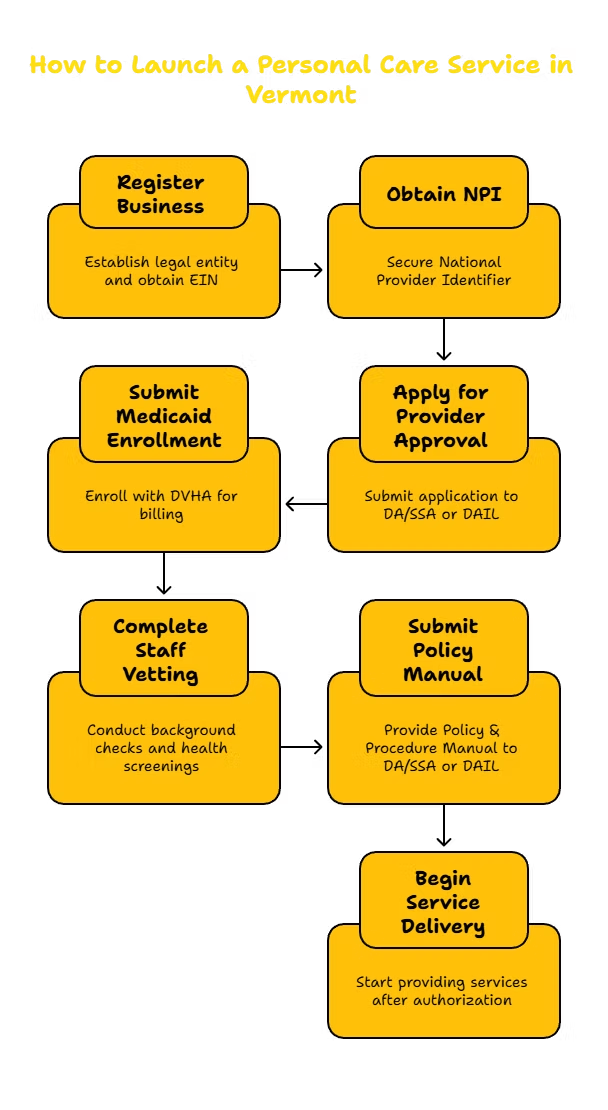
Launching a PCS agency in Vermont requires a structured approach to administrative and clinical compliance. Prospective providers must first establish the legal entity of the business by registering with the Vermont Secretary of State, followed by securing a federal Employer Identification Number (EIN) and a Type 2 National Provider Identifier (NPI). These foundational steps are necessary before applying to become an approved provider through DAIL or the respective DA/SSA.
Once the legal framework is in place, the provider must navigate the Medicaid enrollment process through the DVHA, if they intend to bill directly. Operational readiness requires the development of a comprehensive Policy & Procedure Manual, which must address everything from HIPAA compliance to staff oversight and incident reporting. Providers must also implement rigorous protocols for staff background checks, health screenings, and professional training to maintain continuous compliance with state standards.
What is the Step-by-Step Enrollment and Launch Process?
The transition from a business concept to an active, authorized PCS provider involves a multi-phase timeline. Initial administrative setup generally takes two to four weeks, during which the business entity is formalized and internal policy manuals are drafted. Following this, the application process for DA/SSA or DAIL provider approval typically spans one to two months, depending on the specific program requirements and organizational readiness.
Once agency approval is secured, Medicaid enrollment through the DVHA may take an additional four to six weeks. Final preparations include the thorough vetting of staff members—ensuring all background checks and health screenings are current—and the formal submission of policies to the appropriate governing agencies. Service delivery may officially begin only after the provider has received the necessary ISP authorizations and scheduling clearances for the participants they intend to serve.
Frequently Asked Questions
What is the primary role of a Personal Care Attendant (PCA) in Vermont?
A Personal Care Attendant is responsible for providing direct, compassionate, and hands-on assistance to individuals who require help with ADLs and IADLs. Their duties include executing the specific tasks outlined in the participant's ISP while maintaining high standards of privacy, dignity, and professional conduct.
Are there specific training requirements for agency staff?
Yes. All staff must undergo comprehensive training, which includes HIPAA compliance, infection control, universal precautions, and emergency protocols. Additionally, staff must receive training in client-centered care and the specific documentation requirements necessary for accurate ISP-based reporting and billing.
Which Medicaid programs usually cover Personal Care Services?
PCS is covered under several key programs, including the Choices for Care (CFC) Waiver for older adults and individuals with physical disabilities, the Developmental Disabilities Services Waiver for those with ID/DD, Children’s Personal Care Services (CPCS), the Brain Injury Program, and High-Tech Services for individuals requiring integrated personal and skilled care.
Key Takeaways for Provider Success
Success as a Personal Care Services provider in Vermont hinges on a meticulous commitment to the regulatory framework established by DAIL, DVHA, and the local DAs/SSAs. By maintaining robust documentation protocols, ensuring staff are thoroughly trained in client rights and safety, and remaining strictly aligned with the individualized support plans of each participant, agencies can foster high-quality, sustainable outcomes. Utilizing structured, professional guidance during the initial setup and throughout the ongoing compliance phase will help ensure that the agency remains in good standing while focusing on its primary mission: providing vital, dignified support to Vermont’s most vulnerable populations.
Last verified: 2024. This content is provided for informational purposes only and does not constitute legal or professional advice. Always consult the latest state regulations and official agency resources at https://dail.vermont.gov and https://dvha.vermont.gov for the most current requirements and statutes.