PERSONAL CARE SERVICES PROVIDER IN RHODE ISLAND
By Fatumata Kaba · 2025-10-09 · 5 min read
SUPPORTING INDEPENDENCE, DIGNITY, AND DAILY FUNCTIONING FOR ELDERS AND INDIVIDUALS WITH DISABILITIES THROUGH COMPASSIONATE IN-HOME SUPPORT
Personal Care Services (PCS) in Rhode Island serve as a vital component of the state’s healthcare infrastructure, providing non-medical, essential support to eligible Medicaid beneficiaries. By offering assistance with daily living activities, these services allow individuals to remain safely in their homes, promoting independence while effectively preventing or delaying the need for institutionalized care.
Operating a PCS agency in Rhode Island requires strict adherence to regulations established by the Executive Office of Health and Human Services (EOHHS) and the Rhode Island Department of Health (RIDOH). Providers must navigate a structured path of licensure, Medicaid enrollment, and ongoing compliance to deliver high-quality, reimbursed services to the state’s growing aging and disability population.
What Are the Governing Agencies and Their Roles?
The regulatory framework for Rhode Island’s Long-Term Services and Supports (LTSS) is multi-tiered, involving both state and federal oversight. Understanding these roles is essential for any provider agency seeking to maintain compliance and successfully navigate the Medicaid program landscape.
The Rhode Island Executive Office of Health and Human Services (EOHHS) acts as the primary administrator for the state's Medicaid programs, overseeing the authorization of PCS and LTSS. Simultaneously, the Office of Healthy Aging (OHA) manages The POINT, the state’s designated Aging and Disability Resource Center, which serves as a critical entry point for individuals seeking information and potential referrals to local PCS providers.
Federal oversight is maintained by the Centers for Medicare & Medicaid Services (CMS), which sets the standards for HCBS guidelines that states must follow. Locally, the Rhode Island Department of Health (RIDOH) holds the authority to license home care agencies, ensuring that all entities provide services that meet the state’s rigorous health and safety standards for in-home care delivery.
What Scope of Services Can PCS Providers Offer?
Personal Care Services are designed for individuals who are medically stable but require daily assistance to manage their environment and personal health needs. The objective is to provide a continuum of support that enables recipients to age in place or maintain residence within their communities.
Approved agencies generally provide a specific range of tasks, including:
- Assistance with ADLs: Providing essential help with bathing, grooming, dressing, toileting, eating, and safe mobility.
- Meal Preparation & Housekeeping: Managing cooking requirements, light cleaning, dishwashing, and laundry.
- Safety Monitoring: Providing supervision for clients with memory loss or those at high risk of falls.
- Non-Clinical Support: Reminding clients to adhere to prescribed medication schedules and assisting with non-medical transportation for appointments.
- Documentation: Maintaining accurate records, including visit notes, task checklists, and incident reports.
How Do Providers Obtain Licensure and Medicaid Enrollment?
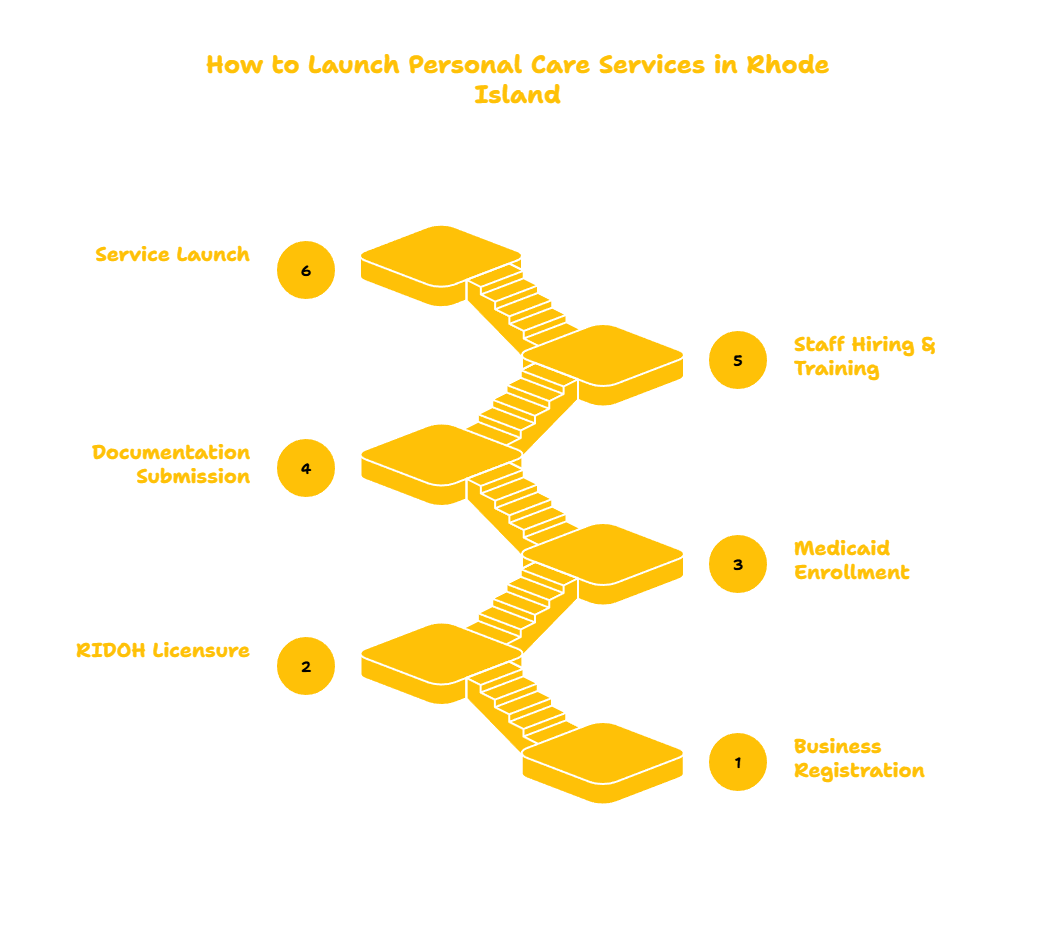
The path to becoming an active PCS provider involves a multi-step process that begins with formalizing the business entity. Before any services can be billed, an agency must demonstrate its capability to meet regulatory standards through rigorous application cycles with both state departments.
Prospective providers must first register their business with the Rhode Island Secretary of State and obtain a Federal EIN and a Type 2 NPI. Following registration, the applicant must apply for a Home Care Provider Agency license through RIDOH. This process involves a comprehensive review of the agency's operational readiness, including the development of a mandatory Personal Care Services Policy & Procedure Manual.
Once licensure is secured, the provider must enroll specifically as a Medicaid PCS provider via the Rhode Island Medicaid portal. During this phase, the agency must provide proof of adequate liability and workers’ compensation insurance. Approval at this stage allows the provider to begin accepting authorized referrals and submitting claims for reimbursement.
What Are the Essential Staffing and Training Requirements?
Quality of care is heavily dependent on the caliber and preparedness of the direct care staff. Agencies are required to implement a robust hiring and training framework to ensure that every caregiver and administrative lead understands their legal and professional responsibilities.
Key staff roles include Personal Care Aides, who perform the hands-on care, and a Registered Nurse supervisor, who conducts initial assessments and develops the individualized care plans. A scheduler or program coordinator is also typically required to manage the logistics of care delivery and regulatory documentation.
All staff members must undergo mandatory training, which typically covers:
- HIPAA privacy and the safeguarding of client information.
- Mandatory reporting protocols for recognizing and addressing potential abuse.
- Standardized procedures for accurate documentation and billing.
- Ongoing annual in-service training as mandated by RIDOH to ensure skill maintenance.
Which Medicaid Waiver Programs Support PCS?
Reimbursement for PCS is facilitated through several distinct channels within the Rhode Island Medicaid ecosystem. Agencies must be familiar with these programs to effectively manage authorizations and ensure timely payment for services rendered.
The foundational program is the Rhode Island Medicaid State Plan PCS Benefit, which assists eligible individuals requiring ADL support. Additionally, the Global Consumer Choice Compact Waiver (1115 Waiver) provides a pathway for coverage under integrated managed care models. Providers may also interact with PACE RI and various Medicaid Managed LTSS plans, which contract with agencies to deliver services. Certain temporary state-funded disability programs may also be available for specific, time-limited needs.
Frequently Asked Questions
What is the typical timeline for launching a new PCS agency?
The launch process is sequential. Business registration and manual development typically take 1–2 months. Licensing and Medicaid enrollment take 2–3 months. Staff hiring and credentialing take 30–60 days, with final service activation occurring upon formal approval from the state agencies.
What must be included in the Policy & Procedure Manual?
The manual must detail client intake processes, ADL task procedures, emergency and incident response protocols, and participant rights. It must also include specific templates for daily visit notes, billing, and clear standards for staff training and supervision.
Are providers required to conduct background checks on staff?
Yes, all direct care staff must undergo thorough background checks as part of the hiring process to ensure the safety and security of the vulnerable populations receiving care.
Key Takeaways for Prospective Providers
Launching a Personal Care Services agency in Rhode Island is a complex process that demands careful coordination between business formation, state licensing, and Medicaid enrollment. Success requires a commitment to maintaining comprehensive, audit-ready documentation and adhering to the specific standards set by RIDOH and EOHHS. By focusing on compliant operations and staff training, providers can effectively meet the critical demand for in-home support within the Rhode Island LTSS system.
Waiver Consulting Group (WCG) provides support to providers in Rhode Island, including assistance with business registration, RIDOH licensure, Medicaid enrollment, the development of customized Policy & Procedure Manuals, staff credentialing tools, and billing readiness support.
Last verified: October 2023. Disclaimer: This information is for educational purposes only and does not constitute legal or professional advice. Always refer to current RIDOH and EOHHS guidelines for the most recent updates to regulations and policies.